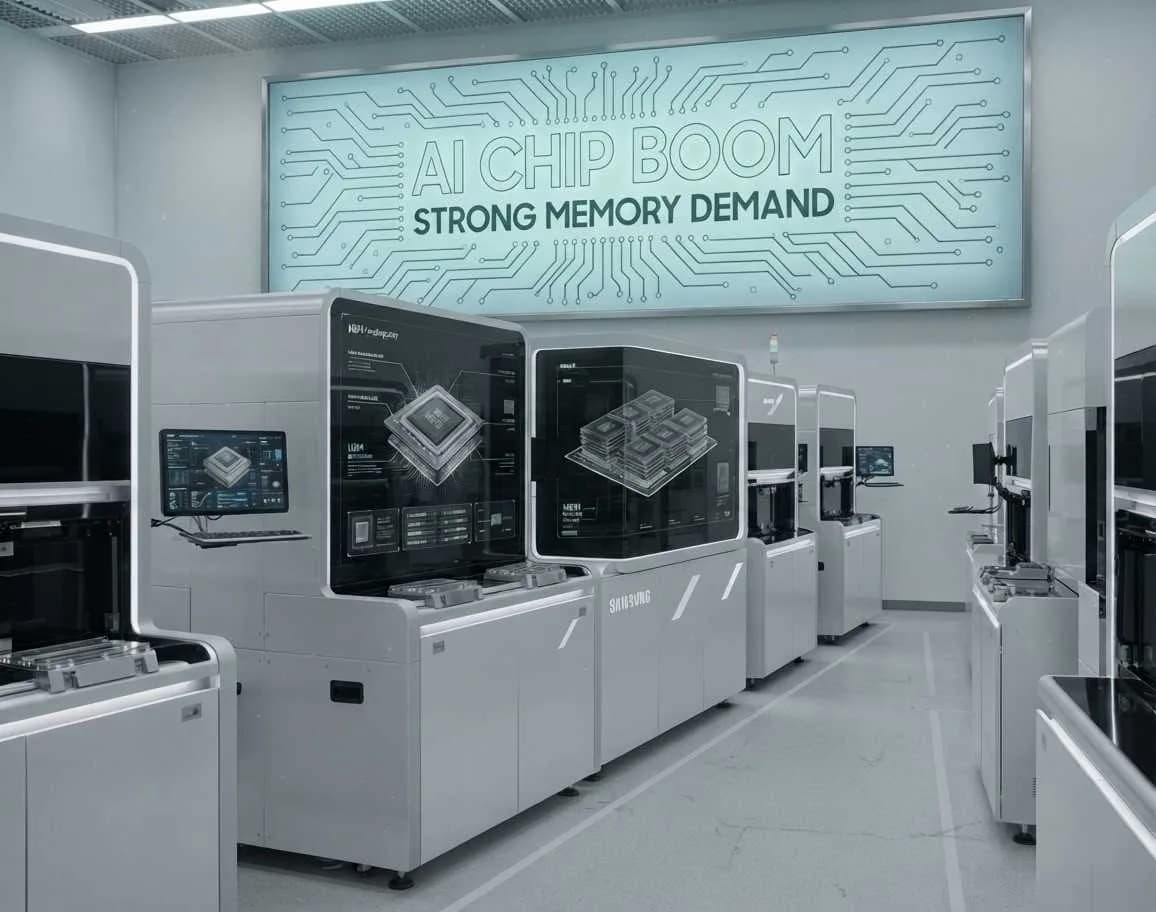
Samsung Expects 1,800% Operating Profit Leap as AI Chip Demand Surges
Samsung Electronics is expecting a historic financial performance as the global artificial intelligence (AI) boom continues to increase demand for advanced memory chips. The company has forecast an estimated 1,800% operating profit leap compared with the same period last year, showing how strongly AI infrastructure is influencing the technology industry.
The rapid growth is mainly linked to high-performance memory chips used in AI data centres. Companies worldwide are investing heavily in artificial intelligence systems, creating strong demand for advanced semiconductor technology.
From experience, major technology shifts often create new market leaders. The current AI wave is doing something similar for semiconductor companies, just like the smartphone revolution transformed the mobile industry years ago.
Why AI Is Driving Samsung’s Record Profit Growth
Samsung’s memory chip business has benefited from increasing demand from global technology companies building AI platforms and data centres.
AI systems require powerful hardware that can process huge amounts of information quickly. This has increased demand for specialised memory products used in advanced computing environments.
Key factors behind Samsung’s growth include:
Rising global investment in AI infrastructure
Increased demand for advanced memory chips
Growth of large-scale data centres
Strong semiconductor market recovery
Companies developing AI services need reliable chip suppliers, and Samsung has positioned itself as one of the major players in this growing market.
The Role of Memory Chips in the AI Revolution
Many people associate AI mainly with software, but the hardware behind these systems is equally important. Memory chips help AI systems store and process large amounts of data efficiently.
The demand is especially strong for advanced memory solutions used in servers and AI computing systems.
A simple example is the difference between a normal computer and an AI data centre. A personal computer handles everyday tasks, while AI data centres process millions of calculations at the same time, requiring much more powerful components.
Traditional Chips vs AI-Focused Memory Chips
Feature | Traditional Memory Chips | AI-Focused Memory Chips |
|---|---|---|
Main Users | Smartphones, laptops, consumer devices | AI servers and data centres |
Demand Growth | Depends on electronics sales | Driven by AI expansion |
Performance Need | Standard processing requirements | High-speed data processing |
Market Value | Competitive pricing | Higher-value technology segment |
Samsung’s Position in the Growing AI Market
Samsung’s success reflects a wider change in the semiconductor industry. Companies are no longer competing only on chip production volume but also on advanced technology, reliability, and long-term partnerships.
One common mistake people make is assuming the AI boom is only benefiting software companies. In reality, chip manufacturers are among the biggest beneficiaries because every AI application requires strong computing infrastructure.
The company’s latest performance shows that AI is not just a technology trend. It is becoming a major economic force shaping global industries.Samsung’s AI Success, Competition, and Future Technology Strategy
Samsung’s expected profit surge shows the growing importance of artificial intelligence in the global technology market. However, maintaining this momentum will depend on how long AI infrastructure demand continues and how effectively companies manage future challenges.
The semiconductor industry is highly competitive. A strong quarter does not guarantee permanent success because technology markets change quickly. Companies must continue investing in research, manufacturing capacity, and innovation to stay ahead.
Samsung vs Competitors in the AI Chip Race
Samsung is competing with some of the world’s most influential semiconductor companies. While Samsung has strong expertise in memory chips, other companies focus on different areas of the AI ecosystem.
Understanding these differences helps explain why the AI market is growing so quickly.
Company | Main Strength | Role in AI Industry |
|---|---|---|
Samsung Electronics | Advanced memory chips and semiconductor manufacturing | Supplies memory solutions for AI systems |
SK hynix | High-performance memory technology | Major supplier for AI data centres |
Nvidia | AI processors and computing platforms | Leading provider of AI processing technology |
Samsung’s advantage comes from its ability to manufacture advanced memory products at scale. However, companies like Nvidia dominate the AI processor market, showing that the AI ecosystem depends on multiple technologies working together.
Challenges That Could Affect Samsung’s Growth
Although AI demand remains strong, analysts have raised questions about whether this level of growth can continue for many years.
Potential challenges include:
Slower AI infrastructure investment
Changes in global chip demand
Increased competition among manufacturers
Possible oversupply in future markets
From experience, technology industries often move through cycles. A period of rapid growth is usually followed by adjustments as companies evaluate demand and production levels.
The key challenge for Samsung will be maintaining growth while avoiding excessive dependence on one market segment.
South Korea’s Massive Semiconductor Investment Plan
South Korea is strengthening its position as a global chip manufacturing centre through a large public-private investment programme.
Samsung and SK hynix are participating in an 800 trillion won investment plan aimed at developing a new semiconductor hub.
The project is expected to support:
Advanced chip manufacturing
AI technology development
New employment opportunities
Greater global competitiveness
The South Korean government also plans to use increased tax revenue from semiconductor growth to support AI projects, startups, housing programmes, and employment initiatives.
Customer Experience and Real-World Impact of the AI Chip Boom
The semiconductor boom affects more than just technology companies. Consumers also experience the impact through device prices and product availability.
As chipmakers focus more on AI-related products, production of traditional chips used in smartphones and laptops may decrease. This can influence pricing across consumer electronics markets.
Many technology discussions on platforms like Quora show that users are interested in how AI development affects everyday devices. People want faster technology, but they also want affordable products.
A balanced semiconductor strategy is important because the future of AI depends on both advanced innovation and accessible technology.
Pros and Cons of Samsung’s AI-Driven Growth
Pros:
Stronger position in global semiconductor markets
Increased investment in technology innovation
Creation of high-value jobs
Growth opportunities in AI infrastructure
Cons:
Heavy dependence on AI market demand
Possible future chip market slowdown
Higher consumer electronics prices
Increased competition from global rivals
Samsung’s current success represents a major opportunity, but long-term leadership will depend on continuous innovation and smart market decisions.The Future of Samsung and the Global AI Semiconductor Industry
Samsung’s expected 1,800% operating profit leap highlights how artificial intelligence is transforming the technology sector. The company’s growth is closely connected with rising demand for memory chips, but the next phase will depend on innovation, market stability, and global AI investment.
The semiconductor industry has always been driven by technological changes. From personal computers to smartphones and now artificial intelligence, each major shift creates new opportunities for companies that can adapt quickly.
Why Samsung’s AI Strategy Matters for the Future
Samsung’s position in the semiconductor market gives it a major advantage as AI adoption continues worldwide. However, staying ahead requires more than increasing production capacity.
The company must focus on:
Developing next-generation memory technologies
Expanding AI-focused semiconductor solutions
Maintaining strong global partnerships
Investing in research and development
Managing market risks carefully
From experience, technology companies that survive long-term are usually those that continue improving even during periods of success.
How AI Growth Could Change the Technology Market
The AI boom is creating opportunities across different industries, including healthcare, finance, manufacturing, and cloud computing.
For example, companies in the USA are investing heavily in AI-powered systems to improve productivity and automate complex tasks. Behind these systems are powerful servers and semiconductor technologies supplied by companies like Samsung and other chip manufacturers.
The impact of AI growth can be seen in:
Faster data processing
More advanced digital services
Increased demand for computing infrastructure
Expansion of technology-related jobs
However, businesses must also prepare for changing market conditions because technology demand can shift quickly.
Consumer Impact: What People Should Expect
The AI semiconductor boom will influence everyday technology products. As manufacturers focus more on high-value AI chips, traditional electronics markets may experience supply changes.
Consumers may notice:
Changes in smartphone and laptop prices
Faster development of AI features
More powerful computing devices
Greater availability of AI-based services
Many users discussing technology trends on platforms like Quora highlight that people are excited about AI improvements but remain concerned about affordability.
The challenge for the industry is creating advanced technology while keeping products accessible for everyday users.
Final Thoughts: Samsung’s Role in the AI Revolution
Samsung’s expected record profit reflects a major shift in the global technology landscape. Artificial intelligence is not only changing software development but also creating enormous demand for semiconductor hardware.
The company’s future success will depend on maintaining technological leadership, managing competition, and responding to changes in global demand.
The AI boom offers significant opportunities, but sustainable growth will require careful planning and continuous innovation.
Stay Updated With Global Technology Trends
Technology developments affect businesses, investors, and everyday consumers. Understanding major industry changes helps people make better decisions about future opportunities.
Follow PehlePakistan.pk for reliable updates on technology, business, global markets, and important developments shaping the future.
Stay informed about the innovations transforming the world economy.
Frequently Asked Questions (FAQs)
1. Why is Samsung expecting an 1,800% operating profit increase?
Samsung’s profit growth is mainly driven by strong global demand for advanced memory chips used in artificial intelligence data centres.
2. How is AI increasing demand for semiconductor chips?
AI systems require powerful computing infrastructure, which increases demand for high-performance memory and processing technologies.
3. Is Samsung competing with Nvidia in AI chips?
Samsung and Nvidia operate in different areas of the AI chip market. Samsung focuses strongly on memory chips, while Nvidia leads in AI processors.
4. What role does Samsung play in the semiconductor industry?
Samsung is one of the world’s largest semiconductor manufacturers and a major supplier of advanced memory technology.
5. Will the AI chip boom continue in the future?
Analysts believe AI demand remains strong, but future growth depends on continued investment and market conditions.
6. How will AI chip demand affect consumers?
AI-focused chip production may improve technology features but could also influence prices of smartphones, laptops, and other devices.
7. Why is South Korea investing heavily in semiconductor production?
South Korea aims to strengthen its global technology position, create jobs, and support future industries through semiconductor investment.
Topics in this story
Article Details
Category: Tech
Published:
Updated:
Author: Rabia
More Stories