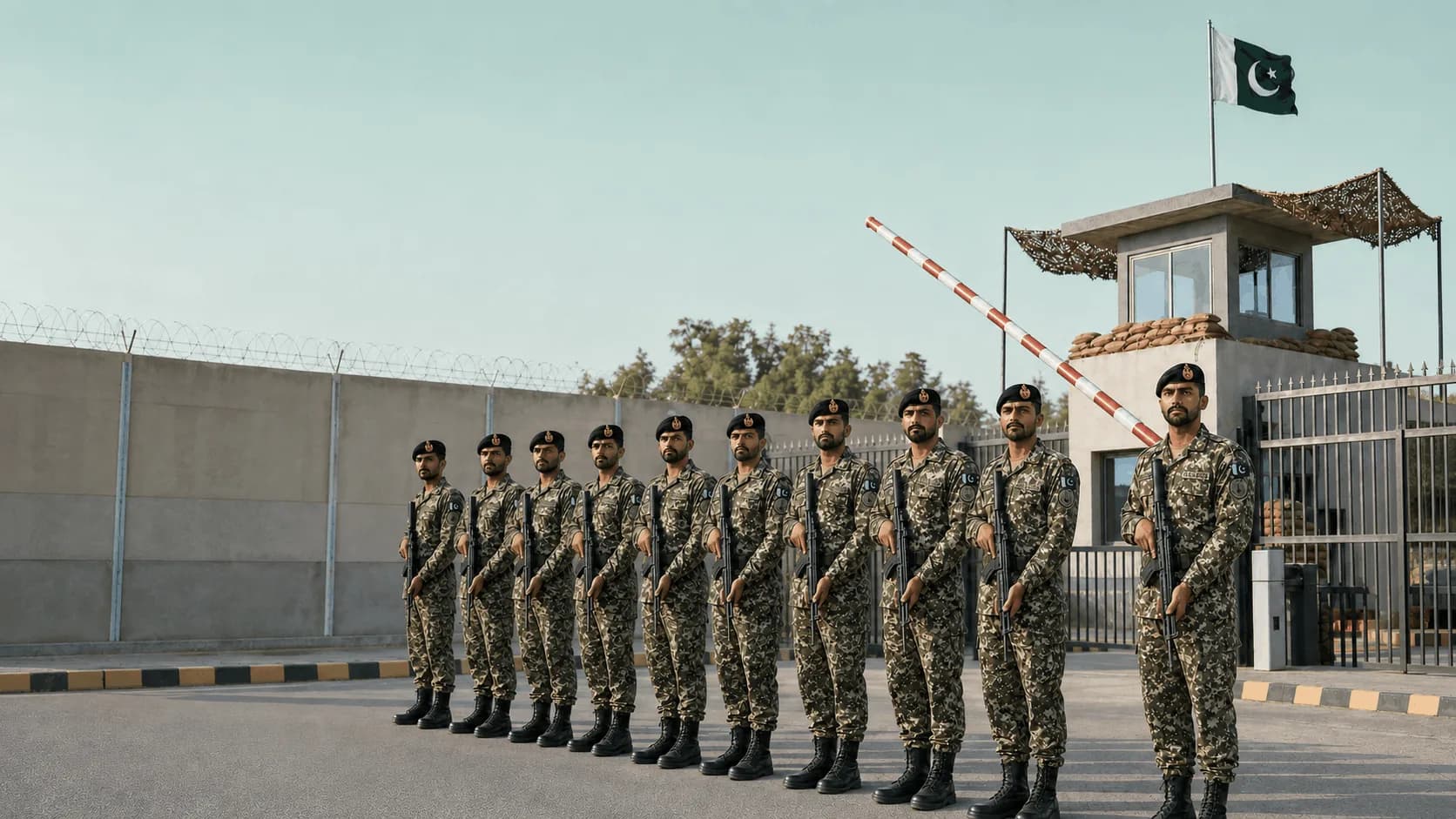
Security forces kill 29 terrorists in Pak-Afghan border operations
The recent intelligence based operations by Pakistan’s security forces in the Pak-Afghan border regions mark one of the more intense counter-terror responses in recent months. According to official statements, 29 terrorists were eliminated in coordinated actions across multiple border zones. In many cases, such operations are not random responses but carefully planned actions based on verified intelligence inputs and movement tracking of militant groups.
From experience, whenever attacks increase in cities like Karachi or regions in Khyber Pakhtunkhwa and Balochistan, security forces usually tighten border surveillance first. That’s exactly what seems to be happening here, where cross-border hideouts were identified and targeted with precision.
Federal Information Minister Atta Tarar also highlighted that these operations were a direct response to recent terrorist attacks. The core objective remains clear, protecting civilians while dismantling networks that operate across provincial and border lines.
How the intelligence based operations were executed
The operations were not limited to one location. Instead, multiple coordinated strikes were carried out in different regions, showing a structured approach rather than isolated actions.
Key operational highlights include:
Intelligence based raids in border areas
Targeting of known militant hideouts
Coordination between multiple security units
Simultaneous actions in different regions
One common mistake people make is assuming border operations are only reactive. In reality, modern counter-terror strategies often rely on continuous surveillance, digital tracking, and human intelligence networks.
Why Pak-Afghan border remains sensitive
The Pak-Afghan border has long been a challenging area due to its difficult terrain and historical militant movement. In countries like the United States, similar border-sensitive zones are monitored using layered intelligence systems and aerial surveillance. Pakistan’s approach also reflects a shift toward more structured intelligence driven operations.
Security forces continue to prioritize civilian safety while responding to evolving threats across the region.Terror Networks Targeted in Coordinated Border Operations
Terrorist hideouts destroyed in Pak-Afghan border regions
The second phase of the intelligence based operations reveals how deeply these actions were planned and executed. Security forces not only eliminated active militants but also destroyed multiple terrorist hideouts across the Pak-Afghan border belt. According to official updates, 25 terrorists were killed in targeted strikes in Paktia, Paktika, and Kunar, while additional operations in Bajaur further intensified the crackdown.
From experience, these kinds of multi-location operations usually signal one thing, intelligence confidence is high and verified. In many cases, authorities wait for confirmation before striking, because hitting the wrong location can create bigger complications on the ground.
Federal Information Minister Atta Tarar confirmed that these actions were a direct response to recent attacks across Karachi, Khyber Pakhtunkhwa, and Balochistan, showing that the operations were not isolated but part of a broader national security response.
Key militant leadership eliminated in Bajaur operation
One of the most significant developments came from Bajaur, where security forces successfully neutralized Khan Farosh, also known as Zabal, a senior commander of the banned Jamaatul Ahrar. Along with him, four of his associates were also killed during the operation.
Key outcomes of the Bajaur strike:
Elimination of a high value militant commander
Disruption of command structure in the area
Four associates neutralized in same operation
Recovery of weapons and ammunition caches
One common mistake people make is thinking that removing a single commander does not matter much. In reality, leadership figures often control recruitment, funding, and cross-border coordination, so their removal creates serious operational disruption.
Broader impact on regional security and future operations
The destruction of multiple hideouts sends a strong signal about Pakistan’s evolving counter-terror strategy. Similar to advanced security models used in the United States, intelligence based targeting focuses on precision rather than large scale blanket operations. This reduces collateral risks while improving operational success.
Authorities have clearly stated that operations will continue until terrorism is fully eliminated. The emphasis is now on sustained pressure rather than short term responses.
Customer Testimonial Highlights
People discussing security updates on platforms like Quora often point out that coordinated intelligence sharing between agencies plays a major role in preventing large scale attacks. Many also highlight that consistent action helps restore public confidence, especially in regions that have faced repeated instability.
Overall, these operations reflect a shift toward more calculated and intelligence driven counter terrorism efforts.
(SOURCE:SAMAA)
Topics in this story
Article Details
Category: News
Published:
Author: Rabia
More Stories