Quick Answer
Delhi Government School in Karachi’s Karimabad area was sealed by a court bailiff on August 29, 2026, following a decades-long dispute over the ownership and possession of its premises. The closure has left approximately 2,800 students without access to their classrooms. The Sindh Education Department is preparing an appeal and seeking a stay order while also pursuing legal acquisition of the land as a permanent solution.
Historic Karachi School Sealed on Court Orders
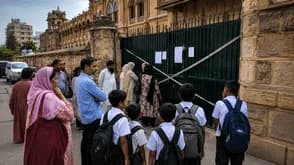
The historic Delhi Government School in Federal B Area’s Karimabad locality has been sealed in compliance with a court order, creating uncertainty over the education of thousands of students.
A written notice was placed outside the building by the Directorate of Education, Sindh School Education Department. Students and teachers were instructed to contact the District Education Officer or the directorate for further information.
The premises were sealed by a court bailiff on August 29 after a prolonged legal dispute between the Sindh government and the Delhi Anglo-Arabic College and Schools Old Boys Association over the ownership and possession of the property.
The closure has particularly affected children from low- and middle-income families who depend on government schools for free education. Parents now fear that the disruption could affect attendance, examination preparation and the students’ entire academic year.
How Many Students Have Been Affected?
Dawn reported that around 2,800 students lost access to their classrooms after the school was sealed. However, another report quoted education officials as saying that enrolment at the school complex was closer to 2,000.
The difference between these figures has not yet been officially clarified. The authorities must publish verified enrolment records so that every affected student can be included in any relocation or academic continuity plan.
The closure affects students enrolled in primary and secondary sections, including boys’ and girls’ schools operating in different shifts.
Which Institutions Operate in the School Complex?
According to a Sindh Education Department document, the Delhi Government School complex is primarily divided into four blocks:
Government Delhi Primary School Karachi in Block A
Government Delhi Secondary School Karachi in Block B
Government Delhi Boys Secondary School Karachi in Block C
Government Delhi College Karachi in Block D
Reports indicate that two girls’ schools operate in morning and evening shifts, while a boys’ school runs during the morning shift. This means the closure has disrupted several educational institutions rather than a single school section.
Students Hold Assembly on the Road
Following the sealing, hundreds of students, teachers and parents gathered outside the premises to demand the immediate reopening of the school.
Unable to enter their classrooms, the students held their morning assembly on the road. Boys and girls carried placards and raised slogans asking the authorities to restore their school and protect their education.
During the protest, some students reportedly broke the locks of two sealed blocks and entered their classrooms. Videos showed students celebrating their return to the rooms, but their action did not legally reverse the sealing order or resolve the dispute.
The protest demonstrated the students’ emotional connection with the institution and their fear that relocation could permanently separate them from their teachers and established learning environment.
History of Delhi Government School
Delhi Government School has a long educational legacy connected to the Anglo-Arabic institutions of Delhi.
The campus in Karachi was established by the Delhi Anglo-Arabic College and Schools Old Boys Association during the 1960s. Historical accounts place its establishment in 1964, while formal teaching activities reportedly began in 1965.
The institution was created after Partition by former students who wanted to continue the educational tradition of Delhi’s historic Anglo-Arabic School and Delhi College in Pakistan.
The Karachi campus originally included classrooms, science laboratories, a library, administrative offices and other educational facilities. It later emerged as one of the city’s best-known public-sector institutions.
The school was nationalised in 1972 under the education nationalisation policy introduced during the government of former prime minister Zulfikar Ali Bhutto. Its administration subsequently came under government control, although questions surrounding the ownership of the land and building remained unresolved.
How the Ownership Dispute Developed
The present crisis is the result of legal and administrative issues that continued for decades.
In 2003, the government introduced a policy allowing educational institutions nationalised during the 1970s to be returned to their previous owners. The Delhi Anglo-Arabic College and Schools Old Boys Association then sought restoration of control over the property.
The dispute eventually reached the Sindh High Court, which ordered the denationalisation of the institution. Historical reporting indicates that the Supreme Court upheld that decision in 2007.
Part of the complex where the college operated was reportedly returned to the association, but possession of the remaining school blocks continued to be disputed. Despite the legal decisions, the government retained control of the school sections while efforts to reach a permanent settlement remained unsuccessful.
The unresolved matter ultimately led to the enforcement of the court order and the sealing of the premises in August 2026.
Did Unpaid Rent Lead to the Sealing?
Several reports have linked the dispute to the alleged failure of the Sindh Education Department to pay rent for the school building.
A report published in 2013 stated that the government was required to pay monthly rent of Rs8,124 to the owners but had failed to make payments for several years. More recent reporting, however, cited officials as saying that rent had been paid until June 2006.
The precise amount currently outstanding and the period for which rent remained unpaid have not been disclosed through a detailed official account. Therefore, non-payment should be described as a reported factor in the dispute rather than the only conclusively established reason for the closure.
The broader conflict concerns ownership, denationalisation and possession of the property, alongside questions about rent and the government’s failure to secure the site permanently.
Sindh Education Department Plans an Appeal
The School Education and Literacy Department has said it is taking legal steps to restore educational activities.
According to an official document, the department is coordinating with the Advocate General and the Solicitor Department to file an appeal before the sessions court. It also plans to submit an application seeking a stay against the disputed order and related proceedings.
A stay order could provide temporary relief by allowing classes to resume while the legal case continues. However, it would not settle the underlying ownership issue.
The department has also asked the Deputy Commissioner of District Central to initiate proceedings for the lawful acquisition of the land. If completed, the acquisition could allow the government to retain the property for educational purposes and provide a permanent solution.
No confirmed timeline has been announced for the appeal, stay application or land-acquisition process.
Will the Students Be Shifted Elsewhere?
Education officials have said that a plan is being prepared to move affected students to nearby government schools.
Relocation may allow lessons to continue, but it could create several practical difficulties. Neighbouring institutions may not have enough classrooms, teachers, laboratories or other facilities to accommodate thousands of additional children.
Families could also face higher transport costs if students are transferred to schools farther from their homes. Changes in shifts and timings may create further difficulties, particularly for younger children and girls.
Students preparing for matriculation examinations are likely to be among the most seriously affected because any extended break or sudden change of teachers could disrupt their studies.
At the time of reporting, the authorities had not publicly provided a complete school-wise relocation plan, a timetable for resuming classes or details about whether teachers would move with their students.
Why the Closure Is a Serious Education Crisis
The case is more than a disagreement over a building. It directly affects the constitutional and social responsibility of the government to provide access to education.
Many students enrolled at Delhi Government School come from families unable to afford private-school fees. If suitable public institutions are unavailable nearby, some parents may struggle to continue their children’s education.
An extended closure could lead to:
Loss of regular teaching time
Poor attendance and lower examination performance
Increased transport expenses
Overcrowding in nearby schools
Separation from existing teachers
Difficulty accessing science laboratories and learning resources
A greater risk of students dropping out
The authorities must therefore ensure that legal proceedings do not leave children without classrooms for an indefinite period.
A School Known for Academic Excellence
Delhi Government School was widely regarded as one of Karachi’s strongest public-sector educational institutions, particularly during the 1980s and early 1990s.
Its students regularly achieved strong results in board examinations, and admission to the institution was considered valuable even among families that had access to other educational options.
According to historical accounts, its students frequently secured leading positions in matriculation examinations. The school continued producing notable results in later years, strengthening its reputation among Karachi’s government institutions.
Its sudden closure therefore threatens not only current students but also the educational legacy of an institution that has served generations of Karachi families.
Similar Disputes Have Affected Other Karachi Institutions
Delhi Government School is not the first public-sector educational institution in Karachi to face disruption because of a property, rent or possession dispute.
Aisha Bawany College and parts of the Islamia College Complex have previously faced similar controversies. Such cases reveal weaknesses in the management of rented or nationalised educational properties.
Failure to maintain updated leases, clear outstanding payments, respond effectively to litigation and secure government institutions can allow administrative disputes to develop into major education crises.
The provincial government needs a central monitoring system for all public schools and colleges operating on privately owned or disputed land. Such a system should track ownership documents, rental payments, lease-expiry dates and pending court cases.
Questions the Government Must Answer
The Sindh government and Education Department should publicly explain why the matter remained unresolved despite court decisions dating back many years.
They must also clarify:
The verified number of affected students
The total amount of rent outstanding, if any
The legal status of each block in the complex
The date on which regular classes will resume
The schools where students may be relocated
Whether existing teachers will move with them
Arrangements for matriculation and other examination classes
Progress on the appeal and stay application
The expected timeline for acquiring the property
Responsibility for administrative and legal delays
Parents should receive a written plan rather than relying on unofficial statements or uncertain assurances.
What Should Happen Next?
The immediate priority must be the continuation of classes. The Education Department should seek urgent legal relief while arranging temporary classrooms for every affected section.
If relocation becomes necessary, students should be moved collectively with their teachers whenever possible. Nearby schools must receive additional classrooms, furniture, staff and learning resources to prevent overcrowding.
Transport support should also be considered for children required to attend institutions located farther away. Special protection must be provided to students preparing for board examinations so that the dispute does not damage their results.
For a permanent solution, the government should either complete the lawful acquisition of the property or negotiate an enforceable agreement with its owners. It should also conduct an administrative inquiry to determine why rent, litigation and acquisition proceedings were not handled before the situation reached the point of sealing.
Article Details
Category: News
Published:
Author: Rabia
More Stories