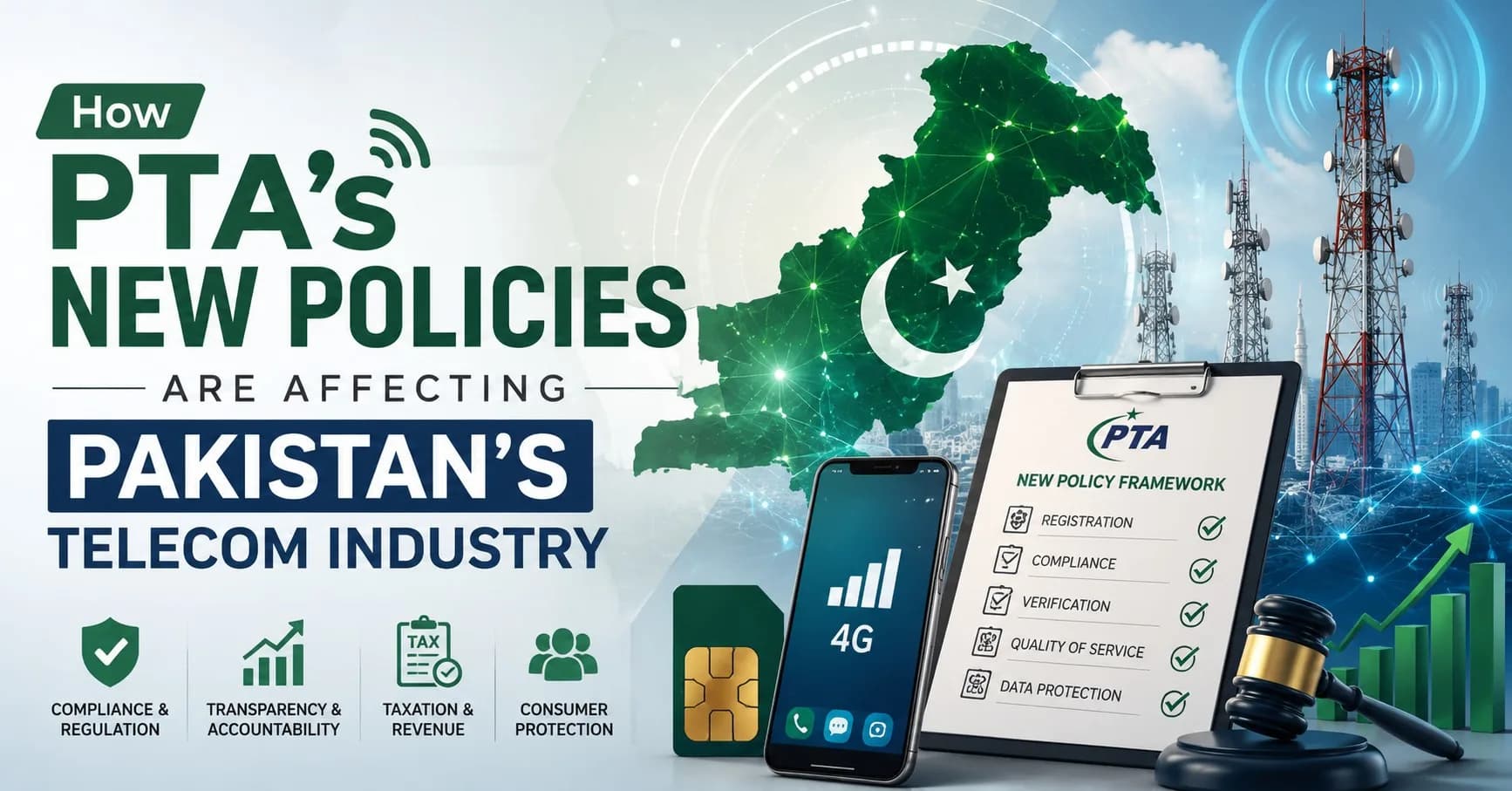
Have you noticed your mobile packages getting more expensive or stricter to activate? That shift is closely tied to new regulatory moves shaping Pakistan’s telecom sector.
The Pakistan Telecommunication Authority (PTA) has introduced a series of policy adjustments over recent years aimed at improving compliance, increasing documentation, and strengthening digital governance. While the intention is to regulate the fast-growing telecom space, the impact is being felt differently by users and operators.
Regulatory Tightening and Its Impact
PTA’s stricter SIM registration rules and biometric verification systems have reduced misuse but also added friction for consumers. Many users now need multiple verification steps before activating services.
From experience, one common frustration among users is delayed SIM issuance, especially for those in rural areas where verification centers are limited.
Taxation and Pricing Pressure
New taxation structures on telecom services have increased operational costs for companies. These costs are often passed down to consumers in the form of higher call and data charges.
For a typical household, this can feel like paying extra for electricity every month just to keep basic communication running. The burden is small per transaction but adds up over time.
Quick Facts
- Pakistan has over 190 million mobile subscribers
- SIM verification now requires biometric authentication
- Telecom taxes are among the highest indirect charges in the country
- Broadband usage continues to grow annually despite price pressure
Policy Impact Overview
| PTA Policy Area | Key Change | Industry Impact |
|---|---|---|
| SIM Registration | Biometric verification mandatory | Reduced misuse but slower onboarding |
| Taxation | Increased service taxes | Higher consumer prices |
| Device Registration | DIRBS enforcement | Reduced illegal handset usage |
Industry Adaptation and Challenges
Telecom operators are investing heavily in compliance systems and digital onboarding tools. However, these upgrades increase their cost base, making profitability harder in a price-sensitive market.
One common mistake people make is assuming telecom companies can absorb all regulatory costs without affecting service pricing. In reality, the ecosystem passes costs along the chain.
Where Things Are Heading
Despite challenges, PTA’s regulatory direction is pushing the industry toward a more structured digital ecosystem. Fraud reduction, improved user verification, and device tracking are strengthening long-term stability.
The future depends on balancing regulation with accessibility. If policies evolve with infrastructure growth, Pakistan’s telecom sector could become more efficient and user-friendly in the coming years.
Closing Thought
PTA’s policy changes are reshaping how Pakistan connects to the digital world. The challenge lies in maintaining security and compliance without slowing down access for everyday users and businesses.
Topics in this story
Article Details
Category: Telecom
Published:
Updated:
Author: Kaif
More Stories