
Quick Answer
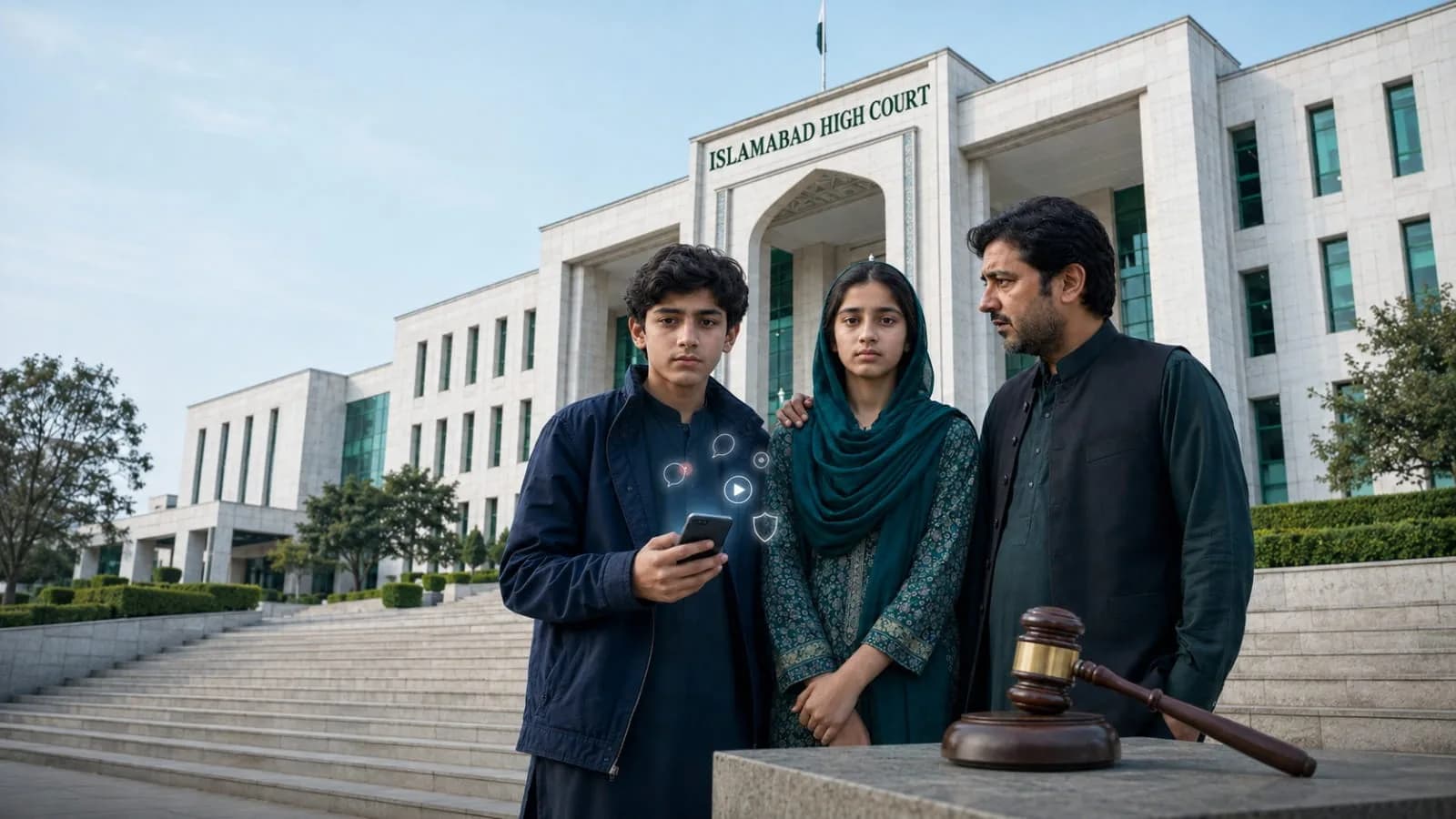
The Islamabad High Court has issued notices to four federal ministries, the PTA and PEMRA on a petition seeking regulation of social media use by children under 16. The petition calls for effective age verification, parental controls and legal safeguards against cyberbullying, online harassment and harmful content. The court has not banned children from using social media and has only sought replies from the respondents at this stage.
The Islamabad High Court heard a petition on Monday seeking legislation to regulate social media use by children below the age of 16.
Chief Justice Sardar Muhammad Sarfraz Dogar heard the petition filed by citizen Waqas Nasir. Advocates Muhammad Jalal Haider and Yahya Farid Khawaja appeared on behalf of the petitioner.
During the hearing, the court issued notices to the Ministry of Information Technology and Telecommunication, Ministry of Information and Broadcasting, Ministry of Interior, Ministry of Law and Justice, Pakistan Telecommunication Authority and Pakistan Electronic Media Regulatory Authority. The respondents were directed to submit their replies.
What Does the Petition Seek?
The petition asks the court to direct the federal government to introduce legislation regulating social media accounts used by children under 16.
A central demand is the introduction of an effective age-verification system. The petitioner maintains that the absence of a reliable system makes it difficult to identify underage users and enforce online safeguards intended for children.
The petition also seeks parental controls, a dedicated child online-protection mechanism and clear responsibilities for social media platforms. It argues that platforms should be required to take effective steps to protect minors from harmful content and unsafe online interactions.
Concerns About Children’s Online Safety
The petitioner has raised concerns about children’s exposure to cyberbullying, online harassment and harmful or age-inappropriate material.
According to the plea, unrestricted access to social media may also expose minors to exploitation, privacy violations, psychological distress and other risks affecting their mental and physical well-being.
The lawyers argued that voluntary safety measures introduced by individual platforms may not be enough without an enforceable legal and regulatory framework.
Protection of Children’s Digital Rights
The petition asks the government to formulate a policy covering children’s digital rights, privacy and online safety.
It relies on the United Nations Convention on the Rights of the Child and General Comment No. 25, which deals with children’s rights in relation to the digital environment. On this basis, the petitioner argues that protecting the best interests of children is a constitutional and legal responsibility of the state.
The requested framework is intended to protect children while also ensuring that any age-verification process handles their personal information safely.
International Laws Cited in the Petition
The petitioner referred to laws and proposed measures in several countries to show that governments are taking steps to strengthen children’s online protection.
Australia’s restrictions concerning social media accounts for children under 16 were presented before the court as a comparative example.
The petition also referred to parental-consent requirements for younger users in France and child-safety measures under the United Kingdom’s Online Safety Act 2023.
Proposed restrictions in New Zealand and Spain were also cited. According to the petitioner, these examples reflect an international move towards age verification, parental supervision and greater responsibility for social media platforms.
These foreign measures were presented only as examples. They do not currently apply in Pakistan and have not been adopted by the Islamabad High Court.
How Could Age Verification Work?
The petition seeks a system capable of confirming whether a person opening or operating a social media account is below the required age.
Such a system could involve age confirmation, identity checks or approval from a parent or legal guardian. However, no particular verification method has been approved by the court.
Any future system would also need to protect children’s personal information and prevent unnecessary collection or misuse of identity data.
Has the IHC Banned Social Media for Children Under 16?
The Islamabad High Court has not imposed a ban on social media use by children under 16.
The case is currently at the notice stage. The court has asked the relevant ministries and regulatory bodies to present their responses to the petition.
The petitioner is seeking legislation and regulatory action from the federal government. Any ban, age restriction or mandatory verification system would require further legal or regulatory steps.
What Happens Next?
The ministries, PTA and PEMRA are expected to submit their replies before the court.
After reviewing their responses, the court may hear further arguments and examine whether Pakistan’s existing laws provide sufficient online protection for children.
A final decision has not yet been announced.
Frequently Asked Questions
Who filed the petition?
Citizen Waqas Nasir filed the petition through advocates Muhammad Jalal Haider and Yahya Farid Khawaja.
What is the main demand of the petition?
It seeks legislation, an effective age-verification system and a comprehensive framework for protecting children under 16 on social media.
Which authorities received notices?
The court issued notices to four federal ministries, the PTA and PEMRA.
What online risks are mentioned in the petition?
The plea mentions cyberbullying, online harassment, harmful content, exploitation and privacy-related risks.
Has social media been banned for children under 16?
No. The court has only heard the petition and sought replies from the respondents.
Why were laws from other countries mentioned?
They were presented as comparative examples of age restrictions, parental consent and online child-safety measures.
Topics in this story
Article Details
Category: News
Published:
Author: Rabia
More Stories