Will Pakistan’s mobile internet finally feel fast, stable, and affordable for everyday users by 2030? That question matters because telecom is no longer just about calls and data bundles. It now connects students, freelancers, small shops, banks, hospitals, transport apps, and digital government services.
Why 2030 Matters for Pakistan’s Telecom Market
Pakistan has already crossed a major digital milestone. PTA reported more than 200 million telecom subscribers, 150 million broadband connections, and over 2 million fiber-to-the-home users. These numbers show scale, but scale alone is not enough.
By 2030, the real test will be quality. Users will expect fewer call drops, stronger indoor coverage, faster uploads, and more reliable mobile internet. From experience, this is where many families feel the gap. A household may pay for mobile data, home broadband, and backup packages, yet still struggle during online classes or work calls. It feels like buying three water tanks because the main supply is unreliable.
5G, Fiber, and Better Coverage Could Lead the Shift
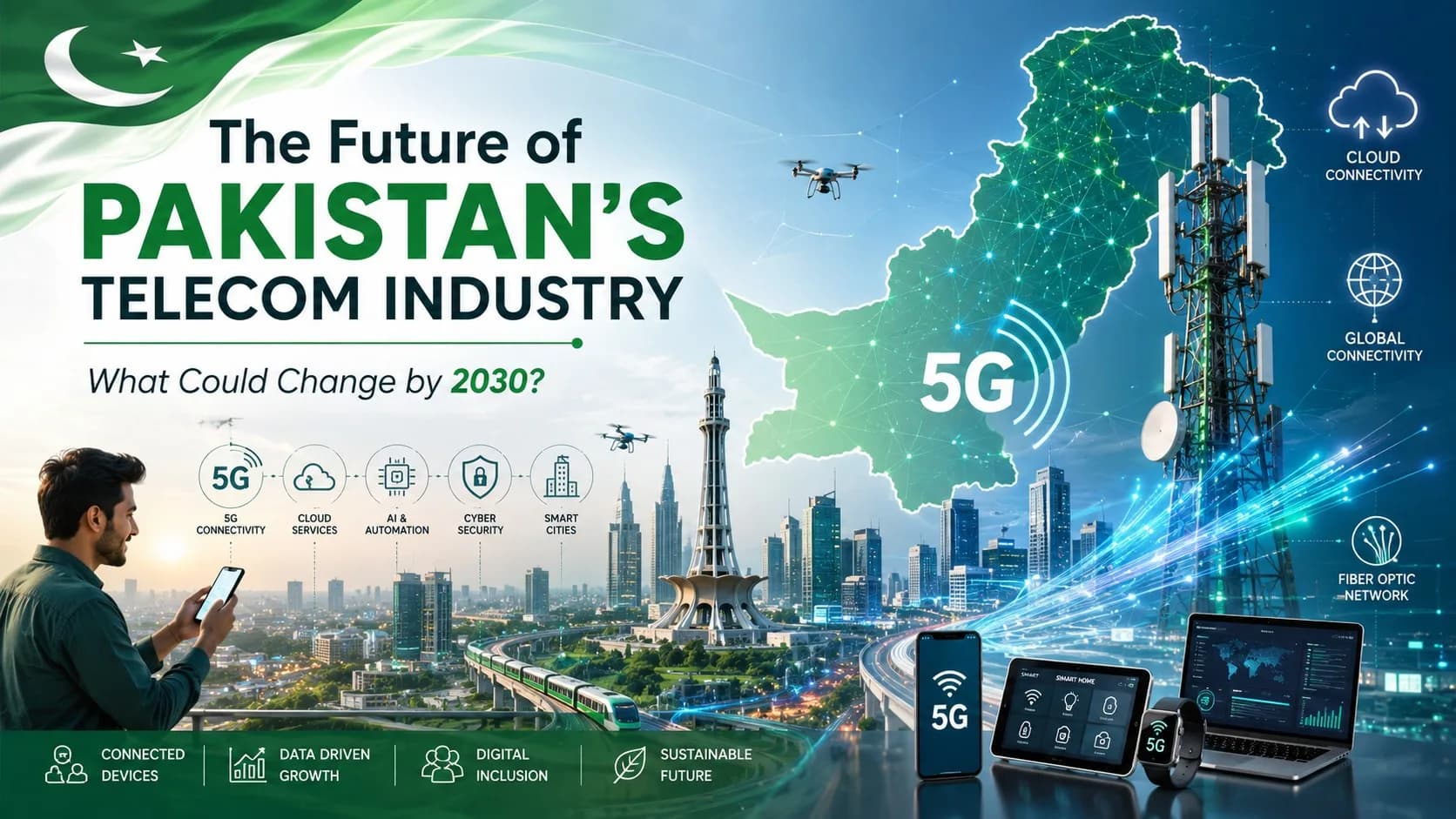
PTA’s 2026 spectrum auction process for next generation mobile services and 5G has placed Pakistan closer to the next phase of connectivity. The auction framework includes bands such as 700 MHz, 1800 MHz, 2100 MHz, 2300 MHz, 2600 MHz, and 3500 MHz.
In many cases, 5G will not change everything overnight. Its early impact may appear in business districts, smart campuses, industrial zones, hospitals, and high-traffic urban areas. Fiber expansion may matter just as much because strong 5G networks also need strong backhaul.
What Could Change for Users by 2030?
One common mistake people make is thinking the future of telecom is only about speed. The bigger change could be consistency. Remote workers will need smoother video calls. Online sellers will need stable payment systems. Students will need uninterrupted learning platforms. Rural users will need meaningful coverage, not just marketing claims.
| Area | Possible Change by 2030 | Why It Matters |
|---|---|---|
| Mobile Internet | Wider 4G quality and early 5G expansion | Better work, study, and entertainment experience |
| Fiber Broadband | More homes and businesses connected | Stable uploads, cloud work, and online meetings |
| Digital Services | More app-based payments, support, and automation | Faster access to services without long queues |
The Cost Challenge Cannot Be Ignored
The future of Pakistan’s telecom industry will also depend on affordability. Better networks require investment in spectrum, towers, fiber, energy backup, cybersecurity, and customer support. If these costs rise too sharply, users may face expensive bundles and operators may delay upgrades.
For families, telecom bills are now close to electricity and transport in importance. A student needs data for lectures. A freelancer needs upload speed. A small shop needs mobile payments. If connectivity becomes too costly, digital growth slows down at the household level.
Closing Thought
By 2030, Pakistan’s telecom sector could become faster, broader, and more service-driven, but only if coverage, affordability, quality, and investment move together. The country has the user base and demand. The next chapter will depend on how well networks serve real people, not just how impressive the subscriber numbers look.
Quick Facts Box
- Pakistan has crossed 200 million telecom subscribers.
- Broadband connections have reached around 150 million nationwide.
- Fiber-to-the-home users have crossed 2 million, according to PTA.
- Pakistan’s NGMS and 5G auction framework includes multiple spectrum bands for future network growth.
Topics in this story
Article Details
Category: Telecom
Published:
Updated:
Author: Kaif
More Stories