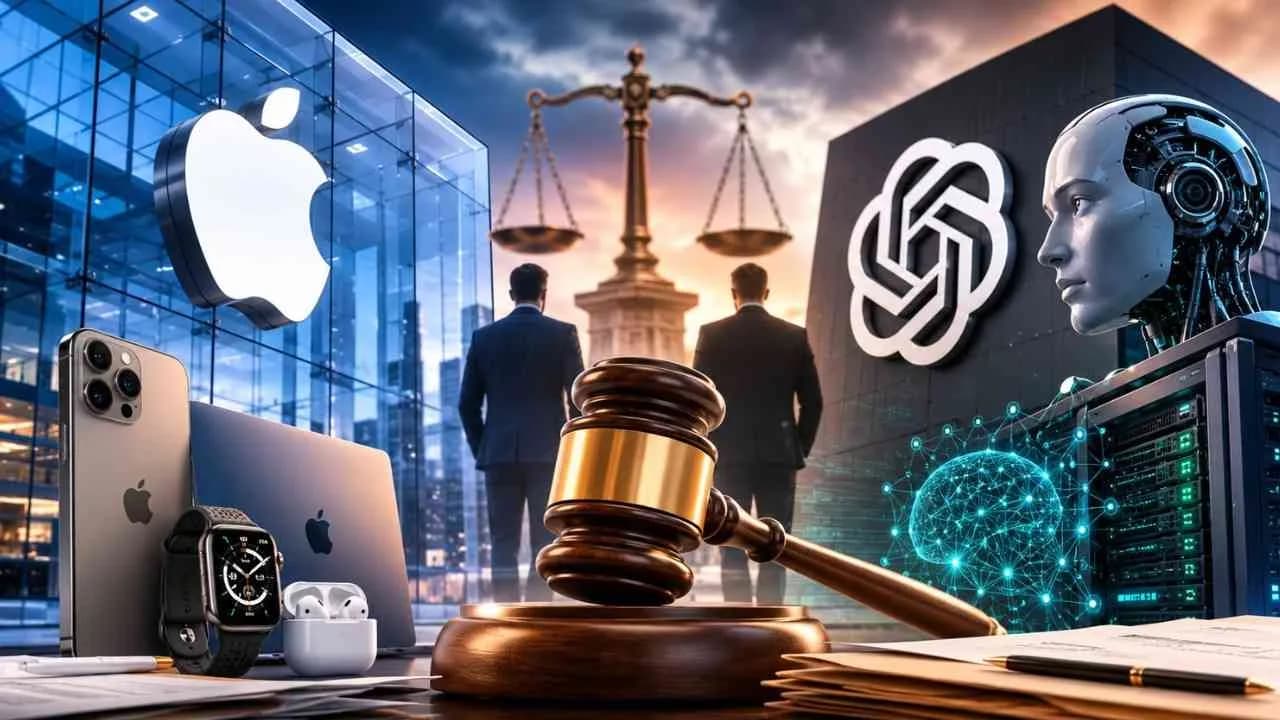
Technology companies often compete for talent, but sometimes that competition ends up in court. The recent case where Apple sues OpenAI, two former employees for trade secrets theft has quickly become one of the biggest legal stories in the AI industry.
Apple claims that confidential hardware information was taken by former employees who later joined OpenAI. According to the lawsuit, the company believes this information may have helped OpenAI accelerate its plans to develop consumer AI hardware.
The allegations go beyond ordinary employee hiring. Apple says confidential files, internal manufacturing knowledge, supplier information, and even physical hardware components were involved. OpenAI, however, strongly denies any intention of using another company's trade secrets and says it remains focused on building original technologies.
This legal battle arrives at a critical time. Artificial intelligence is moving beyond software into physical devices, and many experts believe the next generation of AI products could compete directly with smartphones. That makes the outcome of this lawsuit important not only for Apple and OpenAI but also for the future of the global technology industry.
In many cases, companies compete by hiring experienced professionals. That is completely legal. The real question here is whether confidential business information crossed the line from employee knowledge into protected trade secrets. The answer could shape how technology companies recruit talent for years to come.
What You'll Learn in This Article
Why Apple filed the lawsuit
The allegations against OpenAI
The role of the former Apple employees
Why trade secrets matter in AI development
Possible legal outcomes
How this case could affect future AI hardware
What consumers and the technology industry should watch next
Why Apple Filed the Lawsuit Against OpenAI
Apple says the lawsuit is about protecting years of research, engineering, and product development. According to the company's court filing, it believes confidential hardware information was taken by former employees and later benefited OpenAI's growing hardware division.
Apple argues that this is not simply about employees changing jobs. The company claims there was a coordinated effort to gain access to valuable internal knowledge that competitors should never receive.
Apple's Main Allegations
Apple's complaint includes several serious accusations against OpenAI and two former Apple employees.
According to the lawsuit, Apple alleges that:
Confidential hardware files were copied or retained.
Internal supplier information was accessed.
Manufacturing processes were shared without authorization.
Apple employees were encouraged to discuss confidential projects during recruitment.
Physical Apple hardware components were allegedly brought to interviews.
Apple says these actions gave OpenAI an unfair advantage while developing future AI-powered consumer devices.
Why Trade Secrets Matter
For technology companies, trade secrets are often more valuable than patents. They can include manufacturing techniques, product designs, engineering documents, testing methods, supplier relationships, and production strategies that are not available to the public.
From experience, companies spend years and billions of dollars building this knowledge. Losing it to a competitor can shorten development timelines and reduce the value of years of innovation.
Why Apple Believes the Case Is Important
Apple argues that protecting confidential information is essential for fair competition across the technology industry.
The company says businesses should compete by creating better products, not by using another company's private research or internal engineering work.
As AI companies increasingly enter the consumer hardware market, this lawsuit may become one of the most closely watched intellectual property cases in recent years.
Key Takeaways
Apple believes confidential hardware information was improperly obtained.
The lawsuit focuses on protecting trade secrets rather than stopping employee movement.
The case could influence how technology companies recruit experienced engineers in the future.
Former Apple Employees Named in the Lawsuit
One of the biggest reasons this case has attracted global attention is the involvement of two former Apple employees who later joined OpenAI. Apple claims both individuals had access to highly confidential information during their time at the company and that some of this information was allegedly retained or used after their departure.
The lawsuit does not argue that changing employers is illegal. Instead, Apple's focus is on what happened before and after these employees left the company.
Tang Tan's Move From Apple to OpenAI
Tang Tan spent more than two decades at Apple and played a key role in the development of products such as the iPhone, Apple Watch, and iPod. He now serves as OpenAI's Chief Hardware Officer, leading the company's consumer hardware initiatives.
Apple alleges that before leaving the company, Tan collected internal supplier information and industry summaries. The lawsuit also claims he encouraged some Apple employees interviewing at OpenAI to bring hardware components for discussion during interviews.
Apple believes these actions went beyond normal recruitment practices and involved confidential company assets.
Chang Liu's Alleged Actions
Chang Liu previously worked as a senior electrical engineer at Apple before joining OpenAI earlier this year.
According to Apple's complaint, Liu allegedly kept an Apple-issued work device after leaving the company. Apple further claims he later accessed its internal network and downloaded confidential hardware-related files.
These allegations form an important part of Apple's argument that sensitive information may have reached OpenAI's hardware division.
What Makes These Allegations Significant?
In many cases, engineers move between major technology companies without legal issues. Their experience, skills, and industry knowledge belong to them.
However, one common mistake people make is assuming that experience and confidential information are the same thing. They are not.
If an employee uses general knowledge gained over years of work, that is usually acceptable. But if protected documents, proprietary designs, or confidential engineering files are transferred to another company, it may violate trade secret laws.
The court will ultimately determine whether Apple's allegations are supported by evidence and whether any confidential information was actually misused.
Apple's Main Allegations Against OpenAI
Apple's complaint presents several allegations that go beyond a typical employment dispute. The company argues that OpenAI's hardware ambitions were supported by confidential Apple information obtained through former employees and recruitment efforts.
If these claims are proven in court, the case could become one of the most significant trade secret disputes in the AI era.
Recruitment Practices Under Scrutiny
Apple alleges that OpenAI actively recruited engineers working on confidential Apple projects. Hiring employees from competitors is common across Silicon Valley, but Apple claims the recruitment process crossed legal boundaries.
According to the lawsuit, some candidates were allegedly encouraged to discuss internal projects while they were still employed by Apple. Apple argues that this created a risk of confidential information being shared during interviews.
Alleged Access to Confidential Files
A major part of Apple's complaint focuses on sensitive engineering documents.
The company alleges that confidential hardware files, supplier details, manufacturing processes, and internal reports were copied or retained after employees left Apple. It believes this information could have accelerated OpenAI's hardware research and product development.
Apple also claims its internal investigation identified a pattern suggesting confidential information was repeatedly accessed before certain employees departed.
Types of Information Apple Says Was at Risk
According to the court filing, the information allegedly included:
Hardware engineering documents
Product development plans
Manufacturing processes
Supplier relationships
Internal industry research
Confidential design information
Apple considers these assets among its most valuable business resources because they are developed through years of research and investment.
Claims About Hardware Components
One of the more unusual allegations involves physical Apple hardware.
Apple claims that Tang Tan encouraged certain job candidates to bring Apple hardware components to OpenAI interviews for "show and tell" discussions. If accurate, Apple argues this would represent an inappropriate use of company property during the hiring process.
Apple's Internal Investigation
Apple says its internal review uncovered what it describes as a broader pattern of former employees allegedly taking confidential information while joining OpenAI.
The company argues that employing former Apple engineers is not the issue. Instead, it believes confidential business information was improperly transferred, giving OpenAI an unfair competitive advantage in the race to develop next-generation AI hardware.
Why This Lawsuit Matters for the AI Industry and Future Consumer Hardware
The legal dispute between Apple and OpenAI is about more than confidential documents. It highlights a bigger shift happening across the technology industry. Artificial intelligence is no longer limited to chatbots and software. Companies are now racing to build physical AI devices that could change how people interact with technology every day.
Many industry experts believe this lawsuit could influence how future AI hardware is designed, developed, and protected.
The Race Has Moved Beyond Software
For years, AI companies competed by building better language models and digital services. Today, the focus is expanding toward consumer hardware that combines AI with everyday devices.
Examples include:
AI-powered smart devices
Wearable technology
Voice-first personal assistants
Next-generation productivity tools
Dedicated AI companion devices
This shift increases the value of hardware expertise, making experienced engineers highly sought after.
Apple and OpenAI Are Becoming Direct Competitors
Apple and OpenAI were once seen as partners through the integration of ChatGPT into Apple's ecosystem. However, the relationship has become more competitive as OpenAI invests heavily in consumer hardware.
OpenAI's acquisition of io Products, founded by former Apple designer Jony Ive, signaled its ambition to build AI-focused devices. Apple, meanwhile, continues to strengthen its own AI ecosystem through Apple Intelligence and future hardware innovations.
As both companies pursue similar markets, protecting intellectual property becomes even more important.
Why the Industry Is Watching Closely
From experience, major lawsuits often shape industry standards long after the final verdict.
If Apple succeeds, technology companies may tighten internal security, strengthen employee agreements, and introduce stricter hiring practices.
If OpenAI prevails, the decision could reinforce the principle that skilled professionals can move between companies without limiting innovation, provided confidential information is not misused.
What This Means for Consumers
Although the lawsuit targets corporate practices, consumers could also feel its impact.
Possible outcomes include:
Delays in upcoming AI hardware products
Increased investment in original research
Stronger protection of product designs
More cautious hiring across the tech industry
Greater competition in AI-powered consumer devices
Ultimately, healthy competition benefits users, but only when companies innovate fairly and respect intellectual property. The outcome of this case could help define those boundaries for the next generation of AI technology.
Apple vs OpenAI: A Comparison of Their AI Hardware Strategies
As artificial intelligence evolves, Apple and OpenAI are moving toward the same destination through different paths. Apple builds AI around its existing hardware ecosystem, while OpenAI is working to create a new generation of AI-first consumer devices.
Understanding these approaches helps explain why this legal dispute has become so significant.
Comparison Table
Feature
Apple
OpenAI
Primary Business
Consumer electronics and software
Artificial intelligence research and products
Hardware Experience
More than two decades of global consumer hardware leadership
Expanding into consumer hardware
AI Strategy
Apple Intelligence integrated across devices
AI-first products powered by advanced language models
Consumer Ecosystem
iPhone, iPad, Mac, Apple Watch, Vision products
ChatGPT, enterprise AI, future hardware devices
Competitive Focus
Strengthening its existing ecosystem
Building new AI-driven consumer experiences
Current Legal Position
Plaintiff in the trade secrets lawsuit
Defendant denying all allegations
Competitor Comparison
The AI hardware race is no longer limited to Apple and OpenAI. Several major technology companies are investing billions to secure a leading position.
Company
Current AI Hardware Focus
Competitive Position
Apple
AI integrated into premium consumer devices
Mature hardware leader
OpenAI
New AI-first consumer hardware
Emerging competitor
Google
Pixel devices with Gemini AI
Strong software and hardware ecosystem
Microsoft
AI-powered Windows PCs and Copilot integration
Enterprise and productivity leader
Meta
AI glasses and wearable technology
Consumer AI wearables
Amazon
Alexa-powered smart home devices
Smart home ecosystem
Where Apple Holds an Advantage
Apple's biggest strength is its tightly connected ecosystem. Millions of users already own multiple Apple devices that work together seamlessly.
This gives Apple a significant head start when introducing new AI-powered features because it can distribute them across an existing customer base.
Where OpenAI Could Compete
OpenAI brings a different advantage. Its expertise lies in conversational AI and large language models that millions of people already use daily.
If the company successfully combines that software expertise with innovative hardware, it could introduce entirely new ways for consumers to interact with AI beyond traditional smartphones.
From experience, disruptive products often come from companies willing to rethink familiar technology rather than simply improve existing devices. Whether OpenAI can achieve that remains one of the biggest questions in the industry.
Pros and Cons of the Apple vs OpenAI Legal Battle
Every major technology lawsuit has two sides. While protecting confidential information is essential, companies also need the freedom to hire talented professionals and encourage innovation. This case brings both priorities into focus.
Pros
The lawsuit could have several positive effects on the technology industry.
Encourages stronger protection of trade secrets.
Reinforces the importance of ethical hiring practices.
Promotes fair competition among AI companies.
Pushes businesses to improve internal security.
Clarifies legal boundaries for future AI hardware development.
From experience, clear legal standards often benefit the entire industry because companies know exactly where the line is.
Cons
The dispute may also create challenges for businesses and consumers.
Possible delays in upcoming AI hardware products.
Higher legal costs for both companies.
Increased caution when hiring experienced engineers.
Longer product development cycles.
Greater uncertainty for investors and partners.
One common mistake people make is assuming every lawsuit slows innovation. In reality, many legal disputes eventually create clearer rules that support long-term growth.
Real-World Perspectives
Although this lawsuit is between two companies, its outcome could influence how future AI products reach consumers.
Real Use Case 1: The Everyday Consumer
A user looking forward to AI-powered devices may wonder whether this lawsuit will delay new products. If court proceedings slow development, future hardware launches could take longer than expected.
Real Use Case 2: Engineers Changing Jobs
A common discussion on professional forums, including Quora, involves engineers moving between major technology companies.
Many experienced professionals agree on one point: taking your skills to a new employer is normal, but taking confidential company files is not. That distinction is likely to be central to this case.
Real Use Case 3: Startup Founders
Founders of AI startups are also watching closely. Many rely on hiring experienced engineers from larger companies.
A clear legal outcome could help startups understand how to recruit talent while respecting intellectual property laws.
What Happens Next?
The lawsuit is still in its early stages, and no court has ruled on Apple's allegations. Both Apple and OpenAI will have the opportunity to present evidence, challenge claims, and defend their positions.
Trade secret cases often take months or even years to resolve. During that time, both companies may exchange documents, interview witnesses, and present technical evidence to support their arguments.
Several outcomes are possible:
The case could end in a private settlement.
The court could dismiss some claims while allowing others to proceed.
A full trial could determine whether trade secrets were misused.
The companies could reach a business agreement before a final judgment.
Whatever the outcome, the decision is likely to influence future hiring practices, intellectual property protection, and AI hardware development across the technology industry.
What Should Readers Watch?
Keep an eye on these key developments:
Court rulings on Apple's allegations.
OpenAI's detailed legal response.
Any settlement discussions.
Updates on OpenAI's consumer hardware projects.
Changes to hiring policies across major technology companies.
From experience, landmark technology lawsuits rarely affect only the companies involved. They often reshape industry standards for years to come.
Frequently Asked Questions (FAQs)
Why did Apple sue OpenAI?
Apple sued OpenAI, alleging it obtained and used confidential Apple trade secrets through former employees to support its AI hardware development.
Who is Apple suing?
Apple is suing OpenAI, its hardware chief Tang Tan, former Apple engineer Chang Liu, and related OpenAI entities over alleged trade secret theft.
2. Who are the former Apple employees named in the lawsuit?
The lawsuit names Tang Tan, OpenAI's Chief Hardware Officer and former Apple executive, and Chang Liu, a former Apple electrical engineer.
3. Has OpenAI admitted to using Apple's trade secrets?
No. OpenAI has publicly stated that it has no interest in using another company's trade secrets and is reviewing Apple's legal complaint.
4. What are trade secrets?
Trade secrets are confidential business assets such as product designs, manufacturing methods, engineering documents, supplier information, and technical processes that provide a competitive advantage.
5. Could this lawsuit delay OpenAI's hardware products?
It is possible. While there is no confirmation of delays, prolonged legal proceedings could affect development timelines depending on how the case progresses.
6. Is it illegal for employees to move from Apple to OpenAI?
No. Employees are generally free to change jobs. The legal issue is whether confidential company information or protected trade secrets were improperly taken or used.
7. Why is this lawsuit important for the AI industry?
The case could establish important legal guidance on protecting trade secrets, recruiting talent, and developing AI-powered consumer hardware, making it significant for technology companies worldwide.
[Source: Reuters]
Topics in this story
Article Details
Category: Tech
Published:
Updated:
Author: Urooj
More Stories