
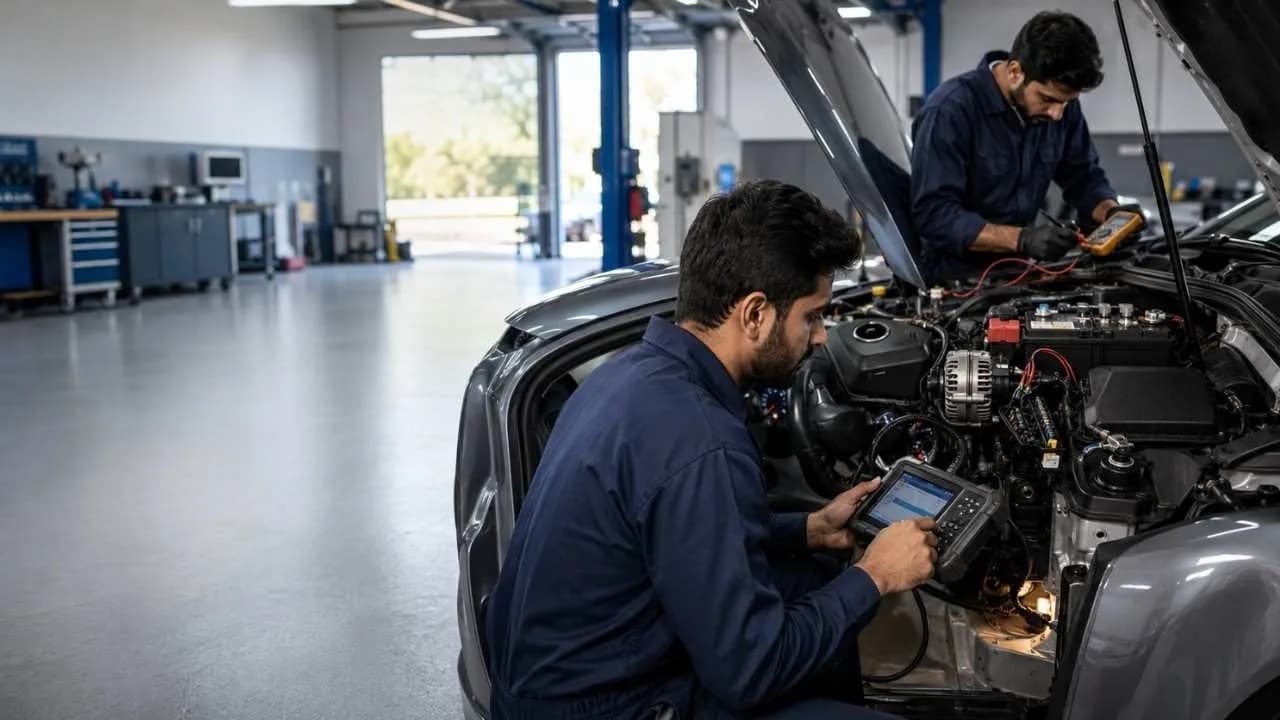
If you've ever turned your car key only to hear a clicking sound or noticed your headlights getting dim while driving, there's a good chance your vehicle needs Auto Electrical Repair. These problems may seem small at first, but they often point to deeper issues inside your car's electrical system.
Modern vehicles rely on far more than just the engine. Everything from starting the car to charging your phone, powering the headlights, running safety sensors, and even controlling the fuel system depends on electricity. A single faulty wire, weak battery, or failing alternator can affect your vehicle's performance in unexpected ways.
In many cases, drivers assume the battery is always the problem. From experience, that's one of the most common mistakes people make. Sometimes the real issue is a worn-out starter motor, damaged wiring, a faulty alternator, or even the vehicle's onboard computer. Replacing the wrong part not only wastes money but also leaves the original problem unsolved.
Take a common example shared by many car owners on automotive forums and Quora. A driver replaced the battery twice because the car wouldn't start every morning. After a proper diagnostic test, the real culprit turned out to be a failing alternator that wasn't charging the battery at all. A simple inspection by an experienced technician could have saved both time and money.
Understanding how your vehicle's electrical system works helps you spot warning signs early. It also makes it easier to decide whether a quick fix is enough or if professional Automotive Electrical Repair is the safer option.
In this guide, you'll learn how your car's electrical system works, the most common electrical problems, how professionals diagnose faults, the repair services available, estimated repair costs in Pakistan, practical maintenance tips, and how to choose a reliable repair shop when searching for auto electrical repair near me.
Whether you own a small hatchback, a family SUV, or a commercial vehicle, this guide will help you make informed decisions and avoid expensive breakdowns.
What Is Auto Electrical Repair?
Most people think a car's electrical system is only about the battery. In reality, it is a connected network that powers nearly every important function in your vehicle. Auto Electrical Repair focuses on finding and fixing faults in this system so your car runs safely and reliably.
Unlike mechanical repairs, which deal with parts like the engine or suspension, electrical repairs involve diagnosing issues with power flow, wiring, sensors, and electronic control units. As modern vehicles become more advanced, electrical systems have also become more complex, making professional diagnosis more important than ever.
Understanding Automotive Electrical Repair
Automotive Electrical Repair covers every component that produces, stores, distributes, or controls electricity inside a vehicle. These components work together, so a fault in one area can create problems elsewhere.
Common electrical repair services include:
Battery testing and replacement
Alternator testing and replacement
Starter motor repair
Electrical wiring and fuse replacement
Lighting system repairs
Power window and central locking repairs
Computer diagnostics and reprogramming
Sensor and ECU troubleshooting
For example, if your battery repeatedly goes flat, replacing it may not solve the problem. A weak alternator or damaged charging cable could be preventing the battery from charging properly.
What Does an Auto Electrician Do?
An Auto Electrician specializes in diagnosing and repairing vehicle electrical systems. Instead of replacing parts based on guesswork, they use professional diagnostic equipment to identify the exact cause of a problem.
Their work typically includes:
Inspecting batteries and charging systems
Testing alternators and starter motors
Repairing damaged wiring
Replacing blown fuses and relays
Diagnosing dashboard warning lights
Programming electronic control modules
Fixing electrical faults in modern vehicles
One common mistake people make is visiting multiple workshops for the same issue without getting a proper diagnostic scan. This often leads to unnecessary part replacements and higher repair costs.
Why Modern Cars Need Professional Electrical Diagnostics
Today's vehicles contain dozens of electronic modules that communicate with each other. Features such as ABS, airbags, electronic steering, parking sensors, cruise control, climate control, and infotainment systems all rely on the electrical network.
If one sensor or module fails, it can trigger warning lights or affect other systems that appear unrelated.
Professional workshops use advanced diagnostic scanners to:
Read fault codes
Check live sensor data
Test charging voltage
Identify communication errors
Locate hidden electrical faults
Reset or reprogram vehicle computers after repairs
This approach saves time and helps avoid replacing parts that are still working correctly.
Mechanical Repair vs Electrical Auto Repair
Feature | Mechanical Repair | Electrical Auto Repair |
|---|---|---|
Main Focus | Engine, brakes, suspension | Battery, wiring, alternator, starter, electronics |
Common Tools | Wrenches and mechanical tools | Multimeter, scan tool, oscilloscope |
Diagnosis | Physical inspection | Electronic testing and computer diagnostics |
Typical Problems | Oil leaks, worn brakes | Battery drain, wiring faults, warning lights |
Technician | Mechanic | Auto Electrician |
Understanding this difference helps you choose the right specialist when electrical problems appear. If your car struggles to start, lights flicker, or electronic features stop working, an experienced Auto Electrician is usually the best professional to diagnose and repair the issue.
Understanding Your Car's Electrical System
Your vehicle's electrical system is like the nervous system of the human body. Every major component communicates and works together to keep the car running smoothly. If one part fails, it can affect several others, making the problem difficult to identify without proper testing.
Many drivers replace parts based on assumptions. From experience, this often leads to unnecessary expenses. Understanding the main components of your car's electrical system can help you recognize problems early and explain symptoms more clearly to a technician.
Battery: The Heart of the Electrical System
The battery stores electrical energy and provides the power needed to start the engine. It also supplies electricity when the engine is off and supports electrical accessories during startup.
A healthy battery typically lasts between three and six years, depending on climate, driving habits, and maintenance.
Common signs of a weak battery include:
Slow engine cranking
Clicking sound when starting
Dim headlights
Dashboard battery warning light
Frequent jump-starts
Corroded battery terminals
One common mistake people make is replacing the battery without checking whether it is actually charging properly. Sometimes the battery is healthy, but another component is causing the problem.
Alternator: The Vehicle's Charging System
Once the engine starts, the alternator takes over. Its job is to recharge the battery and provide electricity to every electrical component while the engine is running.
If the alternator fails, the battery slowly loses charge until the vehicle eventually stops running.
Common symptoms of a failing alternator include:
Battery warning light stays on
Headlights become dim while driving
Electrical accessories lose power
Burning smell from the engine bay
Dead battery after short drives
Unusual whining noise
This is why Alternator Testing and Replacement is one of the most common services offered during professional Auto Electrical Repair.
Starter Motor: Getting the Engine Running
The starter motor is responsible for turning the engine when you start your vehicle. It receives power directly from the battery.
If the starter motor is faulty, the engine may not crank at all, even if the battery is fully charged.
Signs of starter motor problems include:
Single clicking sound
Grinding noise
Engine won't crank
Smoke near the starter
Intermittent starting issues
Professional Starter Motor Testing and Replacement helps determine whether the starter needs repair or complete replacement.
Electrical Wiring and Connectors
Every electrical component in your vehicle is connected through a network of wires and connectors. These cables carry power and data between different systems.
Over time, wiring can become damaged due to:
Heat
Moisture
Rodents
Corrosion
Accidents
Poor aftermarket installations
Damaged wiring may cause:
Random warning lights
Lights flickering
Power windows not working
Engine misfires
Sensors failing unexpectedly
Proper Electrical Wiring and Fuse Replacement restores safe electrical flow and prevents recurring issues.
Fuse Box and Relays
Fuses protect your vehicle from electrical overloads. If too much current flows through a circuit, the fuse blows before expensive components are damaged.
Relays act like electronic switches that control high-power systems such as:
Cooling fans
Fuel pumps
Headlights
Air conditioning compressors
Horns
If a fuse blows repeatedly, simply replacing it isn't enough. The underlying electrical fault must be diagnosed first.
ECU: The Vehicle's Brain
Modern vehicles rely on an Engine Control Unit (ECU) and several other electronic control modules. These computers monitor hundreds of sensors and adjust vehicle performance in real time.
They control systems such as:
Engine management
Fuel injection
Transmission
ABS braking
Airbags
Steering assistance
Climate control
Parking sensors
If the ECU detects a fault, it stores an error code and may illuminate the Check Engine Light or another dashboard warning.
This is where Computer Diagnostics and Reprogramming becomes essential. Professional scan tools can quickly identify fault codes, monitor live data, and determine whether a repair, software update, or module replacement is needed.
How These Components Work Together
Think of your car's electrical system as a team.
The battery provides the initial power.
The starter motor cranks the engine.
The alternator keeps the battery charged.
Wiring distributes electricity throughout the vehicle.
Fuses protect each electrical circuit.
The ECU manages and monitors all electronic systems.
When one component fails, it often affects the entire system. That's why experienced technicians test the complete electrical system instead of replacing parts based on guesswork.
A proper understanding of these components makes it easier to recognize warning signs early and reduces the risk of costly breakdowns.
Common Car Electrical Problems
Electrical faults can appear without warning. One day your car starts normally, and the next day it refuses to start or shows multiple warning lights. In many cases, these issues begin as small faults but become expensive repairs if ignored.
The good news is that most electrical problems have clear warning signs. Recognizing them early can save you time, money, and the inconvenience of being stranded on the road.
Dead or Weak Battery
A dead battery is one of the most common reasons drivers search for auto electrical repair near me. While batteries naturally wear out over time, they can also fail because of extreme weather, leaving lights on overnight, or charging system problems.
Common symptoms include:
Engine won't start
Slow engine cranking
Clicking sound when turning the key
Dim interior lights
Dashboard battery warning light
If your battery dies repeatedly, don't assume the battery itself is faulty. A professional inspection can determine whether the alternator or another component is causing the issue.
Quick Tip
Most car batteries last between 3 and 6 years. Having the battery tested once a year after the third year can help prevent unexpected breakdowns.
Faulty Alternator
The alternator keeps the battery charged while supplying power to your vehicle's electrical components. When it begins to fail, your battery drains even while driving.
Signs of a failing alternator include:
Battery warning light stays on
Flickering or dim headlights
Weak air conditioning blower
Electrical accessories stop working
Burning smell
Dead battery after a short drive
Many people replace the battery first, only to discover the real problem was the alternator. Proper Alternator Testing and Replacement can quickly identify the source of the fault.
Starter Motor Failure
The starter motor is responsible for turning the engine during startup. If it fails, your vehicle may not crank even if the battery is fully charged.
Common signs include:
Single clicking noise
Grinding sound
Engine doesn't crank
Smoke near the starter
Intermittent starting problems
Professional Starter Motor Testing and Replacement ensures the issue is correctly diagnosed before replacing expensive parts.
Blown Fuses
Fuses protect your vehicle's electrical circuits from damage caused by excessive current. When a fuse blows, the connected component stops working.
You may notice:
Power windows stop working
Radio won't turn on
Horn stops functioning
Interior lights fail
Wipers stop operating
One common mistake people make is replacing a blown fuse with a higher-rated one. This can damage wiring or electronic components and create a serious safety risk.
Damaged Electrical Wiring
Electrical wiring runs throughout the entire vehicle. Heat, moisture, corrosion, rodents, and poor aftermarket installations can all damage wiring over time.
Signs of wiring problems include:
Random electrical failures
Flickering lights
Burning smell
Dashboard warning lights
Engine misfires
Battery drain
Repairing damaged wiring often requires specialized equipment and experience. This is why professional Electrical Auto Repair is recommended for wiring faults.
Faulty Ignition Switch
The ignition switch sends power from the battery to different systems when you turn the key or press the start button.
If the switch becomes faulty, you may experience:
Vehicle won't start
Dashboard lights stay off
Engine stalls while driving
Accessories lose power
Key turns but nothing happens
Because ignition switch symptoms often resemble battery or starter issues, accurate diagnosis is essential.
Dashboard Warning Lights
Modern vehicles continuously monitor their electrical systems. When something goes wrong, the ECU stores an error code and displays a warning light.
Common warning lights include:
Battery warning light
Check Engine light
ABS warning light
Airbag warning light
Steering warning light
Ignoring these warnings can lead to larger repairs. A diagnostic scan helps identify the exact cause instead of relying on guesswork.
Battery Drain When the Car Is Parked
If your battery dies after the vehicle sits overnight or for a day or two, you may have a parasitic battery drain.
Common causes include:
Faulty relays
Interior lights staying on
Damaged wiring
Faulty alarm systems
Malfunctioning electronic modules
An experienced Auto Electrician can measure battery drain and locate the circuit responsible.
Computer or Sensor Failures
Modern vehicles rely heavily on sensors and electronic control modules. When one sensor fails, it can trigger multiple warning lights or affect engine performance.
Possible symptoms include:
Poor fuel economy
Rough idling
Engine hesitation
Transmission shifting problems
Multiple warning lights appearing together
This is where Computer Diagnostics and Reprogramming becomes invaluable, allowing technicians to identify the faulty sensor or module quickly.
Common Electrical Problems at a Glance
Problem | Common Symptoms | Recommended Solution |
|---|---|---|
Dead Battery | No start, clicking noise | Battery testing and replacement |
Faulty Alternator | Battery warning light, dim headlights | Alternator testing and replacement |
Bad Starter Motor | Engine won't crank | Starter motor testing and replacement |
Blown Fuse | Electrical accessories stop working | Fuse replacement |
Damaged Wiring | Flickering lights, battery drain | Wiring inspection and repair |
Faulty Ignition Switch | No power or intermittent starting | Ignition switch diagnosis |
ECU or Sensor Failure | Warning lights, poor performance | Computer diagnostics and reprogramming |
Knowing these common problems can help you react quickly when something feels wrong. In many cases, early diagnosis prevents minor electrical issues from turning into major repairs.
Signs You Need Auto Electrical Repair
Electrical problems rarely happen without warning. Your car usually gives small clues before a major failure occurs. The challenge is that many drivers ignore these signs until the vehicle refuses to start or breaks down on the road.
If you notice any of the following symptoms, it's a good idea to schedule Auto Electrical Repair before the issue becomes more expensive.
Your Car Is Hard to Start
A slow or difficult start is often the first sign of an electrical problem. While a weak battery is a common cause, the issue could also involve the alternator, starter motor, or wiring.
Watch for these signs:
Slow engine cranking
Multiple attempts before the engine starts
Clicking sound when turning the key
Complete no-start condition
One common mistake people make is replacing the battery immediately. A proper diagnostic test may reveal that another component is causing the problem.
Clicking or Grinding Noise During Startup
A clicking sound usually means the starter motor isn't receiving enough power. Grinding noises may indicate worn starter gears or internal damage.
Possible causes include:
Weak battery
Faulty starter motor
Loose battery terminals
Corroded cables
Damaged wiring
Ignoring these noises can eventually leave you stranded.
Battery Warning Light Appears
The battery warning light doesn't always mean the battery is bad.
In many cases, it indicates:
Alternator failure
Charging system issues
Loose battery connections
Faulty voltage regulator
Damaged charging cables
If this warning light stays on while driving, have the charging system checked as soon as possible.
Headlights Become Dim or Flicker
Healthy headlights should maintain consistent brightness.
If they dim while idling or flicker while driving, your vehicle may have:
A weak alternator
Poor battery condition
Loose wiring
Voltage fluctuations
Many drivers notice this problem at traffic signals when engine RPM drops.
Dashboard Lights Behave Abnormally
Your dashboard provides valuable information about your vehicle's condition.
Warning signs include:
Lights becoming unusually dim
Warning lights flashing randomly
Display screen restarting
Instrument cluster turning off unexpectedly
These symptoms often point to electrical faults rather than mechanical problems.
Electrical Accessories Stop Working
Modern vehicles rely on electricity for comfort and convenience features.
If any of these stop working unexpectedly, an electrical fault may be developing:
Power windows
Power locks
Air conditioning controls
Radio or infotainment system
USB charging ports
Windshield wipers
Power mirrors
When several accessories fail at the same time, the issue usually involves a fuse, relay, wiring, or the vehicle's electrical control system.
Burning Smell or Melted Plastic Odor
A burning smell coming from the dashboard or engine bay should never be ignored.
Possible causes include:
Overheated wiring
Short circuits
Electrical overload
Melting insulation
Faulty alternator
If you notice smoke or a strong burning odor, stop driving safely and have the vehicle inspected immediately.
Battery Keeps Going Flat
If your battery dies repeatedly, replacing it may not solve the problem.
Common hidden causes include:
Faulty alternator
Parasitic battery drain
Electrical short circuit
Defective relay
Interior lights staying on
An experienced Auto Electrician can perform a parasitic drain test to locate the source of the problem.
Frequent Blown Fuses
Replacing a blown fuse once is normal.
Replacing the same fuse repeatedly is not.
This usually indicates:
Damaged wiring
Short circuit
Faulty electrical component
Incorrect aftermarket installation
Simply installing a new fuse without fixing the root cause may lead to further electrical damage.
Check Engine Light Stays On
Although many people associate the Check Engine Light with engine problems, electrical faults can also trigger it.
Possible causes include:
Sensor failure
ECU communication errors
Charging system problems
Ignition system faults
Wiring issues
Professional computer diagnostics can identify the exact fault code within minutes.
When Should You Visit an Auto Electrician?
You should arrange professional Automotive Electrical Repair if you notice:
The car struggles to start
Lights flicker regularly
Battery dies repeatedly
Dashboard warning lights remain on
Burning smells from electrical components
Electrical accessories stop working
Multiple electrical issues appear together
Early diagnosis usually costs much less than repairing major electrical damage caused by ignoring these warning signs.
Quick Checklist
Warning Sign | Should You Get It Checked? |
|---|---|
Slow engine start | Yes |
Clicking noise | Yes |
Battery warning light | Yes |
Flickering headlights | Yes |
Burning smell | Immediately |
Dead battery every few days | Yes |
Blown fuse more than once | Yes |
Check Engine Light with electrical symptoms | Yes |
Paying attention to these early warning signs can help prevent unexpected breakdowns and reduce repair costs. If your vehicle shows any of these symptoms, don't wait until it stops running completely. A timely inspection by a qualified Auto Electrician can save both time and money.
Diagnosing Car Electrical Problems & Car Electrical Repairs
Finding the real cause of an electrical problem is often more difficult than fixing it. Many electrical faults produce similar symptoms, which is why professional diagnosis is the most important step in any Auto Electrical Repair process.
For example, a car that won't start could have a weak battery, a faulty starter motor, a failing alternator, damaged wiring, or even a software issue in the engine control module. Replacing parts without testing usually leads to wasted time and money.
Professional workshops use specialized equipment to identify the exact fault before recommending repairs.
Why Proper Diagnosis Matters
Electrical systems are connected. A fault in one component can affect several others.
Without accurate testing, technicians may replace:
A battery that is still healthy
An alternator that is working correctly
A starter motor that isn't the real problem
One common mistake people make is assuming the most obvious part has failed. From experience, many "dead battery" cases actually turn out to be charging system or wiring issues.
A proper diagnosis ensures that only the faulty component is repaired or replaced.
Step 1: Computer Diagnostics
Modern vehicles store fault codes whenever an electrical or electronic problem is detected.
Using an advanced diagnostic scanner, technicians can:
Read fault codes
Monitor live sensor data
Check charging voltage
Detect communication errors
Identify faulty modules
Reset warning lights after repairs
This process is known as Computer Diagnostics and Reprogramming, and it saves hours of manual troubleshooting.
Step 2: Battery Inspection and Testing
The battery is usually tested first because every electrical component depends on it.
Technicians inspect:
Battery voltage
Cold cranking amps (CCA)
Charging condition
Battery terminals
Cable connections
Signs of corrosion
Battery age
If the battery cannot hold a charge or fails a load test, Battery Testing and Replacement may be recommended.
Step 3: Alternator Testing
The alternator keeps the battery charged while supplying electricity to the vehicle.
During testing, technicians check:
Charging voltage
Output current
Voltage regulator performance
Drive belt condition
Charging efficiency under load
A weak alternator often causes:
Battery warning light
Flickering headlights
Dead battery
Electrical accessories losing power
If necessary, Alternator Testing and Replacement is performed to restore proper charging.
Step 4: Starter Motor Testing
When the engine doesn't crank properly, the starter motor becomes the next component to inspect.
Technicians evaluate:
Starter current draw
Voltage supply
Solenoid operation
Starter engagement
Internal motor condition
If testing confirms failure, Starter Motor Testing and Replacement may be required.
Step 5: Wiring and Fuse Inspection
Faulty wiring is one of the hardest electrical issues to diagnose because the damage is often hidden.
Technicians inspect:
Wiring harnesses
Battery cables
Ground connections
Electrical connectors
Fuse box
Relays
Special tools help locate:
Short circuits
Broken wires
Loose connections
Corroded terminals
Excessive resistance
Professional Electrical Wiring and Fuse Replacement restores reliable power throughout the vehicle.
Step 6: Sensor and ECU Evaluation
Modern cars contain dozens of sensors that continuously send information to the Engine Control Unit (ECU).
If one sensor provides incorrect data, the vehicle may experience:
Poor fuel economy
Engine hesitation
Transmission issues
Multiple warning lights
Reduced performance
The diagnostic scanner helps determine whether the sensor, wiring, or ECU itself is responsible.
In some cases, software updates or ECU reprogramming are needed after replacing certain components.
Step 7: Final System Verification
After repairs are completed, technicians perform a final inspection to confirm everything is working correctly.
This usually includes:
Clearing fault codes
Rechecking charging voltage
Starting the engine multiple times
Testing electrical accessories
Road testing the vehicle
Performing a final diagnostic scan
This final step helps ensure the original problem has been fully resolved.
Professional Diagnosis vs Guesswork
Professional Diagnosis | Guesswork Repairs |
|---|---|
Uses diagnostic scanners | Relies on assumptions |
Finds the exact fault | May replace the wrong part |
Saves time | Can take multiple repair attempts |
Prevents unnecessary costs | Often increases repair bills |
Checks the complete system | Focuses on one suspected component |
Why You Shouldn't Skip Diagnostics
Searching for auto electrical repair shops near me is only the first step. Choosing a workshop that performs complete diagnostics before replacing parts is far more important.
Experienced technicians understand that today's vehicles are controlled by sophisticated electronic systems. Instead of guessing, they use testing equipment to locate the exact problem, ensuring repairs are accurate, cost-effective, and long-lasting.
Investing in proper diagnostics today can help you avoid repeated breakdowns and unnecessary expenses in the future.
Auto Electrical Repair Services Explained
Every vehicle eventually needs electrical maintenance, whether it's replacing an aging battery or diagnosing a complex wiring fault. Professional Auto Electrical Repair services cover much more than simply changing parts. The goal is to identify the root cause of the problem and restore your vehicle's electrical system to proper working condition.
Below are the most common services offered by experienced auto electricians.
Battery Testing and Replacement
The battery supplies the power needed to start your vehicle and supports electrical components when the engine is off. Over time, every battery loses its ability to hold a charge.
During Battery Testing and Replacement, technicians check:
Battery voltage
Cold Cranking Amps (CCA)
Charging capacity
Terminal condition
Corrosion
Battery age
If the battery fails these tests, replacing it before complete failure can prevent unexpected breakdowns.
You may need a new battery if:
The engine cranks slowly.
The battery is more than four years old.
The battery warning light remains on.
Jump-starts become frequent.
Alternator Testing and Replacement
The alternator keeps the battery charged while supplying electricity to the entire vehicle.
A faulty alternator often causes problems that many drivers mistake for a bad battery.
Professional Alternator Testing and Replacement includes:
Charging voltage inspection
Output current testing
Drive belt inspection
Voltage regulator testing
Charging system diagnosis
Common symptoms include:
Dim headlights
Battery warning light
Dead battery
Weak electrical accessories
Burning smell
Replacing a failing alternator early helps prevent damage to the battery and other electrical components.
Starter Motor Testing and Replacement
The starter motor is responsible for cranking the engine during startup.
When technicians perform Starter Motor Testing and Replacement, they inspect:
Starter current draw
Solenoid operation
Internal motor condition
Voltage supply
Starter engagement
Signs your starter may be failing include:
Clicking when turning the key
Grinding noises
Engine not cranking
Intermittent starting
Replacing a worn starter before complete failure reduces the risk of being stranded.
Electrical Wiring and Fuse Replacement
Your vehicle contains hundreds of wires carrying electricity to different systems.
Damaged wiring may result from:
Heat
Moisture
Rodents
Corrosion
Poor-quality aftermarket accessories
Previous accident repairs
Professional Electrical Wiring and Fuse Replacement includes:
Wiring inspection
Short circuit detection
Connector repair
Fuse replacement
Relay replacement
Ground connection repair
Instead of replacing blown fuses repeatedly, technicians identify and repair the underlying electrical fault.
Computer Diagnostics and Reprogramming
Modern vehicles rely heavily on onboard computers to monitor and control engine performance, safety systems, and electronic features.
Using advanced diagnostic equipment, technicians can:
Read fault codes
Monitor live sensor data
Reset warning lights
Update ECU software
Reprogram replacement modules
Calibrate sensors after repairs
This process, known as Computer Diagnostics and Reprogramming, allows technicians to pinpoint problems quickly without unnecessary part replacements.
Which Service Do You Need?
Problem | Recommended Service |
|---|---|
Car won't start | Battery Testing or Starter Motor Testing |
Battery keeps dying | Alternator Testing and Replacement |
Lights flicker while driving | Alternator Inspection |
Electrical accessories stop working | Electrical Wiring and Fuse Replacement |
Dashboard warning lights | Computer Diagnostics and Reprogramming |
Random electrical faults | Complete Auto Electrical Inspection |
Choosing the right repair service starts with an accurate diagnosis. A qualified Auto Electrician will test the entire electrical system before recommending repairs, ensuring that only the faulty component is replaced. This approach saves money, prevents repeat problems, and keeps your vehicle running safely.
When to Have Your Auto Electrical System Serviced
Many drivers wait until their car refuses to start before looking for Auto Electrical Repair. Unfortunately, by that point, a small issue may have turned into a costly repair. Regular inspections can identify electrical faults early, helping you avoid unexpected breakdowns and expensive replacements.
From experience, electrical problems rarely appear overnight. Most vehicles show warning signs days or even weeks before a major failure occurs. Paying attention to these signs can save both time and money.
Have Your Electrical System Checked Every Year
Even if your car is running well, it's a good idea to have the electrical system inspected at least once a year. This is especially important for vehicles that are more than three years old or are driven daily.
A routine inspection usually includes:
Battery health check
Alternator output test
Starter motor inspection
Wiring condition
Fuse and relay check
Computer diagnostic scan
These tests help detect hidden issues before they become serious.
Replace the Battery Before It Fails
A car battery doesn't last forever. In most cases, it performs well for three to six years, depending on weather conditions, driving habits, and maintenance.
Consider replacing your battery if:
It is more than four years old.
The engine starts slowly.
The battery frequently needs a jump-start.
Battery test results show poor performance.
Replacing the battery before complete failure is often more convenient than waiting until your car won't start.
After Dashboard Warning Lights Appear
Dashboard warning lights are your vehicle's way of telling you something needs attention.
If any of these lights stay on, schedule an inspection as soon as possible:
Battery warning light
Check Engine Light
ABS warning light
Airbag warning light
Steering system warning light
Ignoring these warnings can lead to more expensive repairs later.
When the Car Is Difficult to Start
A vehicle that struggles to start should never be ignored.
Possible causes include:
Weak battery
Faulty starter motor
Failing alternator
Loose battery cables
Electrical wiring issues
Even if the car eventually starts, the underlying problem will usually get worse over time.
Lights Become Dim or Flicker
Headlights, dashboard lights, or interior lights that flicker while driving often indicate charging system problems.
This may be caused by:
A weak alternator
Poor battery condition
Loose electrical connections
Damaged wiring
A quick inspection can identify the cause before it affects other electrical systems.
Before a Long Road Trip
Planning a long journey? Having your vehicle inspected beforehand can help prevent unexpected breakdowns, especially in remote areas.
Before traveling, ask your technician to check:
Battery condition
Alternator charging system
Starter motor
Exterior and interior lights
Fuse box
Wiring connections
This simple step can provide peace of mind during your trip.
After Heavy Rain or Flooding
Water is one of the biggest enemies of a vehicle's electrical system. Floodwater or excessive moisture can damage wiring, connectors, sensors, and electronic modules.
After driving through deep water, watch for signs such as:
Warning lights appearing
Engine hesitation
Electrical accessories failing
Unusual dashboard behavior
If you notice any of these symptoms, have the electrical system inspected immediately.
When Electrical Accessories Stop Working
Modern vehicles rely on electricity for many convenience features. If several accessories stop working at the same time, it usually indicates an electrical fault rather than multiple component failures.
Common examples include:
Power windows
Central locking
Radio
Air conditioning controls
USB charging ports
Windshield wipers
A professional diagnostic test can quickly identify whether the issue involves a fuse, relay, wiring, or control module.
Service Schedule at a Glance
Situation | Recommended Action |
|---|---|
Battery older than 4 years | Test or replace the battery |
Annual vehicle maintenance | Complete electrical inspection |
Dashboard warning lights | Schedule diagnostics immediately |
Slow or difficult starting | Test battery, starter, and alternator |
Flickering headlights | Inspect charging system |
Before a long road trip | Perform a full electrical check |
After heavy rain or flooding | Inspect wiring and electronic components |
Electrical accessories stop working | Diagnose the electrical system |
Don't Wait for a Breakdown
One common mistake people make is delaying an inspection because the vehicle still starts and drives. However, electrical faults often become more serious over time. A weak alternator can damage the battery, a faulty wire can affect multiple systems, and a minor charging issue can eventually leave you stranded.
Scheduling regular Automotive Electrical Repair inspections helps keep your vehicle reliable, improves safety, and reduces the likelihood of unexpected repair bills.
DIY vs Professional Auto Electrical Repair
Many car owners try to fix electrical problems themselves to save money. While simple tasks like cleaning battery terminals or replacing a blown fuse can often be done safely, modern vehicles are far more complex than they were a decade ago. Today's cars rely on sensors, control modules, and advanced wiring systems that require specialized tools and knowledge.
From experience, one of the biggest mistakes people make is replacing parts based on online advice instead of confirming the actual fault. What seems like a bad battery could actually be a failing alternator, damaged wiring, or a software issue.
Understanding what you can safely do yourself and when to seek professional Auto Electrical Repair can save both time and money.
DIY Repairs You Can Safely Perform
Some basic maintenance tasks don't require advanced equipment and can help keep your vehicle in good condition.
These include:
Cleaning battery terminals
Tightening loose battery connections
Checking battery voltage with a multimeter
Replacing an accessible blown fuse with the correct rating
Inspecting visible wiring for damage
Replacing remote control batteries
These simple tasks can prevent minor issues from becoming larger problems.
Repairs Best Left to Professionals
Modern electrical systems are sensitive. Incorrect repairs can damage expensive components or create safety risks.
Professional Automotive Electrical Repair is recommended for:
Alternator replacement
Starter motor replacement
ECU programming
Computer diagnostics
Wiring harness repair
Electrical short circuit diagnosis
Airbag system repairs
ABS electrical faults
Sensor replacement and calibration
Certified technicians use diagnostic scanners and testing equipment that are not available to most vehicle owners.
Risks of DIY Electrical Repairs
Although online tutorials can be helpful, they cannot replace proper diagnostics.
Incorrect repairs may result in:
Damaged electronic modules
Blown fuses
Battery drain
Short circuits
Engine starting problems
Higher repair costs later
Safety hazards
A small mistake during electrical repairs can affect several systems at once.
DIY vs Professional Auto Electrical Repair
Feature | DIY Repair | Professional Repair |
|---|---|---|
Cost | Lower upfront cost | Higher initial cost |
Tools Required | Basic hand tools | Advanced diagnostic equipment |
Accuracy | Based on observation | Computer-assisted diagnosis |
Time Required | Can take longer | Faster and more accurate |
Warranty | Usually none | Often includes service warranty |
Suitable For | Simple maintenance | Complex electrical faults |
Risk Level | Higher | Lower |
Which Option Saves More Money?
Many people choose DIY repairs because they appear less expensive. However, replacing the wrong part often costs more than paying for a proper diagnosis.
For example:
A driver notices the battery warning light and replaces the battery. The warning light remains because the alternator was actually failing. The driver ends up paying for both a new battery and an alternator, even though the battery didn't need replacement.
A professional diagnostic test would have identified the alternator immediately, preventing unnecessary expense.
When Should You Call an Auto Electrician?
You should seek professional help if your vehicle shows any of these signs:
Battery keeps dying
Engine won't start
Dashboard warning lights remain on
Headlights flicker while driving
Burning smell from electrical components
Multiple electrical accessories stop working
Repeated blown fuses
Check Engine Light appears with electrical symptoms
Searching for auto electrical repair shops near me can help you find local service providers, but always choose a workshop that offers computerized diagnostics rather than relying on guesswork.
DIY or Professional? A Quick Decision Guide
Problem | DIY | Professional |
|---|---|---|
Clean battery terminals | ✅ | |
Replace key fob battery | ✅ | |
Replace a visible fuse with the correct rating | ✅ | |
Battery repeatedly goes flat | ✅ | |
Alternator failure | ✅ | |
Starter motor replacement | ✅ | |
Electrical wiring repair | ✅ | |
Computer diagnostics | ✅ | |
ECU programming | ✅ |
Final Recommendation
Basic maintenance is a great way to keep your vehicle in good condition, but modern electrical systems require precision. If you're unsure about the cause of an issue, it's always better to consult an experienced Auto Electrician.
A professional diagnosis may cost a little more upfront, but it often prevents unnecessary repairs, protects expensive electronic components, and gives you confidence that the problem has been fixed correctly.
Auto Electrical Repair Cost in Pakistan
One of the first questions drivers ask after discovering an electrical issue is, "How much will it cost?" The answer depends on the type of fault, your vehicle's make and model, the quality of replacement parts, and the workshop you choose.
Simple repairs like replacing a fuse may cost only a few hundred rupees, while repairing a damaged wiring harness or replacing an ECU can cost significantly more. That's why a proper diagnosis is important before any repair work begins.
Factors That Affect Repair Costs
Several factors influence the total cost of Auto Electrical Repair.
These include:
Vehicle make and model
Availability of genuine spare parts
Type of electrical fault
Labor charges
Diagnostic scan fees
Workshop location
Warranty on parts and labor
Luxury vehicles and newer models usually have more advanced electrical systems, making repairs more expensive than those for older vehicles.
Estimated Auto Electrical Repair Costs in Pakistan
The following table provides average market estimates. Actual prices may vary depending on your city, vehicle, and workshop.
Service | Estimated Cost (PKR) |
|---|---|
Computer Diagnostic Scan | 2,000 – 5,000 |
Battery Testing | 500 – 1,500 |
Battery Replacement | 18,000 – 45,000+ |
Alternator Repair | 5,000 – 12,000 |
Alternator Replacement | 18,000 – 60,000+ |
Starter Motor Repair | 4,000 – 10,000 |
Starter Motor Replacement | 15,000 – 45,000+ |
Fuse Replacement | 300 – 1,500 |
Wiring Repair | 2,500 – 15,000 |
ECU Programming | 5,000 – 20,000+ |
These estimates are intended as a general guide and may differ depending on the vehicle and parts used.
Estimated Costs in International Markets
If you're comparing prices globally, labor charges are usually much higher outside Pakistan.
Service | Average International Cost |
|---|---|
Diagnostic Scan | $60 – $150 |
Battery Replacement | $100 – $350 |
Alternator Replacement | $350 – $900 |
Starter Motor Replacement | $300 – $800 |
Wiring Repair | $150 – $1,000+ |
ECU Programming | $100 – $500 |
Although labor costs are lower in Pakistan, using quality parts and experienced technicians remains essential for long-term reliability.
Genuine Parts vs Cheap Alternatives
Choosing the cheapest replacement part isn't always the best decision.
Genuine Parts
Advantages
Better reliability
Manufacturer specifications
Longer lifespan
Warranty support
Disadvantages
Higher initial cost
Aftermarket Parts
Advantages
Lower purchase price
Easily available
Disadvantages
Quality varies
Shorter lifespan in some cases
Limited warranty
From experience, investing in a reliable battery or alternator often saves money over time because it reduces the chances of repeat failures.
Is It Worth Paying for a Diagnostic Scan?
Some drivers try to avoid diagnostic fees, thinking they can save money by replacing the suspected part directly.
In reality, a diagnostic scan often reduces the total repair cost.
For example:
A vehicle owner notices that the battery warning light stays on. Instead of getting the car tested, they replace the battery. The problem continues because the alternator is actually faulty. The result is paying for a battery that wasn't needed, plus the cost of repairing the alternator.
A professional diagnostic test could have identified the issue in just a few minutes.
Tips to Reduce Electrical Repair Costs
You can lower long-term maintenance expenses by following a few simple practices:
Replace the battery before it completely fails.
Don't ignore dashboard warning lights.
Have the charging system tested annually.
Use genuine or high-quality replacement parts.
Fix small wiring problems before they spread.
Avoid poor-quality aftermarket electrical accessories.
Schedule regular inspections with a qualified Auto Electrician.
Repair Now or Wait?
Situation | Recommended Action |
|---|---|
Weak battery | Replace soon |
Flickering headlights | Inspect immediately |
Battery warning light | Get a diagnostic scan |
Burning smell | Stop driving and seek repair |
Repeated blown fuses | Diagnose the electrical system |
Check Engine Light with electrical symptoms | Professional inspection required |
The Bottom Line
The cost of Auto Electrical Repair depends on the fault, but delaying repairs usually makes the problem more expensive. Spending a small amount on early diagnostics can help prevent major failures, reduce repair bills, and improve your vehicle's safety and reliability.
Choosing a trusted repair shop that uses proper diagnostic equipment is often the smartest investment you can make.
How to Choose the Best Auto Electrical Repair Shop Near You
Finding a repair shop is easy. Finding one that accurately diagnoses and fixes your vehicle the first time is much harder. When people search for auto electrical repair near me, they often choose the closest workshop without checking its experience, equipment, or customer reviews.
From experience, the quality of the technician matters just as much as the quality of the replacement parts. An experienced Auto Electrician can identify the real problem quickly, while an inexperienced one may replace several parts before finding the actual fault.
What to Look for in an Auto Electrical Repair Shop
Before handing over your vehicle, consider these important factors.
Experienced Auto Electricians
Choose a workshop with technicians who specialize in vehicle electrical systems rather than general mechanical repairs.
Ask questions such as:
How long have they been repairing electrical systems?
Do they work on your vehicle's make and model?
Can they explain the diagnosis clearly?
Experience often leads to faster and more accurate repairs.
Advanced Diagnostic Equipment
Modern vehicles require computerized diagnostics.
A professional workshop should have:
OBD diagnostic scanners
Battery testers
Charging system analyzers
Multimeters
Electrical circuit testing equipment
Workshops that rely only on trial and error may increase both repair time and costs.
Genuine or High-Quality Replacement Parts
Ask what type of parts the workshop uses.
A reliable repair shop should offer:
Genuine parts where available
Trusted aftermarket brands
Warranty on replacement parts
Warranty on labor
Using low-quality electrical components can lead to repeated failures.
Transparent Pricing
A trustworthy workshop should provide:
Clear estimates
Diagnostic charges explained in advance
Breakdown of parts and labor costs
No hidden fees
If a repair shop refuses to explain the problem or provide a cost estimate, consider looking elsewhere.
Customer Reviews Matter
Online reviews often reveal how a workshop treats its customers.
Look for feedback about:
Accurate diagnosis
Honest pricing
Repair quality
Customer service
Warranty support
Delivery time
While no business has perfect reviews, consistent positive feedback is usually a good sign.
Searching for Auto Electrical Repair Near You
People use different search terms depending on their location and preference.
Some of the most common searches include:
auto electrical repair near me
auto electrical repair shops near me
auto electric repair near me
electrical auto repair
These searches help users find local businesses that specialize in diagnosing and repairing vehicle electrical systems.
Understanding Business Name Searches
Sometimes people search for specific repair businesses rather than general services.
Examples include:
A Auto Electrical & Repair
A 1 Auto Repair & Electric
Don's Auto Electric & Repair
A Auto Electrical & Repair Cincinnati OH
A Auto Electrical and Repair Finneytown
These are examples of location-specific business searches. If you're in Pakistan or another country, focus on finding reputable local workshops with experienced technicians, modern diagnostic tools, and positive customer reviews rather than choosing a shop based solely on its name.
Competitor Comparison
Different repair providers offer different levels of expertise. The comparison below can help you decide which option best suits your needs.
Feature | Local Mechanic | Auto Electrician | Authorized Dealership |
|---|---|---|---|
Battery Replacement | ✅ | ✅ | ✅ |
Alternator Repair | ✅ | ✅ | ✅ |
Computer Diagnostics | Limited | ✅ | ✅ |
ECU Programming | Rare | ✅ | ✅ |
Advanced Wiring Repair | Limited | ✅ | ✅ |
Latest Diagnostic Equipment | Sometimes | ✅ | ✅ |
Genuine Parts Availability | Varies | Varies | ✅ |
Cost | Low | Moderate | Highest |
Best For | Basic repairs | Electrical faults | Manufacturer-specific repairs |
Questions to Ask Before Choosing a Workshop
Before approving any repair, ask:
What caused the electrical fault?
Will you perform a complete diagnostic scan?
Are genuine or aftermarket parts being used?
Is there a warranty on parts and labor?
How long will the repair take?
Can I receive a written estimate before work begins?
A reputable workshop should answer these questions confidently and honestly.
Final Advice
Choosing the right repair shop is just as important as fixing the problem itself. A qualified Auto Electrician with modern diagnostic equipment can identify faults accurately, prevent unnecessary part replacements, and ensure your vehicle remains safe and reliable.
Instead of choosing the first workshop you find, compare reviews, ask about their diagnostic process, and confirm they have experience with your specific vehicle model. A little research today can save you significant time and repair costs in the future.
Pros and Cons of Professional Auto Electrical Repair
Every vehicle owner wants repairs that are accurate, affordable, and long-lasting. While professional Auto Electrical Repair usually costs more than attempting a DIY fix, it often provides better value in the long run. Understanding both the advantages and limitations can help you make an informed decision.
From experience, the biggest expense is rarely the repair itself. It's paying to replace the wrong parts because the actual problem wasn't diagnosed correctly.
Pros of Professional Auto Electrical Repair
Accurate Diagnosis
Professional technicians use advanced diagnostic scanners and electrical testing equipment to identify the exact cause of the problem.
Instead of replacing parts based on guesswork, they confirm the fault before starting repairs.
Saves Time
Electrical issues can take hours or even days to diagnose without the right equipment.
An experienced Auto Electrician can usually identify the problem much faster, reducing vehicle downtime.
Prevents Costly Mistakes
Modern vehicles contain sensitive electronic systems.
Incorrect repairs can damage:
Engine Control Unit (ECU)
Sensors
Wiring harnesses
Battery
Alternator
Starter motor
Professional repairs reduce the risk of unnecessary damage.
Access to Specialized Equipment
Many electrical faults cannot be diagnosed using basic tools.
Professional workshops use:
OBD diagnostic scanners
Battery analyzers
Charging system testers
Digital multimeters
Oscilloscopes
ECU programming equipment
These tools improve both speed and accuracy.
Quality Parts and Warranty
Most reputable workshops provide warranties on both parts and labor.
This gives you added confidence that if the same issue returns within the warranty period, it can be resolved without additional repair costs.
Improved Vehicle Safety
Electrical faults can affect important safety systems, including:
Airbags
ABS brakes
Electronic steering
Headlights
Brake lights
Professional repairs help ensure these systems continue working correctly.
Cons of Professional Auto Electrical Repair
Higher Initial Cost
Professional diagnosis and skilled labor cost more than basic DIY repairs.
However, this expense often prevents much larger repair bills later.
Appointment May Be Required
Busy workshops sometimes require appointments, especially for complex electrical diagnostics.
This may not be convenient if you need immediate repairs.
Quality Can Vary Between Workshops
Not every repair shop has experienced technicians or modern equipment.
Choosing an inexperienced workshop can result in repeated repairs and unnecessary expenses.
Genuine Parts May Cost More
Original equipment parts generally offer better reliability but usually come with a higher price compared to cheaper aftermarket alternatives.
Pros and Cons Comparison Table
Pros | Cons |
|---|---|
Accurate fault diagnosis | Higher upfront repair cost |
Faster troubleshooting | Some workshops require appointments |
Prevents unnecessary part replacement | Repair quality varies by workshop |
Access to advanced diagnostic tools | Genuine parts can be more expensive |
Warranty on parts and labor | Luxury vehicle repairs cost more |
Better long-term reliability | Some repairs require ordering parts |
Improved vehicle safety | Complex repairs may take longer |
Is Professional Repair Worth the Cost?
In many cases, yes.
Consider this real-world example.
A driver notices the battery warning light and decides to replace the battery at home. A week later, the warning light returns because the alternator was actually failing. The owner ends up paying for a new battery, an alternator replacement, and additional labor.
If the vehicle had undergone professional Automotive Electrical Repair from the beginning, the technician would have identified the faulty alternator immediately, avoiding unnecessary expenses.
When DIY Is Enough
You can usually handle these basic tasks yourself:
Cleaning battery terminals
Tightening battery connections
Replacing a key fob battery
Replacing an accessible fuse with the correct rating
Checking battery voltage using a multimeter
For anything beyond these simple jobs, professional diagnosis is usually the safer option.
Final Verdict
Professional Auto Electrical Repair may require a larger upfront investment, but it often delivers better results through accurate diagnostics, quality repairs, and improved vehicle safety. While simple maintenance tasks can be done at home, complex electrical faults should always be handled by a qualified Auto Electrician using proper diagnostic equipment.
Choosing the right professional today can save you from repeated repairs, unnecessary part replacements, and costly breakdowns in the future.
Real Customer Experiences & Practical Examples
Reading about electrical problems is helpful, but real-life situations often make things easier to understand. Many drivers experience similar issues yet assume completely different causes. The examples below are inspired by common discussions shared by vehicle owners on automotive forums like Quora and based on situations mechanics encounter regularly.
These stories show why professional diagnosis is often more valuable than replacing parts based on guesswork.
Customer Experience 1: It Wasn't the Battery After All
The Problem
A car owner noticed that the vehicle struggled to start every morning. Thinking the battery had reached the end of its life, they replaced it.
For a few days, everything seemed normal.
Then the same problem returned.
The Diagnosis
A qualified Auto Electrician performed a charging system test and discovered that the alternator wasn't charging the new battery properly.
The Solution
After replacing the alternator, the starting problem disappeared completely.
Lesson Learned
Replacing the battery without testing the charging system can lead to unnecessary expenses.
Customer Experience : Flickering Headlights During Night Driving
The Problem
A driver noticed that the headlights became dim whenever the car stopped at traffic signals.
The battery was only one year old, so the owner assumed everything was fine.
The Diagnosis
A workshop performed Computer Diagnostics and Reprogramming along with charging system tests. The alternator output was below the manufacturer's specifications.
The Solution
After replacing the alternator, the headlights maintained consistent brightness, and the battery warning light disappeared.
Lesson Learned
Flickering lights usually indicate a charging problem rather than a faulty battery.
Customer Experience : The Car Wouldn't Start After Heavy Rain
The Problem
Following several days of heavy rain, the vehicle occasionally refused to start.
Sometimes it worked normally, while other times nothing happened when the key was turned.
The Diagnosis
Technicians found moisture inside a wiring connector near the engine bay, causing an intermittent electrical connection.
The Solution
The damaged connector was replaced, the wiring was cleaned, and the affected area was sealed to prevent future water intrusion.
Lesson Learned
Water damage can affect electrical connections even if the engine itself is in good condition.
Customer Experience: Replacing the Wrong Part
The Problem
A driver purchased a new starter motor after reading online that clicking sounds always indicate a faulty starter.
Unfortunately, the vehicle still wouldn't start.
The Diagnosis
A professional inspection revealed severely corroded battery terminals that prevented sufficient current from reaching the starter motor.
The Solution
Cleaning the battery terminals and replacing the damaged cables completely solved the issue.
Lesson Learned
The symptom isn't always the cause. Proper testing should always come before replacing parts.
Common Mistakes Car Owners Make
Many electrical repairs become more expensive because of avoidable mistakes.
The most common ones include:
Ignoring dashboard warning lights
Replacing parts without diagnostics
Installing low-quality electrical components
Using the wrong fuse rating
Delaying repairs after noticing warning signs
Choosing the cheapest repair shop without checking experience
Avoiding these mistakes can significantly reduce long-term maintenance costs.
Preventive Maintenance Tips
The best way to deal with electrical problems is to prevent them before they happen. While some component failures are unavoidable, regular maintenance can significantly reduce the risk of unexpected breakdowns and expensive repairs.
From experience, many major electrical faults begin as small issues that could have been detected during a routine inspection. Spending a little time on preventive maintenance today can save you from costly Auto Electrical Repair later.
Inspect Your Battery Regularly
Your battery is the foundation of your vehicle's electrical system. A quick inspection every few months can help you spot problems before they affect your daily driving.
Check for:
Corrosion on battery terminals
Loose cable connections
Cracked battery case
Low battery voltage
Swollen battery housing
If your battery is more than four years old, consider having it tested during your next service.
Keep Battery Terminals Clean
Corrosion on battery terminals can reduce electrical flow and create starting problems.
You can help prevent this by:
Cleaning terminals periodically
Tightening loose connections
Applying a battery terminal protectant after cleaning
Always disconnect the negative terminal first if you plan to clean the battery yourself.
Don't Ignore Dashboard Warning Lights
Dashboard warning lights are early indicators that something needs attention.
If you notice:
Battery warning light
Check Engine Light
ABS warning light
Airbag warning light
Arrange a diagnostic inspection as soon as possible. Addressing small faults early is usually much cheaper than repairing major electrical failures later.
Avoid Cheap Electrical Accessories
Low-quality accessories can overload your vehicle's electrical system.
Be cautious when installing:
LED lighting kits
Audio systems
Phone chargers
Dash cameras
GPS trackers
Additional lighting
Choose products from reputable brands and have them installed by qualified technicians to avoid wiring damage or blown fuses.
Test the Charging System Annually
Many drivers only discover alternator problems after the battery fails.
An annual charging system inspection can detect:
Weak alternator output
Charging voltage issues
Worn drive belts
Faulty voltage regulators
Regular testing helps ensure your battery remains properly charged throughout the year.
Protect Your Vehicle from Water Damage
Moisture is one of the most common causes of electrical faults.
To reduce the risk:
Avoid driving through deep floodwater.
Repair damaged weather seals.
Dry the engine bay after heavy flooding.
Have connectors inspected if the vehicle has been submerged.
Water entering electrical connectors can lead to corrosion and intermittent faults that are difficult to diagnose later.
Schedule Computer Diagnostics
Modern vehicles rely heavily on electronic control systems. Even when no warning lights are visible, periodic diagnostic scans can identify hidden faults before they become serious.
A routine diagnostic scan can detect:
Stored fault codes
Sensor issues
Charging system problems
Communication errors
Early electronic failures
This proactive approach often prevents unexpected repairs.
Follow Your Vehicle's Maintenance Schedule
Every manufacturer recommends service intervals for inspecting key electrical components.
Following these schedules helps ensure:
Battery performance remains reliable.
Wiring stays in good condition.
Electrical connections remain secure.
Charging systems operate efficiently.
Skipping scheduled maintenance may shorten the lifespan of important electrical components.
Preventive Maintenance Checklist
Use this simple checklist to keep your vehicle's electrical system in good condition.
Maintenance Task | Recommended Frequency |
|---|---|
Inspect battery terminals | Every 3 months |
Test battery health | Once a year |
Check charging system | Once a year |
Inspect wiring and connectors | During routine servicing |
Perform computer diagnostics | Annually or when warning lights appear |
Replace battery (if needed) | Every 3 to 6 years |
Inspect fuses and relays | During scheduled maintenance |
Small Steps, Big Savings
Preventive maintenance doesn't take much time, but it can make a big difference. Simple habits like checking your battery, paying attention to warning lights, and scheduling annual inspections can help you avoid unexpected breakdowns and reduce repair costs.
The goal isn't just to extend the life of your electrical system. It's also to improve safety, reliability, and peace of mind every time you get behind the wheel.
Final Thoughts
Modern vehicles are more advanced than ever, and their electrical systems play a vital role in keeping everything running smoothly. From starting the engine to powering safety features and onboard computers, every component depends on a healthy electrical system.
Ignoring early warning signs such as a slow engine start, flickering headlights, or dashboard warning lights may seem harmless at first, but these small issues can quickly turn into expensive repairs. Regular inspections and timely Auto Electrical Repair can help you avoid unexpected breakdowns and extend the life of your vehicle.
One of the biggest takeaways from this guide is that electrical problems should never be diagnosed through guesswork. A professional inspection can identify the exact cause, whether it's a weak battery, a failing alternator, damaged wiring, or an issue with the vehicle's electronic control system.
If you're searching for auto electrical repair near me or comparing auto electrical repair shops near me, don't focus only on price. Choose a repair shop with experienced technicians, modern diagnostic equipment, transparent pricing, and positive customer reviews. A quality repair today can save you from much larger expenses in the future.
Whether you drive a compact car, an SUV, or a commercial vehicle, keeping your electrical system in good condition improves reliability, enhances safety, and gives you confidence every time you start the engine.
Professional Auto Electrical Repair?
If your vehicle is showing signs of electrical trouble, don't wait until you're stranded on the roadside. Early diagnosis is almost always less expensive than repairing major electrical failures.
Before choosing a repair shop, make sure to:
Look for experienced Auto Electricians.
Ask if they perform computerized diagnostics.
Request a clear estimate before repairs begin.
Check customer reviews and service warranties.
Choose genuine or high-quality replacement parts whenever possible.
Taking these simple steps can help you receive accurate repairs, avoid unnecessary costs, and keep your vehicle running safely for years to come.
If you're unsure what's causing the problem, schedule a professional electrical inspection as soon as possible. A timely diagnosis today could save you hundreds or even thousands in future repair costs.
Frequently Asked Questions (FAQs)
1. How much does it cost to fix electrical in a car?
The cost of Auto Electrical Repair depends on the problem and your vehicle. In Pakistan, simple repairs like fuse replacement may cost a few hundred rupees, while alternator, starter motor, or wiring repairs can range from a few thousand to several tens of thousands of rupees. A professional diagnostic scan helps identify the exact issue before repairs begin.
2. How do you diagnose electrical problems in a car with a multimeter?
A multimeter is used to measure battery voltage, charging voltage, continuity, and electrical resistance. It helps detect weak batteries, faulty alternators, damaged wiring, and poor electrical connections. However, modern vehicles often require computer diagnostics in addition to multimeter testing for accurate fault detection.
3. What should you do if your car has electrical problems?
If your car shows signs of electrical trouble, such as warning lights, flickering headlights, or starting issues, avoid ignoring the problem. Check the battery terminals for loose connections, but if the issue continues, have the vehicle inspected by a qualified Auto Electrician using professional diagnostic equipment.
4. What is an auto electrician?
An Auto Electrician is a technician who specializes in diagnosing, repairing, and maintaining vehicle electrical systems. They work on batteries, alternators, starter motors, wiring, sensors, lighting systems, and electronic control modules using specialized diagnostic tools.
5. What are the top three skills of an auto electrician?
A skilled auto electrician should have:
Strong electrical troubleshooting skills
Experience using diagnostic scanners and testing equipment
Knowledge of vehicle wiring, electronic systems, and computer-controlled components
These skills help identify faults quickly and perform reliable repairs.
6. What is the difference between a mechanic and an auto electrician?
A mechanic mainly repairs mechanical components such as engines, brakes, suspension, and transmissions. An Auto Electrician specializes in electrical and electronic systems, including batteries, alternators, starter motors, wiring, sensors, and vehicle computers.
7. What do you call an auto electrician?
An auto electrician is also known as an automotive electrician or automotive electrical technician. Their primary role is to diagnose and repair electrical and electronic systems in cars, SUVs, trucks, and other vehicles.
[Source: gats auto repair]
Topics in this story
Article Details
Category: Car
Published:
Updated:
Author: Urooj
More Stories