Budget 2026-27: Telecom Sector Pushes for Tax Relief as Digital Costs Rise
Bold reality: Pakistan cannot build a faster digital economy while making internet access expensive for ordinary users.
Closing Thought
The telecom sector’s demand for tax relief in Budget 2026-27 is not just an industry issue. It directly affects students, freelancers, small businesses, online sellers, and families using mobile data every day. A balanced policy can protect government revenue while making connectivity more affordable and investment-friendly for Pakistan’s digital future.
Quick Facts Box
- Telecom operators have submitted tax relief proposals for FY2026-27.
- The sector wants lower withholding tax and reduced duties on fibre and 5G equipment.
- Reports say more than 30% of Pakistan’s population still lacks 4G coverage.
- Industry estimates link a 10% rise in broadband penetration with around 2% GDP per capita growth.
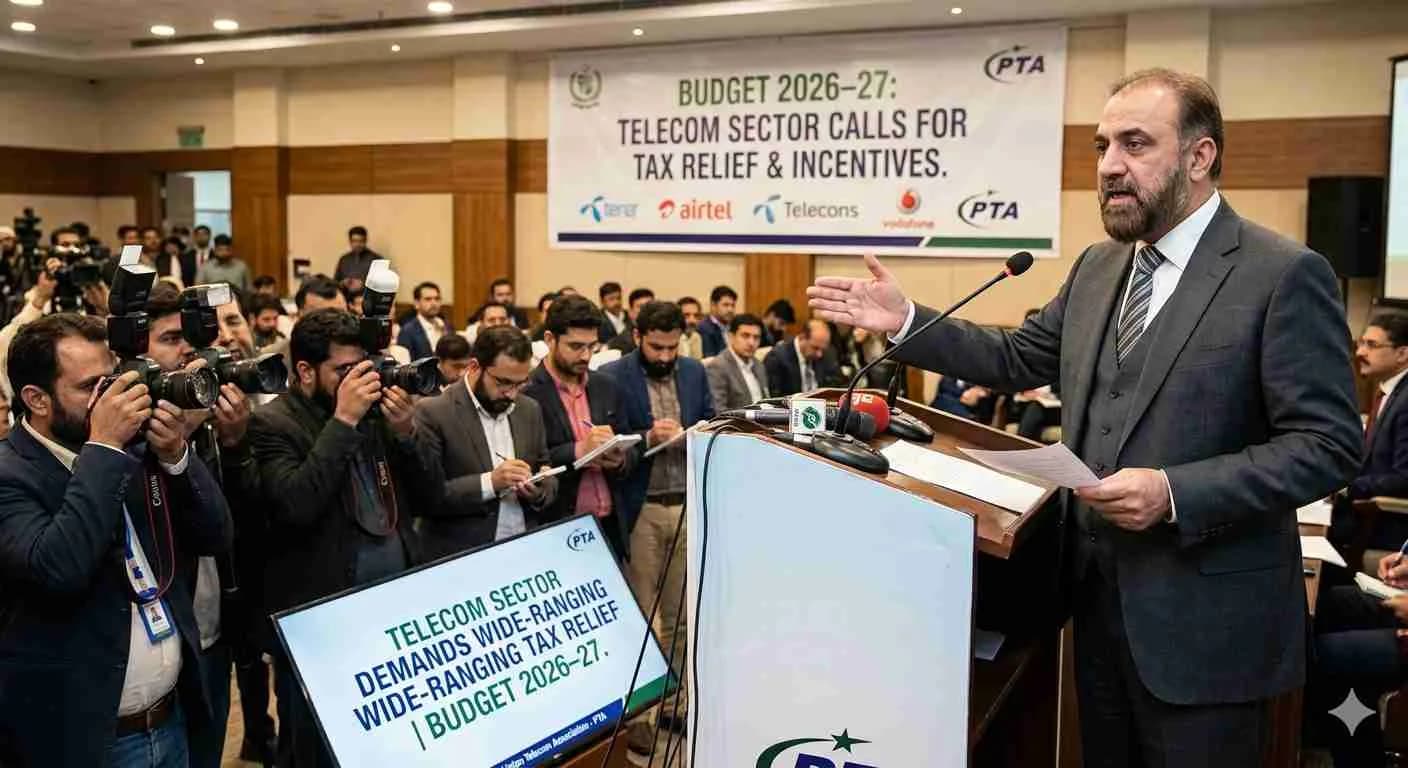
Pakistan’s telecom sector has asked the government for wide-ranging tax relief in the upcoming Budget 2026-27, arguing that high taxes, expensive imports, and rising operating costs are slowing digital expansion. The proposals have been submitted at a time when the country is preparing for 5G, wider fibre deployment, and greater demand for affordable internet.
According to recent reports, telecom operators are seeking cuts in withholding tax, advance income tax on mobile usage, duties on fibre optic cable, and customs duties on 5G-related equipment. The government is also reportedly considering major relief measures for broadband and telecom services to support digital connectivity.
Why Telecom Companies Want Relief Now
The industry says the current tax structure increases costs for both operators and consumers. This becomes more serious when mobile internet is no longer a luxury. It is used for banking, education, ride-hailing, delivery work, online stores, and freelance income.
From experience, a small tax increase on mobile usage feels minor on paper. But for a family with four smartphones, school groups, WhatsApp calls, and daily data use, it adds up quickly. It is like buying cooking oil every week and finding the price slightly higher each time. The monthly budget feels the pressure before anyone notices the exact reason.
Fibre and 5G Are at the Centre of the Debate
One of the biggest demands is a sharp cut in duties on fibre optic cable. Fibre is the backbone of fast internet. Without it, users may get 4G or 5G on paper, but weak backhaul can still cause slow speeds and unstable service.
Reports suggest the government is looking at reducing the heavy duty burden on fibre imports. Telecom players argue this step can help them connect more towers, expand broadband, and improve service quality in smaller cities and underserved areas.
What It Means for Consumers
If the relief is approved, users may not see an overnight price drop. However, better tax treatment can create room for improved packages, stronger coverage, and faster data services over time.
In many cases, people blame mobile companies for expensive bundles. That is only part of the picture. Taxes, spectrum payments, energy costs, imported equipment, and currency pressure also shape final prices.
Practical Advice for Mobile Users
Consumers should review their monthly usage before buying large bundles. Heavy video users need data-focused plans, while families that call across networks should compare off-net minutes. Small businesses should track internet spending like electricity bills because both now affect daily operations.
One common mistake people make is buying the biggest package without checking expiry, app limits, or fair usage rules. A cheaper package with the right mix can save more than a large bundle that expires unused.
Article Details
Category: Telecom
Published:
Updated:
Author: Muhammad Umer
More Stories