
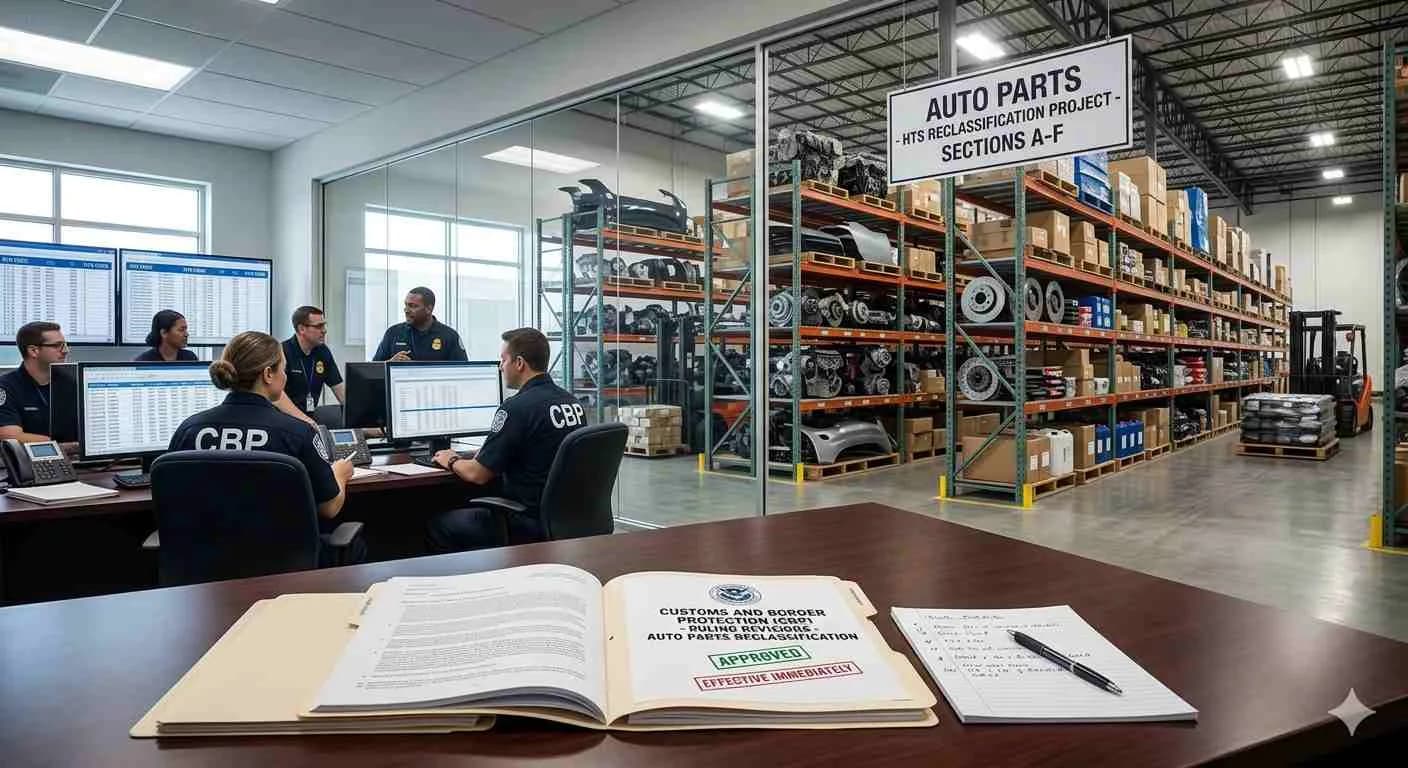
What if a simple label change in customs paperwork could shift costs across an entire global automotive supply chain? That is exactly the kind of ripple effect triggered after CBP revised rulings to reclassify certain auto parts under updated customs interpretations.
CBP Moves to Update Auto Parts Classification
The U.S. Customs and Border Protection (CBP) has revised several rulings that redefine how specific automotive components are classified under tariff schedules. These updates affect how importers categorize parts when they enter the United States.
In many cases, such reclassification decisions are not just administrative changes. They directly influence duty rates, compliance requirements, and supply chain strategies for manufacturers and suppliers worldwide.
Why Auto Parts Classification Matters More Than It Seems
At first glance, classification codes may look like technical paperwork. In reality, they determine how much companies pay in import duties and how efficiently goods move across borders.
From experience, one common mistake people make is assuming customs classification is fixed once assigned. However, agencies like CBP periodically update rulings based on product design changes, trade policies, and legal interpretations.
For consumers, these changes can eventually reflect in vehicle pricing and repair costs. It is similar to grocery supply chains. A small increase in transport cost for one ingredient can quietly affect the final price on the shelf.
Which Auto Parts Are Affected
The revised rulings focus on specific categories of automotive components that previously fell under broader classification groups. These may include electrical systems, mechanical assemblies, and modular vehicle parts.
| Category | Possible Impact |
|---|---|
| Electrical Components | Revised tariff classification rules |
| Mechanical Assemblies | Updated duty structure |
| Modular Auto Parts | Stricter import documentation |
| Replacement Components | Compliance reassessment required |
Global Supply Chains Under Pressure
Automotive manufacturers rely heavily on cross-border sourcing. Even a small change in classification rules can force companies to rethink supplier contracts and logistics planning.
Higher compliance requirements may also slow down clearance processes temporarily as importers adjust to new interpretations. This is particularly relevant for just-in-time manufacturing systems that depend on fast and predictable deliveries.
In many cases, companies respond by re-evaluating sourcing locations or redesigning parts to fit more favorable classification categories.
Industry Reaction and Compliance Adjustments
The automotive industry typically reacts quickly to such regulatory changes. Legal teams, customs brokers, and supply chain managers begin reassessing product classifications to avoid unexpected penalties or delays.
Businesses that fail to adapt risk higher import costs or shipment holds at border checkpoints. Over time, this can affect production timelines and inventory availability in key markets.
Closing Thought
CBP’s revised rulings on auto parts classification highlight how regulatory details can quietly reshape global trade dynamics. While the changes may seem technical, their influence reaches deep into manufacturing, pricing, and supply chain stability. As the automotive industry becomes more complex, compliance accuracy will remain a critical factor for global competitiveness.
Quick Facts Box
- CBP has revised rulings affecting auto parts classification
- Changes influence import duties and compliance rules
- Global supply chains may face short-term adjustments
- Automotive manufacturers must reassess documentation processes
Article Details
Category: Auto
Published:
Author: Muhammad Sheikh
More Stories