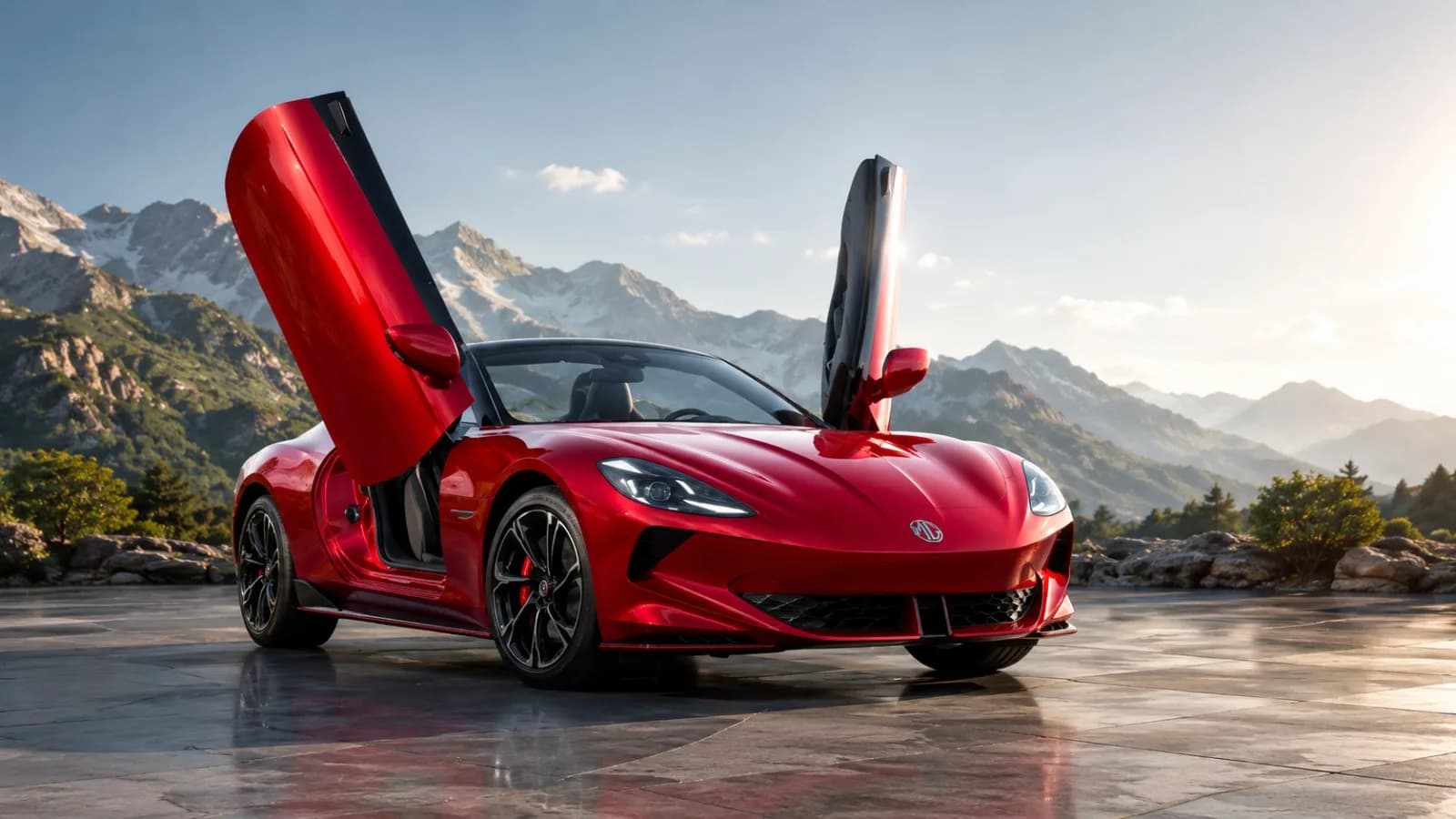
Chery and BYD Accelerate Chinese Carmakers’ Push Into Europe
European car buyers are changing fast. The real question now is simple: can traditional automakers keep up with the speed and pricing power of Chinese brands?
That question is becoming harder to ignore as Chery & BYD Europe Market Gains continue to reshape the region’s automotive industry. Chinese manufacturers are no longer entering Europe quietly. They are building dealer networks, launching hybrid and electric models, investing in local operations, and targeting price-sensitive consumers who are struggling with rising living costs.
For years, European brands dominated their home turf through engineering reputation and customer loyalty. But the market has shifted. Consumers now care just as much about software, battery range, affordability, and after-sales convenience.
In many cases, Chinese automakers are delivering all four.
Chinese Brands Are Moving Beyond Budget Labels
There was a time when Chinese vehicles were viewed as low-cost alternatives with questionable quality. That image is fading quickly.
BYD, officially known as :contentReference[oaicite:0]{index=0}, has emerged as one of the world’s largest electric vehicle companies. Meanwhile, :contentReference[oaicite:1]{index=1} has expanded aggressively across global markets through SUVs, hybrids, and strategic partnerships.
European consumers are beginning to see these companies differently. Competitive pricing still matters, but the bigger attraction now is value for money.
Modern infotainment systems, longer EV range, advanced driver-assistance technology, and stylish interiors are becoming standard features in Chinese models. Some European buyers are discovering that a lower-priced vehicle no longer means sacrificing comfort or technology.
From experience, this is where established brands often underestimate new competition. They assume loyalty alone will protect market share.
That rarely works for long in the auto industry.
Why Europe Has Become a Key Battleground
Europe is one of the most important automotive markets in the world. Winning here gives automakers credibility, scale, and global visibility.
At the same time, the region is under pressure to accelerate electric vehicle adoption. Governments continue pushing emissions targets, while fuel prices and urban restrictions are encouraging consumers to shift toward electrified transport.
Chinese manufacturers see an opportunity.
European buyers want affordable EVs, but many locally produced electric vehicles remain expensive. Entry-level EV pricing is still out of reach for large segments of middle-income households.
That gap is exactly where companies like BYD and Chery are positioning themselves.
For many families, buying a new EV today feels similar to shopping for groceries during inflation spikes. One common mistake people make is assuming car affordability depends only on monthly installments. In reality, energy costs, maintenance, insurance, and charging access all shape long-term ownership costs.
Chinese brands are trying to simplify that equation by offering feature-rich vehicles at lower prices.
Affordable Pricing Is Their Biggest Weapon
Price remains one of the strongest advantages for Chinese automakers entering Europe.
While premium European EVs often target higher-income buyers, Chinese manufacturers are aggressively competing in the mid-range and entry-level categories.
This strategy matters because economic uncertainty across Europe has changed buyer priorities. Consumers are becoming more cautious with large purchases.
Instead of paying extra for heritage branding, many buyers are focusing on practical value.
| Factor | Chinese Carmakers | Traditional European Brands |
|---|---|---|
| Pricing | More affordable EV options | Generally higher-priced models |
| Technology Features | Advanced digital systems standard | Often optional upgrades |
| Battery Focus | Strong vertical integration | Mixed supply dependence |
| Market Expansion Speed | Rapid dealership growth | More gradual adaptation |
BYD’s Battery Advantage Is Changing the Game
One major reason behind BYD’s rise is its control over battery production.
Unlike many automakers that rely heavily on third-party suppliers, BYD produces much of its battery technology internally. This gives the company stronger cost control and greater flexibility.
Battery supply chains have become one of the most important competitive advantages in the EV sector. Delays, shortages, and raw material volatility can significantly impact production.
BYD’s integrated model helps reduce those risks.
The company has also expanded beyond fully electric vehicles by pushing plug-in hybrid technology. That approach appeals to consumers who are interested in electrification but still worried about charging infrastructure.
In several European countries, hybrid demand remains strong because charging networks outside major cities are still developing.
Chery Is Taking a Broader Expansion Route
Chery’s strategy looks slightly different.
Rather than focusing only on premium EV positioning, the company is spreading across multiple vehicle categories. SUVs, family-focused crossovers, hybrids, and urban-friendly models are all part of its European push.
That wider product approach gives Chery flexibility in uncertain market conditions.
European consumers are not moving toward electrification at the same pace everywhere. Northern Europe has seen stronger EV adoption, while some Southern and Eastern European markets remain more price-sensitive.
Chery appears to understand that regional variation.
Instead of relying on one single vehicle type, it is building a portfolio that can adapt to different economic realities across Europe.
European Automakers Are Feeling the Pressure
Competition from Chinese manufacturers is already forcing responses from established brands.
Several European automakers are accelerating software development, cutting EV prices, and restructuring production plans.
Some are also reconsidering their heavy focus on premium electric vehicles.
The concern is straightforward. If affordable Chinese EVs continue gaining traction, traditional brands could lose market share among middle-income consumers.
This pressure extends beyond sales numbers.
Supply chains, battery sourcing, labor costs, and manufacturing efficiency are now under intense scrutiny across Europe’s automotive sector.
One challenge for European manufacturers is that legacy operations are expensive to transform. Existing factories, labor agreements, and older production systems make rapid change difficult.
Chinese companies entered the EV race later, but that allowed them to build around newer technology from the start.
Tariffs and Trade Tensions Could Increase
As Chinese brands gain momentum, trade tensions are becoming more visible.
European regulators are increasingly examining subsidies, supply chains, and import pricing linked to Chinese EV manufacturers.
There is ongoing debate about whether low-cost Chinese vehicles benefit from unfair competitive advantages.
Still, tariffs alone may not completely slow market momentum.
Consumers primarily respond to price, quality, and availability. If Chinese automakers continue improving those areas, demand could remain strong despite regulatory pressure.
In many cases, protectionist measures also create unintended consequences. Higher tariffs can raise vehicle prices for consumers already dealing with inflation and economic uncertainty.
Local Manufacturing Could Become the Next Big Move
One major trend to watch is local European production.
Chinese automakers are increasingly considering assembly plants and manufacturing partnerships inside Europe. Doing so could reduce tariff exposure while improving delivery times and local credibility.
It also helps address political concerns around imports.
BYD has already signaled interest in expanding production capabilities closer to European consumers. Other Chinese brands are exploring similar options.
This strategy mirrors how Japanese and Korean automakers expanded globally decades ago.
First came exports. Then dealerships. Then local factories.
History shows the automotive industry often evolves in cycles like this.
Technology Is Becoming the Real Competition
The biggest battle may not actually be about hardware anymore.
Software, connected services, smart dashboards, battery efficiency, and AI-assisted driving are becoming central to consumer decisions.
Chinese automakers have invested heavily in digital ecosystems, particularly younger brands targeting tech-focused drivers.
Many European companies still hold strong engineering advantages, especially in driving dynamics and safety perception. However, software adaptation has been slower in some cases.
That gap matters because modern car buyers increasingly expect smartphone-style experiences inside vehicles.
Fast updates, responsive interfaces, intelligent navigation, and connected features are no longer luxury extras. Consumers now expect them as standard.
What This Means for Pakistan and Emerging Markets
The European expansion of Chinese automakers could also influence markets like Pakistan.
As Chinese companies scale globally, production volumes increase and technology costs gradually decline. That can eventually improve affordability in developing markets.
Pakistan’s auto sector is already seeing growing Chinese involvement through partnerships, assembly operations, and EV discussions.
If brands like BYD and Chery continue succeeding internationally, confidence in Chinese automotive technology could strengthen further across South Asia and the Middle East.
Consumers in emerging economies often prioritize reliability, fuel efficiency, and ownership cost above luxury branding. Chinese manufacturers are positioning themselves strongly around those exact concerns.
Closing Thought
The rise of Chinese automakers in Europe is no longer a temporary market trend. It reflects a deeper shift in how the global auto industry operates. Companies like BYD and Chery are proving that affordability, battery innovation, and software-focused vehicles can challenge decades of established dominance. European manufacturers still hold enormous strengths in engineering, safety, and brand trust, but the competition is becoming far more intense. Over the next few years, the real winners will likely be consumers who gain access to better technology, wider choices, and more competitive pricing across the automotive market.
Quick Facts Box
- Chinese EV brands are rapidly expanding across European markets
- BYD’s battery integration strategy is lowering production costs
- Chery is targeting multiple vehicle segments including hybrids and SUVs
- European automakers face growing pricing and technology pressure
Article Details
Category: Auto
Published:
Updated:
Author: Muhammad Anus
More Stories