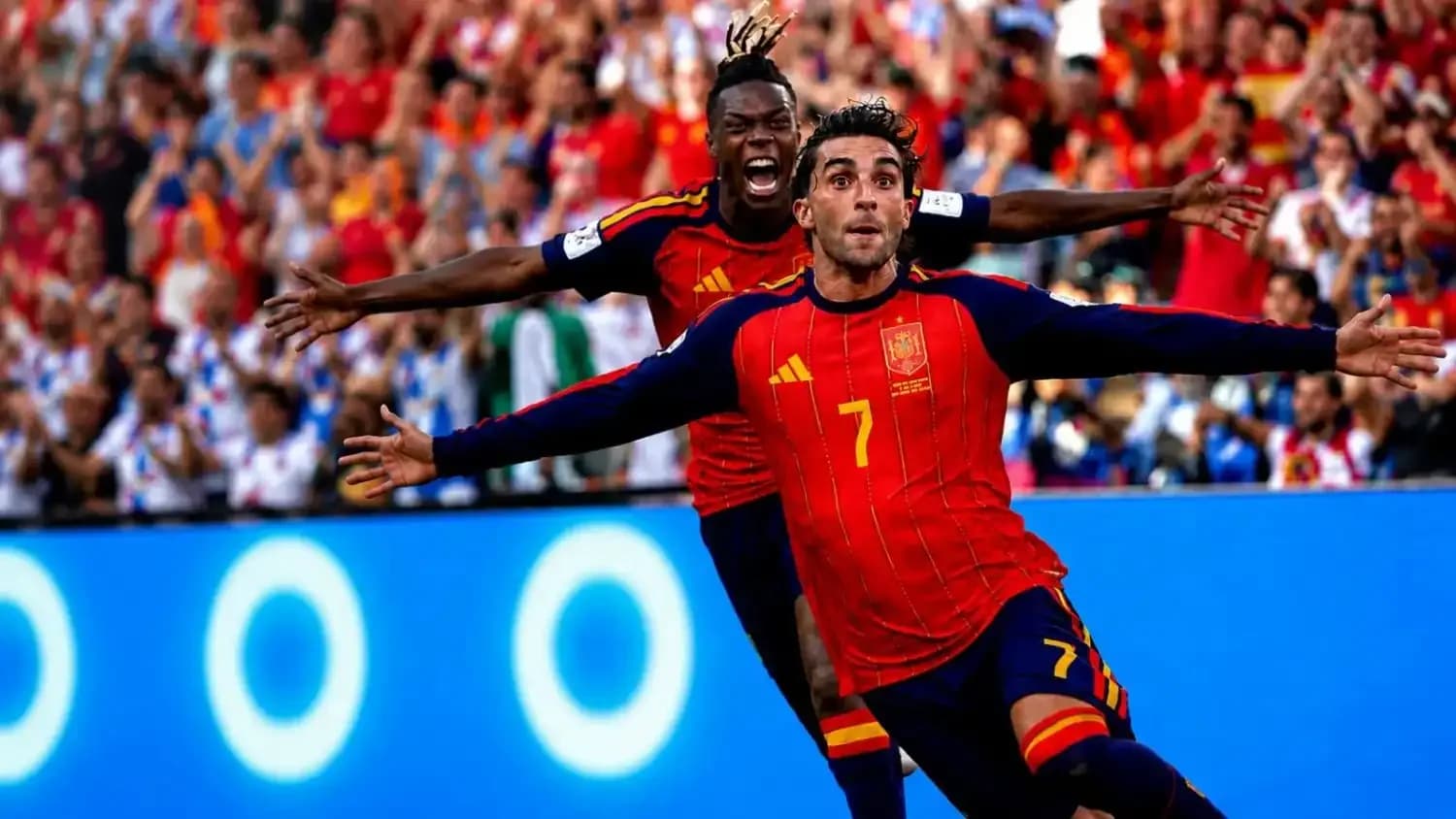
Spain defeated defending champion Argentina 1-0 after extra time to win the 2026 FIFA World Cup, with Ferran Torres scoring the winning goal in the 106th minute.
Spain controlled most of the final but struggled to beat Emiliano Martínez, who delivered an outstanding performance in goal at MetLife Stadium in East Rutherford, New Jersey.
Argentina faced an even bigger challenge after Enzo Fernández was sent off in second-half stoppage time for receiving a second yellow card. Spain used its one-player advantage in extra time, and Torres finally scored the goal that secured the country’s second men’s World Cup title.
Spain vs. Argentina World Cup Final Match Details
Match Detail | Information |
|---|---|
Competition | FIFA World Cup 2026 Final |
Date | July 19, 2026 |
Final Score | Spain 1-0 Argentina |
Score After 90 Minutes | 0-0 |
Score After Extra Time | Spain 1-0 Argentina |
Goal Scorer | Ferran Torres |
Goal Time | 106th minute |
Spain Total Attempts | 20 |
Argentina Total Attempts | 2 |
Emiliano Martínez Saves | 12 |
Red Card During Match | Enzo Fernández |
Post-Match Red Card | Leandro Paredes |
Referee | Slavko Vinčić |
Venue | MetLife Stadium, East Rutherford, New Jersey |
Champion | Spain |
FIFA selected Slovenian official Slavko Vinčić to referee the final. He became the first referee from Slovenia to take charge of a men’s World Cup final.
Ferran Torres Scores Spain’s Winning Goal in Extra Time
Spain spent more than 100 minutes trying to break through Argentina’s defensive formation before finally scoring.
Just seconds after the second period of extra time began, Pedro Porro sent a deep cross toward the far post. Nico Williams kept the ball in play by heading it back into Torres’ path.
Torres met the ball with a powerful left-footed shot that flew under the crossbar, finally beating Martínez and giving Spain a 1-0 lead in the 106th minute.
It was Torres’ most important goal of the tournament, coming on soccer’s biggest stage after Spain had controlled the game without being rewarded for its pressure.
Torres put the ball into the net again in the 114th minute after breaking free and beating Martínez. However, the goal was disallowed after semi-automated offside technology confirmed that Torres was narrowly offside.
The decision kept Spain’s lead at one goal and gave Argentina one final chance to force a penalty shootout.
Spain Controls the Final as Martínez Keeps Argentina Alive
The narrow final score did not show how much Spain controlled the match.
Spain kept possession, moved the ball patiently and repeatedly pinned Argentina near its own penalty area.
Key match statistics included:
Spain recorded 15 attempts during the first 90 minutes.
Argentina did not attempt a single shot during regulation time.
Spain earned nine corners, while Argentina had only one.
After 120 minutes, Spain had 20 attempts and Argentina had two.
Both Argentine attempts came late in extra time.
Martínez was the main reason Argentina remained level for more than 100 minutes. He stopped Spain with diving saves, close-range blocks and quick reactions throughout the match.
His 10th save came when he stopped Lamine Yamal’s free kick during stoppage time, helping send the match into extra time.
Martínez finished with 12 saves, the highest recorded total in a men’s World Cup final since detailed records began in 1966.
His performance kept Argentina in the game, but Spain continued attacking until Torres finally produced a finish he could not stop.
Enzo Fernández Red Card Changes the Match
Argentina was reduced to 10 players during second-half stoppage time when Enzo Fernández received his second yellow card.
Fernández had already been booked earlier in the match. His second yellow came after a late challenge on Spain defender Pau Cubarsí, who was knocked heavily to the ground.
Referee Vinčić showed Fernández a second yellow card, followed by a red card. Argentina therefore had to play the entire extra-time period with one fewer player.
Spain immediately increased the pressure, while Argentina moved into a more defensive formation.
Argentina coach Lionel Scaloni eventually replaced forward Julián Álvarez with defender Marcos Senesi as his team tried to keep the game scoreless and reach a penalty shootout.
Spain thought it had taken the lead in the 96th minute when Nico Williams put the ball into the net. However, the goal was disallowed because Mikel Merino was judged to have stepped on Nicolás Otamendi’s foot during the buildup.
The score remained 0-0, but Spain continued creating chances before Torres finally scored.
Argentina’s Late Attacks Fail to Produce an Equalizer
Argentina created very little during regulation time. Spain’s midfield and defense prevented Lionel Messi from receiving the ball in dangerous positions.
After falling behind, Argentina moved more players forward and finally began creating opportunities.
One of its few attempts came when Messi fired a powerful shot from outside the penalty area, but the ball struck Merino directly in the face.
Play was stopped for several minutes while the Spanish midfielder received medical treatment.
Argentina later created another dangerous moment when Giuliano Simeone sent a low ball across Spain’s penalty area, forcing Cubarsí to make an important defensive stop.
Messi then delivered a late corner that reached Simeone inside the area. However, the Argentine attacker leaned back and sent his shot over the crossbar.
It was Argentina’s final clear opportunity to tie the game.
Spain stayed calm during the closing minutes, cleared Argentina’s final passes and protected its lead until the final whistle.
Leandro Paredes Receives Red Card After Final Whistle
Tensions continued after the match ended as players from both teams became involved in a confrontation on the field.
Leandro Paredes received a red card after the final whistle following an incident involving Gavi and other Spanish players.
The Argentine midfielder pushed Gavi to the ground as the confrontation became more heated.
The incident did not change the result, but it added more controversy to the final moments of a tense and physical World Cup final.
Could This Be Lionel Messi’s Final World Cup Appearance?
The defeat may have marked Lionel Messi’s final appearance at a FIFA World Cup, although it should not be described as his confirmed final international match without an official announcement.
Messi struggled to influence the game because Spain controlled possession and prevented Argentina from building regular attacks.
His first meaningful attempt did not come until the closing stages of extra time.
Messi would be 43 years old when the 2030 World Cup takes place, making another appearance at the tournament uncertain.
However, his international future remains uncertain and ultimately depends on his decision. Any retirement report should remain unconfirmed until Messi or the Argentine Football Association makes an official announcement.
For that reason, the 2026 final is more accurately described as his possible World Cup farewell, rather than his final match for Argentina.
Spain Wins Its Second Men’s World Cup
Spain has now won the men’s FIFA World Cup twice, following its first victory in South Africa in 2010.
Both World Cup victories were secured with goals in extra time:
Andrés Iniesta scored the winning goal against the Netherlands in 2010.
Ferran Torres scored the winning goal against Argentina in 2026.
The result ended Argentina’s attempt to become the first country since Brazil to win two consecutive men’s World Cups.
Brazil remains the last country to achieve that record after winning the tournament in 1958 and 1962.
Spain also completed the 2026 tournament without losing a match and allowed only one goal during the entire competition.
Its defensive strength, patient passing and ability to control games provided the foundation for its title-winning campaign.
Following Spain’s victory in the 2023 Women’s World Cup, the country also became the first nation to hold the men’s and women’s FIFA World Cup titles at the same time.
Frequently Asked Questions
Who won the 2026 FIFA World Cup final?
Spain won the 2026 FIFA World Cup final, defeating defending champion Argentina 1-0 after extra time.
Who scored the winning goal for Spain against Argentina?
Ferran Torres scored the only goal of the final in the 106th minute after Nico Williams headed the ball into his path.
Why was Enzo Fernández sent off?
Enzo Fernández received a second yellow card for a late challenge on Pau Cubarsí during second-half stoppage time. Argentina played all of extra time with 10 players.
How many saves did Emiliano Martínez make in the final?
Martínez made 12 saves, the highest recorded total in a men’s World Cup final since detailed records began in 1966.
How many attempts did Spain and Argentina record?
Spain finished the match with 20 attempts, while Argentina recorded only two, both during the closing stages of extra time.
How many men’s FIFA World Cups has Spain won?
Spain has won the men’s FIFA World Cup twice, lifting the trophy in 2010 and 2026.
Was the 2026 World Cup final Lionel Messi’s last match?
It may have been Messi’s final World Cup appearance, but it has not been officially confirmed as his last international match for Argentina.
Final Thoughts
Spain’s patience was tested by an excellent performance from Martínez, but the team continued attacking and stayed committed to its game plan. Its control of possession and strong defensive organization kept Argentina under pressure for most of the final.
Torres delivered the decisive goal when Spain needed it most, sealing a deserved victory and making a new generation of Spanish players world champions.
Sources
Associated Press — Completed Spain vs. Argentina World Cup final report and match statistics, July 19, 2026.
The Guardian — World Cup final report and major post-match incidents, July 19, 2026.
The Guardian Live Coverage — Minute-by-minute coverage and late match opportunities, July 19, 2026.
El País — Spain vs. Argentina final coverage and decisive incidents, July 19–20, 2026.
FIFA — Official appointment of Slavko Vinčić as referee for the World Cup final.
Topics in this story
Article Details
Category: Fifa
Published:
Updated:
Author: Usama Haider
More Stories