Gold Prices in Pakistan Rise Amid Global Market Volatility
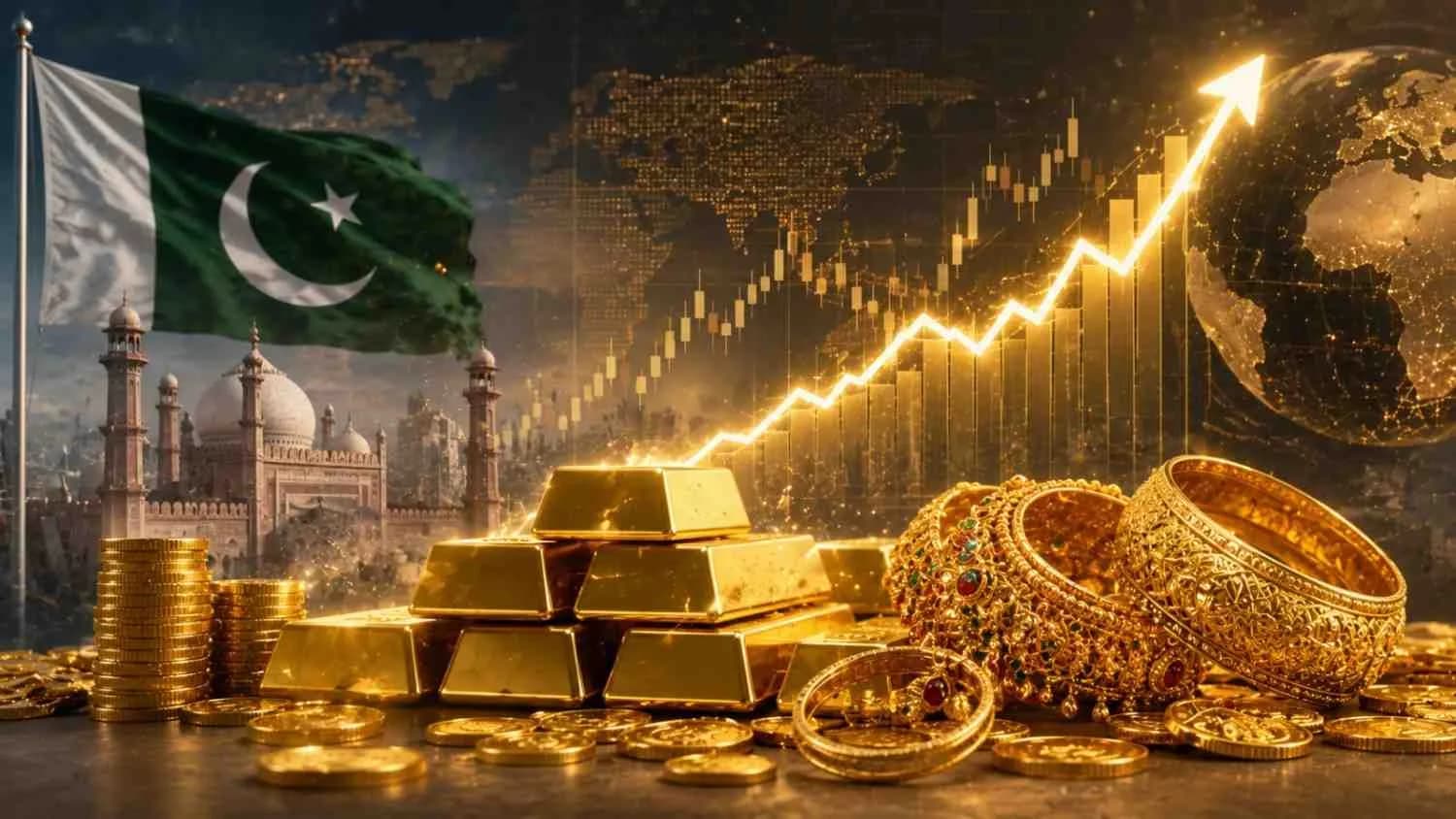
Gold Prices in Pakistan Rise Amid Global Market Volatility
Gold Prices in Pakistan Rise Amid Global Market Volatility
Gold prices in Pakistan continue to show a strong upward trend as global economic uncertainty, inflation pressure, and currency fluctuations reshape investor behavior. Across major cities like Karachi, Lahore, Islamabad, and Peshawar, both investors and consumers are closely tracking daily gold rate movements before making financial decisions.
In recent months, gold has once again proven why it is considered a “safe-haven asset.” Whenever global markets become unstable, investors shift capital away from riskier assets such as equities and move toward gold, pushing its demand and price higher.
From a local perspective, Pakistan’s gold market is highly sensitive to international trends. Even a minor shift in global bullion prices or USD exchange rate can immediately impact domestic rates, often within hours.
- Gold demand rises during global financial uncertainty
- Investors move away from volatile stock markets
- Wedding season increases physical gold demand in Pakistan
- Currency depreciation amplifies local price pressure
Introduction – Understanding the Market Reality for Investors
The rise in gold prices is not an isolated event but part of a broader global financial shift. Inflation concerns in major economies, unstable geopolitical conditions, and changing interest rate policies have all contributed to stronger gold demand worldwide.
Historically, gold has acted as a hedge against inflation. When the value of fiat currencies weakens, investors naturally turn to gold to preserve purchasing power. This behavior is currently visible across both developed and emerging markets.
In Pakistan, this impact is more pronounced due to dependency on imports and foreign exchange fluctuations. Since gold is priced internationally in US dollars, any movement in the dollar directly influences domestic pricing.
Why investors feel increasing pressure
- Rapid changes in daily gold rates create uncertainty
- Retail buyers struggle with budget planning
- Investors face timing challenges in volatile markets
- Long-term strategies become more important than short-term speculation
Global Market Volatility Driving Gold Prices
Global financial markets have been experiencing increased volatility due to inflation concerns, central bank policies, and geopolitical tensions. These factors collectively push investors toward safer assets like gold.
Gold’s global pricing mechanism makes it extremely sensitive to macroeconomic indicators. When uncertainty rises, demand for gold increases almost immediately, leading to price surges in both international and local markets.
- Inflation increases demand for safe-haven assets
- Interest rate cuts reduce returns on savings instruments
- Geopolitical conflicts increase investor risk aversion
- Global recession fears boost gold accumulation
Impact of US Federal Reserve policies
The US Federal Reserve plays a central role in global gold pricing. When interest rates are lowered, gold becomes more attractive because it does not yield interest but retains value. Conversely, higher rates can temporarily reduce demand. However, in uncertain times, gold often remains strong regardless of rate fluctuations.
Current Gold Price Trends in Pakistan
In Pakistan, gold prices are updated frequently in Sarafa markets depending on international signals. Cities such as Karachi and Lahore act as key hubs for bullion trading, influencing nationwide rates.
Retail jewelers usually adjust prices with slight delays compared to wholesale markets, but overall direction remains aligned with global trends. Daily fluctuations have become a normal part of the market structure.
- Multiple daily price updates in major cities
- Strong dependency on USD to PKR exchange rate
- Wholesale market sets direction for retail pricing
- Short-term volatility remains high
Market behavior pattern
Gold markets typically react quickly to international news. A sudden geopolitical event or inflation report can push prices up within hours, followed by minor corrections as markets stabilize.
Historical Context of Gold Prices in Pakistan
Over the past decade, gold prices in Pakistan have shown a consistent upward trajectory. While short-term corrections occur, the long-term trend reflects currency depreciation and global demand growth.
In earlier years, gold was primarily seen as a cultural asset used for weddings and savings. However, it has now evolved into a formal investment instrument for both retail and institutional investors.
Economic instability, inflation cycles, and periodic currency devaluations have reinforced gold’s importance in Pakistani households.
Key Factors Behind Rising Gold Prices
Several interconnected factors are currently driving gold prices upward globally and locally.
- Global inflation and economic slowdown concerns
- Weak US dollar performance against major currencies
- Central banks increasing gold reserves
- Ongoing geopolitical tensions in multiple regions
- Supply chain constraints in mining sectors
Inflation and purchasing power
Inflation reduces the real value of currency, making gold a preferred store of value. As inflation rises, investors seek protection from currency depreciation, leading to increased gold demand globally.
Impact on Pakistani Consumers
Rising gold prices have a direct impact on household spending, especially during wedding seasons where gold jewelry is considered essential in many cultural traditions.
Middle-income families are increasingly adjusting their purchasing behavior by reducing gold quantity or opting for lighter designs.
- Higher wedding budgets for families
- Shift toward lightweight jewelry designs
- Increased preference for gold savings schemes
- Delayed purchases due to price uncertainty
Investor Behavior in Volatile Markets
Investors respond differently to rising gold prices. Some see it as a buying opportunity, while others prefer waiting for corrections. However, timing the market consistently remains difficult.
Experienced investors often recommend gradual accumulation rather than lump-sum purchases, especially during volatile conditions.
Gold vs Other Investment Options
Gold continues to remain one of the most stable investment choices in Pakistan, especially when compared with other asset classes.
- Gold: Stable store of value with global demand
- Stocks: High return potential but highly volatile
- Real Estate: Long-term growth but low liquidity
- Bank Savings: Low risk but often below inflation rate
Gold’s biggest advantage is its liquidity and global acceptance, making it a preferred choice during crises.
Future Outlook for Gold Prices in Pakistan
The future outlook for gold remains cautiously positive. While short-term fluctuations are expected, long-term demand is likely to stay strong due to global economic uncertainty.
If inflation remains high and geopolitical tensions persist, gold prices may continue to rise gradually over the coming months.
However, any significant strengthening of the US dollar or aggressive interest rate hikes could temporarily slow down price growth.
Conclusion
Gold prices in Pakistan are expected to remain volatile in the short term, influenced by global economic conditions and currency fluctuations. Despite this volatility, gold continues to serve as a reliable long-term store of value.
For investors and consumers alike, a balanced approach is essential. Instead of waiting for perfect entry points, gradual and consistent purchasing often proves more effective in uncertain markets.
FAQs
Why are gold prices rising in Pakistan?
Due to global inflation, currency depreciation, and increased investor demand.
Is gold a safe investment in uncertain times?
Yes, gold is widely considered a safe-haven asset during economic instability.
How does USD affect gold prices?
Since gold is priced in USD globally, changes in exchange rates directly impact local prices.
Should I invest in gold now or wait?
In volatile markets, gradual investment is often safer than waiting for price dips.
Will gold prices fall in the future?
Short-term corrections are possible, but long-term trends depend on global economic conditions.
(Source: The Express Tribune)
Article Details
Category: Investment
Published: 3 June 2026
Time: 12:55 pm
Updated: 3 June 2026 at 1:49 pm
Author: Muhammad Anus
More Stories