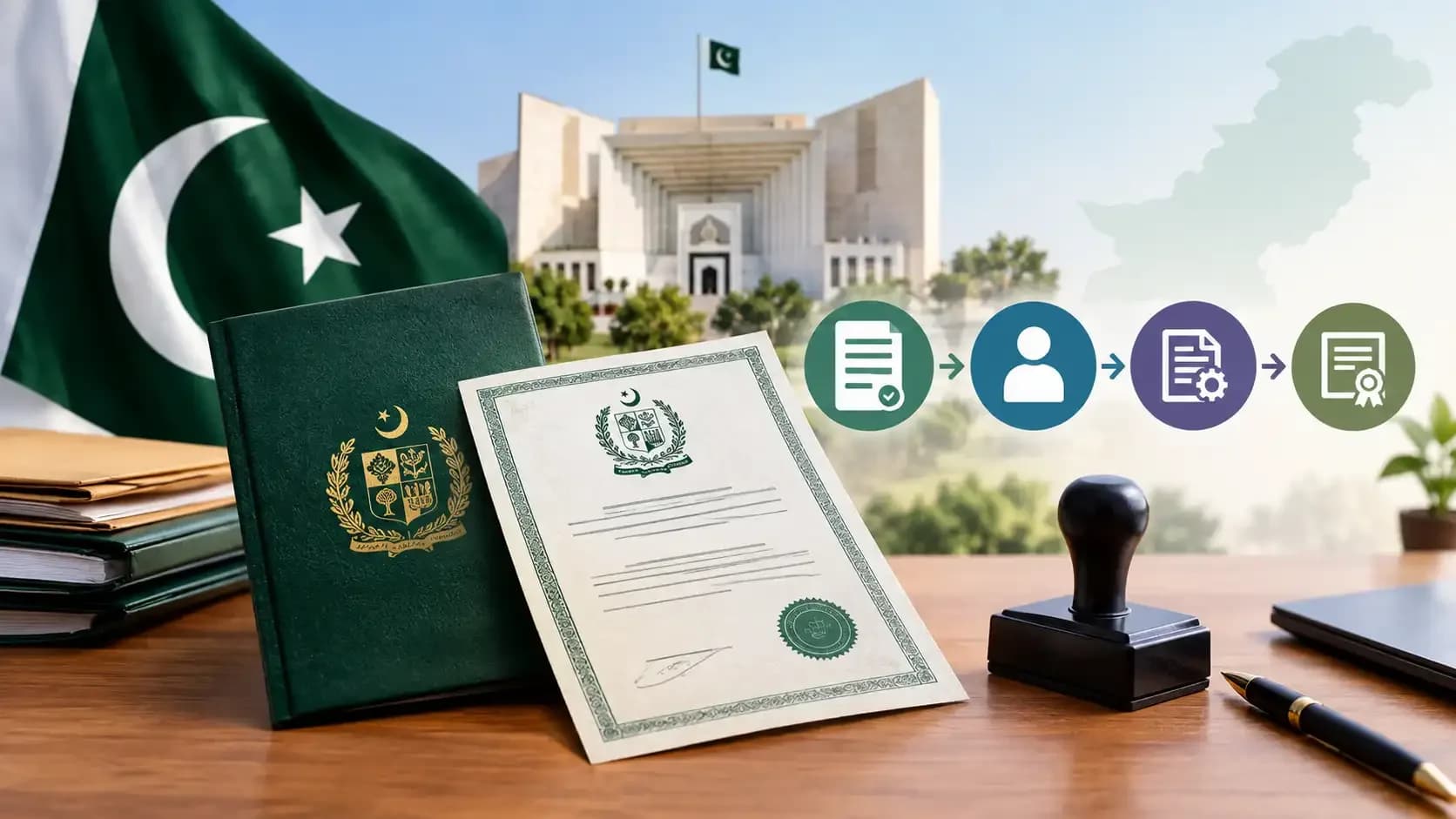
Every year, millions of Pakistanis apply for government jobs and most get rejected not because they lack talent, but because they don't understand how the system works.
Which commission conducts your test? What does BPS-17 actually pay after allowances? Can you still apply after crossing the age limit?
This guide explains the entire government hiring structure in Pakistan from the ground up: the Basic Pay Scale system, eligibility rules, testing bodies, the application process, and what your actual take-home salary looks like.
Whether you're a fresh graduate eyeing your first FPSC test or a contract employee hoping to convert to a permanent post, this is the page to bookmark.
To understand which testing body conducts your exam, see FPSC vs PPSC vs NTS vs PTS - which test for which job.
What Is the BPS System?
BPS stands for Basic Pay Scale the standardised salary system used by the Government of Pakistan to pay all civil servants. Introduced in 1972 and revised periodically, it divides all government posts into 22 grades from BPS-1 (naib qasid, peon) at the bottom to BPS-22 (federal secretary) at the top.
The grade of a post determines everything: your salary, your annual increment, your pension entitlement, your allowances, and which commission or body recruits you. When an advertisement says "BPS-17," it means the post carries Grade 17 of this system.
The critical point most people miss: basic pay is not your take-home salary. The actual amount you receive includes ad-hoc relief allowances, house rent, conveyance, medical, and other benefits that often double or triple the basic figure. We'll break this down with a worked example below.
How Government Hiring in Pakistan Works
Government recruitment follows a centralised structure set by the Establishment Division (the federal body governing civil service rules).
Recruitment happens through three channels: direct recruitment (you apply, test, interview, get appointed), promotion (existing government servants move up), and transfer (lateral movement across departments).
For someone entering from outside, direct recruitment is the only door.
The testing and selection body depends on the grade of the post and whether it's a federal or provincial vacancy:
Grade Range | Federal Body | Provincial Body |
BPS-16 and above | FPSC (Federal Public Service Commission) | PPSC, SPSC, KPPSC, BPSC |
BPS-5 to BPS-15 | Respective ministry or NTS/PTS | Respective provincial department or NTS/PTS |
BPS-1 to BPS-4 | Departmental hiring | Departmental hiring |
For a side-by-side comparison of syllabus, fee, test pattern and application process, see FPSC vs PPSC vs NTS vs PTS which test for which job.
BPS Pay Scale Chart - Revised 2026 (RBPS-2026)
The Government of Pakistan issued Revised Basic Pay Scales 2026 (RBPS-2026) through a Ministry of Finance Office Memorandum dated 21 July 2026, effective 1 July 2026.
The Ad-hoc Relief Allowance 2022 (15%) and Ad-hoc Relief Allowance 2025 (10%) were permanently merged into basic pay, raising every grade's basic pay by approximately 20–25%. A new 7% Ad-hoc Relief Allowance 2026 was added on top.
Grade | Min Basic (Rs) | Increment (Rs) | Max Basic (Rs) | Typical Posts |
BPS-1 | 16,280 | 530 | 32,520 | Naib Qasid, Peon, Chowkidar |
BPS-2 | 16,760 | 560 | 33,560 | Daftari, Mali, Driver (light) |
BPS-4 | 17,860 | 620 | 36,460 | Dispatch Rider, Junior Clerk |
BPS-5 | 18,490 | 660 | 38,260 | Senior Clerk, Stenotypist |
BPS-7 | 19,840 | 750 | 42,340 | Cook, Dak Runner, Office Boy |
BPS-9 | 21,470 | 870 | 47,570 | LDC, Junior Auditor |
BPS-11 | 23,530 | 1,020 | 54,130 | UDC, Junior Accountant |
BPS-14 | 27,370 | 1,300 | 66,370 | Stenotypist, Data Entry Operator |
BPS-16 | 30,740 | 1,530 | 76,640 | Inspector, Superintendent |
BPS-17 | 54,140 | 2,320 | 123,740 | Assistant Director, Lecturer, DSP |
BPS-18 | 68,750 | 2,940 | 156,950 | Deputy Director, Asstt Commissioner |
BPS-19 | 87,290 | 3,730 | 199,190 | Director, Commissioner |
BPS-20 | 110,790 | 4,740 | 252,990 | Additional Secretary, DIG |
BPS-21 | 128,920 | 5,520 | 294,520 | Secretary, IG Police |
BPS-22 | 146,770 | 6,290 | 335,470 | Federal Secretary, Chief Secretary |
Source: Ministry of Finance OM No. F.1(2)IMP/2026 dated 21 July 2026 - RBPS-2026. Figures are basic pay only.
Want the full breakdown including allowances and net take-home? See the BPS pay scale chart with allowances and take-home salary.
Worked Example: What Does a BPS-17 Officer Actually Earn?
Let's take a newly appointed Lecturer (BPS-17) posted in Lahore (A-category city) under RBPS-2026:
Component | Monthly Amount (Rs) |
Basic pay (starting) | 54,140 |
Ad-hoc Relief Allowance 2026 (7%) | 3,790 |
House Rent Allowance (45% of basic, A-city) | 24,363 |
Medical allowance | 8,000 |
Conveyance allowance (revised 2026) | 5,000 |
Approximate gross salary | 95,000 – 1,20,000 |
Minus: GP Fund deduction (10%) | (5,400) |
Approximate take-home | 90,000 – 1,15,000 |
You can calculate the exact tax on your BPS salary using the site's income tax calculator.
The key takeaway: a BPS-17 basic pay of Rs 54,140 translates to a take-home of roughly Rs 90,000–1,15,000 when allowances are added. By year 10, with annual increments and periodic revisions, that figure rises substantially.
Eligibility: Who Can Apply for Government Jobs?
Age limits
The standard age bracket for FPSC (federal BPS-16+ posts) is 21 to 30 years. PPSC allows up to 35 years for most Punjab posts. But the raw numbers don't tell the full story Pakistan's government hiring includes one of the most extensive age relaxation frameworks anywhere:
Government servants: up to 5 additional years.
Women: 5 years relaxation in PPSC; 8 years in Punjab for many posts.
Disabled persons: 10 years relaxation.
Ex-FATA / merged areas and Balochistan: 5 years additional in many federal posts.
Ex-servicemen: age relaxed by the duration of military service plus 2 years.
Widows / children of deceased civil servants: 5 years relaxation.
For the full breakdown of relaxation categories and provincial differences, read age relaxation and quota rules explained.
Educational qualifications
BPS-1 to BPS-4: Primary or Middle pass (some posts require Matric).
BPS-5 to BPS-15: Matric, Intermediate, or Bachelor's degree depending on post.
BPS-16 and above: Minimum Bachelor's (16 years education); many posts require Master's or specialised qualifications (LLB, MBBS, MBA, M.Phil).
If your degree is from a foreign institution or chartered body, you need an HEC equivalence certificate before applying. Without it, your application is rejected at screening regardless of degree quality.
Domicile and Provincial Quota
Almost every government job requires a domicile certificate proving permanent residence in a specific province or region. This isn't a formality it determines your quota, and quotas are strictly enforced. Federal posts are distributed across provinces roughly as follows:
Province / Region | Federal Quota Share |
Punjab | 50% |
Sindh (Urban) | 7.6% |
Sindh (Rural) | 11.4% |
Khyber Pakhtunkhwa | 11.5% |
Balochistan | 6% |
Merged Areas (ex-FATA) | 4% |
Gilgit-Baltistan | 1.5% |
AJK | 2% |
Federal Capital (Islamabad) | 2% |
Merit (open to all) | 4% |
Source: Establishment Division, Government of Pakistan.
A candidate from Balochistan competes within a 6% share, not against the entire country which is why domicile is so critical. For the complete process of obtaining one, see domicile and PRC certificate documents, fee, process.
Which Commission Conducts Your Test?
FPSC (Federal Public Service Commission) handles all federal BPS-16+ posts including the CSS exam, federal ministry vacancies, and specialised positions. FPSC conducts its own written tests and interviews.
PPSC, SPSC, KPPSC, BPSC are the provincial public service commissions for Punjab, Sindh, KP, and Balochistan respectively. They recruit for provincial BPS-16+ posts lecturers, section officers, tehsildars, assistant directors.
NTS (National Testing Service) is a private testing body contracted by various departments for BPS-5 to BPS-15 posts and increasingly BPS-16 as well, particularly for ad-hoc and project-based positions.
PTS, ETEA, OTS, CTS perform similar roles, especially at the provincial and departmental level. The rule of thumb: check the advertisement it always names the testing body.
For a detailed comparison, see FPSC vs PPSC vs NTS vs PTS - which test for which job.
How to Apply for Government Jobs Online
The shift to online applications has made the process more accessible but also more confusing every commission has its own portal. Here's the step-by-step:
Step 1 - Find the vacancy
Government vacancies are published in the official gazette, major newspapers (Dawn, Jang, Express), and on official websites.
The fastest way to stay current is the government jobs hub on this site, which aggregates listings across all commissions daily.
Step 2 - Check eligibility carefully
Before filling a single form, match yourself against every criterion: age (with relaxation if applicable), qualification (with HEC equivalence if needed), domicile, experience, and any special conditions. One mismatch and your application is screened out before a human ever reads it.
Step 3 - Register on the relevant portal
Body | Portal | Fee Payment |
FPSC | Bank challan or HBL/NBP deposit | |
PPSC | 1Link, JazzCash, EasyPaisa, bank | |
NTS | Online or bank challan | |
PTS | Online or bank challan |
Step 4 - Prepare your documents
Have these ready in scanned form:
CNIC (front and back)
Domicile certificate
All educational certificates and transcripts (Matric onwards)
HEC equivalence or verification (for degree-level posts)
Experience certificates (if required)
Passport-size photographs (white background, recent)
NOC from current employer (if already in government service)
Step 5 - Submit and track
After submitting online, you'll receive a roll number slip closer to the test date. Check the portal regularly test dates, centres, and admit cards are published there.
Need help with the application form itself? See the government job CV and application form filled example or a step-by-step walkthrough.
The Selection Process: What Happens After You Apply
For most BPS-16+ posts, the selection process has three stages:
Written test
The test pattern varies by commission but typically includes a subject-specific paper, a general knowledge paper, and an English/Urdu paper. For CSS, the written exam spans 12 papers over multiple days. For PPSC one-paper posts, it's a single MCQ test of 100 marks.
You need to clear the minimum threshold (usually 40–50%) to move forward. The written test carries the most weight usually 75–85% of total marks.
For syllabus and paper patterns, check the exam guide tool.
Interview / viva voce
Candidates who clear the written test are called for an interview. The panel typically includes the commission chairman or a member, a subject expert, and a psychologist (in FPSC's case). Marks range from 100 to 300. The interview assesses personality, communication, subject knowledge, and general awareness.
Merit list
Final merit is calculated by combining written test marks, interview marks, and in some cases academic record. The merit list is published on the commission's website. If your total score falls within the available seats for your quota, you receive an offer of appointment.
Government Job Benefits Beyond Salary
Salary is only one part of the compensation. Government employment in Pakistan includes benefits the private sector rarely matches at equivalent pay:
Pension: defined-benefit pension after retirement (minimum 25 years of service or at superannuation age of 60). Calculated on last drawn basic pay; increases with government revisions.
Medical coverage: government servants and families receive free or subsidised treatment at government hospitals, plus a medical allowance.
Housing or house rent: either an official residence (for senior officers) or HRA ranging from 15% to 45% of basic pay depending on city.
Job security: permanent government servants cannot be terminated without a formal inquiry and due process.
Leave: 10 days casual leave, 48 days earned leave per year (accumulated if unused), medical leave, and various special leaves.
Provident fund: compulsory savings both employee and government contribute. Accumulated balance with interest paid out at retirement.
Common Mistakes to Avoid
Applying for the wrong quota. Your domicile determines your quota, not your current address. A Lahore-based person with a Peshawar domicile applies under the KP quota.
Missing the age window. Age is calculated on the closing date of the advertisement, not the test date. Always calculate your age against the closing date and factor in relaxation.
Submitting unattested documents. Many commissions still require attested copies. An unattested degree can lead to disqualification after clearing the test.
Not tracking deadlines. Government job ads run on hard deadlines. No extensions, no late submissions, no exceptions.
Ignoring the official syllabus. Each commission publishes a recommended syllabus. Candidates who prepare from generic books without consulting it consistently score lower.
Can I Convert a Contract Job into a Permanent One?
Contract posts offer government pay and experience but not pension, permanence, or seniority benefits. They can be a stepping stone many contract employees later apply for permanent positions through regular recruitment. But they should not be confused with permanent gazetted posts. If stability and pension are your goals, target regular BPS recruitment through the relevant commission from the start.
Frequently Asked Questions
Q: Can I apply for both federal and provincial jobs simultaneously?
Yes. There is no rule preventing you from applying to FPSC and PPSC (or any other commission) at the same time. You can even appear in multiple tests in the same season.
Q: Is a Master's degree required for BPS-17 posts?
For most BPS-17 posts, a Bachelor's degree (16 years of education) is the minimum. A Master's is required for some specialised posts (lecturers, certain administrative positions). Always check the specific advertisement.
Q: What happens if I fail the written test?
You can re-apply for the next advertisement. There is no limit on the number of attempts for most commission exams, as long as you remain within the age limit.
Q: How long does the entire hiring process take?
From advertisement to final appointment, the timeline varies. FPSC CSS takes 12–18 months. A single PPSC post might be filled in 3–6 months. NTS-based hiring can take 2 months to a year.
Q: What is the difference between BPS-16 and BPS-17?
BPS-16 is the highest non-officer grade (Inspector, Senior Clerk). BPS-17 is the first officer grade (Assistant Director, Lecturer, DSP). The jump in basic pay Rs 30,740 to Rs 54,140 reflects a fundamental difference in status, responsibility, and career trajectory.
Q: Are government salaries competitive with the private sector?
For IT and tech roles, the private sector generally pays more. For administration, law, education, and management, government service is financially competitive once pension, medical coverage, and job security are factored in.
What to Read Next
This guide gives you the structural foundation. For the specifics, follow the links below each one covers a topic you'll need as you prepare and apply:
Looking for live openings? Visit the latest government job listings for today's vacancies across federal and provincial departments.
Article Details
Category: Guides
Published:
Updated:
Author: Usama Haider
More Stories