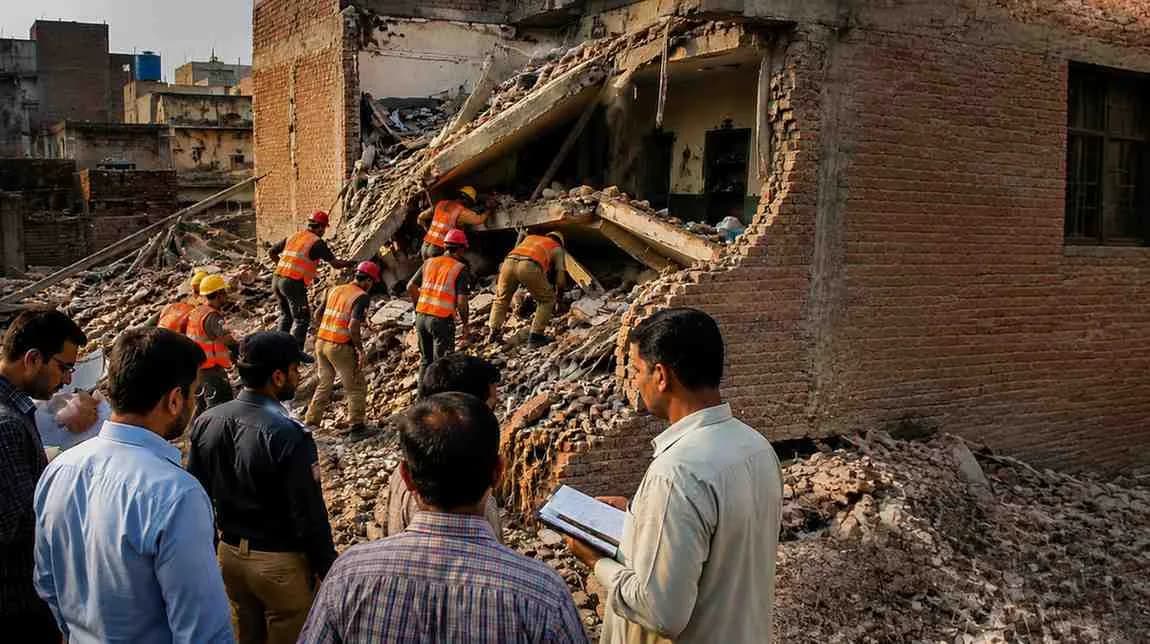
IHC Strikes Down CDA's Blanket Property Ban in Zone-III Areas
IHC overturns CDA’s blanket ban on property transfers in Islamabad Zone-III
The Islamabad High Court (IHC) has struck down the Capital Development Authority’s (CDA) blanket ban on the sale, registration, transfer, and mutation of properties in several areas of Islamabad’s Zone-III, ruling that the authority acted without legal backing. The court held that while preventing illegal housing schemes is a legitimate objective, the CDA could not impose broad restrictions on all property transactions through administrative instructions. The ruling came while hearing a petition filed by a resident of Shah Allah Ditta, who argued that the restrictions had prevented him from dealing with his ancestral property to support his family and cover his elderly mother's medical expenses.
The judgment was delivered by Justice Muhammad Asif, who allowed the petition and declared that executive authorities must remain within the limits of the Constitution and applicable laws while implementing judicial directions.
Court says CDA exceeded its legal authority
The petitioner informed the court that he owns ancestral property in Shah Allah Ditta and had been unable to sell or transfer it because of restrictions imposed after an IHC order issued on November 30, 2023. According to the petition, that earlier order only directed the CDA to stop construction related to illegal housing schemes in Zone-III and prevent transactions connected to such developments.
However, the petitioner argued that the CDA expanded the scope of the order. A letter issued by the Director General (Building and Housing Control) on December 1, 2023, requested the Deputy Commissioner of Islamabad to suspend the registration of sale deeds and mutation of properties in several Zone-III areas, including Shah Allah Ditta, Sangjani, Sara-e-Kharbooza, and Siri Saral.
The petition further claimed that the deputy commissioner verbally instructed sub-registrars and revenue officials to halt all property transactions without issuing any statutory notification or written order. As a result, even genuine transactions between private individuals that had no connection with illegal housing schemes were affected.
IHC emphasizes constitutional limits on executive actions
In its judgment, the Islamabad High Court acknowledged the importance of protecting Islamabad's Master Plan, environmentally sensitive areas, and enforcing zoning regulations. However, it stressed that such objectives cannot justify actions that lack legal authority.
The court ruled that administrative authorities implementing judicial orders cannot expand or modify their scope through executive directions. It observed that regulating land use is different from restricting ownership rights and that powers to control construction do not automatically permit a ban on property transfers.
The judgment also rejected the CDA's argument that widespread illegal construction justified the blanket restriction. Instead, the court held that authorities should proceed against actual violators rather than imposing indiscriminate restrictions on all landowners.
The IHC ultimately declared that the administrative embargo on the sale, purchase, registration, and mutation of properties, imposed without statutory notification or lawful authority, had no legal effect because it also blocked legitimate transactions unrelated to illegal housing schemes.
(SOURCE :ARYNEWS)
Topics in this story
Article Details
Category: News
Published: 2 July 2026
Time: 3:14 pm
Author: Rabia
More Stories