Ever wished your phone could handle routine tasks before you even asked? Within the next five years, AI may move from being a “tech tool” to becoming a daily assistant for work, study, health, shopping, and home life.
AI Will Become More Personal
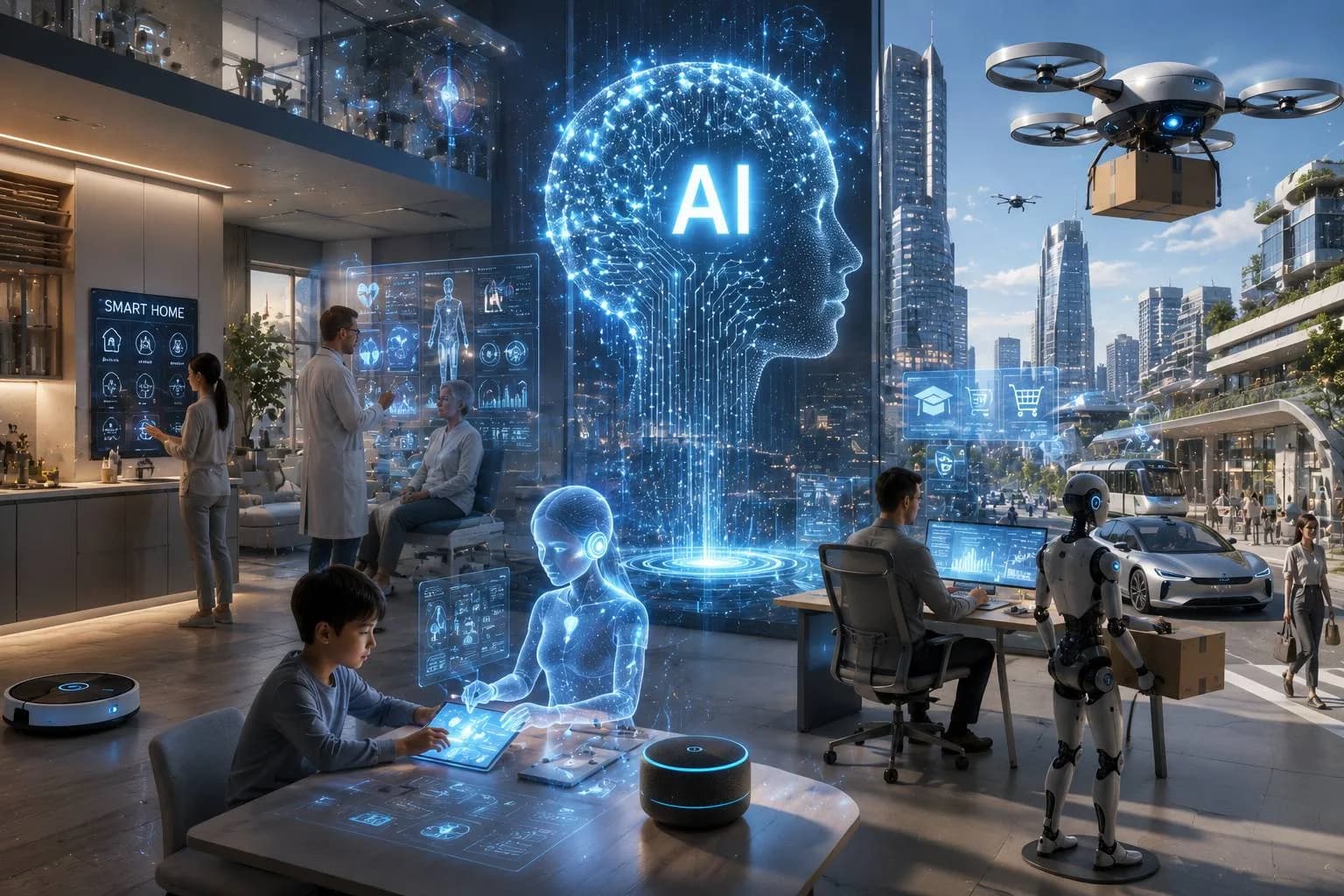
AI In Everyday Life is expected to become more useful because tools are moving into phones, apps, laptops, cars, schools, hospitals, banks, and customer service systems. The IMF says AI may affect almost 40% of jobs worldwide, while the World Economic Forum expects major skill changes by 2030.
In many cases, AI will not replace an entire activity. It will remove the boring part. It may summarize emails, compare prices, plan travel, draft documents, translate messages, and help users manage time better.
Where AI Could Change Daily Routines
| Area | Possible Change |
|---|---|
| Home life | Smart assistants may manage reminders, bills, shopping lists, and energy use. |
| Education | Students may get personalized lessons, summaries, quizzes, and language support. |
| Healthcare | AI may support symptom checks, appointment planning, and health record review. |
| Work | Employees may use AI for reports, research, design, coding, and customer support. |
Workplaces Will Feel The Shift First
From experience, offices adopt tools quickly when they save time. AI can already write first drafts, analyze spreadsheets, generate images, prepare meeting notes, and answer customer questions.
One common mistake people make is thinking AI is only for technical workers. Teachers, shopkeepers, marketers, designers, accountants, writers, doctors, and government staff may all use AI in different ways.
The Financial Burden On Families
AI can save time, but it may also create new costs. Families may need better phones, faster internet, paid apps, online courses, or upgraded laptops. It is like buying a washing machine. It reduces effort, but it still adds purchase, electricity, and maintenance costs.
If AI tools become too expensive, the gap between skilled and unskilled users may grow. Affordable training will matter as much as access to the tools themselves.
Education And Health Could Become More Accessible
AI In Everyday Life may help students learn at their own pace. A child struggling with math could get simpler explanations, while a university student could summarize long readings faster.
In healthcare, AI may help people understand reports, prepare questions for doctors, and track medicine schedules. Still, AI should support medical advice, not replace qualified professionals.
Privacy And Trust Will Be The Biggest Tests
AI systems may handle personal messages, health records, location data, voice notes, and financial habits. Users should avoid sharing sensitive documents with unknown tools and should check privacy settings carefully.
Companies will also need clear rules for data use, accuracy checks, and human review. A fast answer is useful only when it is safe and reliable.
Closing Thought
AI could make everyday life faster, smarter, and more personalized within five years. But the real success will depend on affordability, digital skills, privacy protection, and responsible use. The future will not belong only to people who use AI, but to those who learn how to question it, guide it, and use it wisely.
Quick Facts Box
- The IMF says AI may affect almost 40% of jobs worldwide.
- The World Economic Forum’s Future of Jobs Report 2025 covers workforce changes through 2030.
- AI is expected to support education, healthcare, office work, shopping, and personal productivity.
- Privacy, affordability, and digital skills will shape how widely AI benefits ordinary users.
Article Details
Category: Global
Published:
Author: Pari Row
More Stories