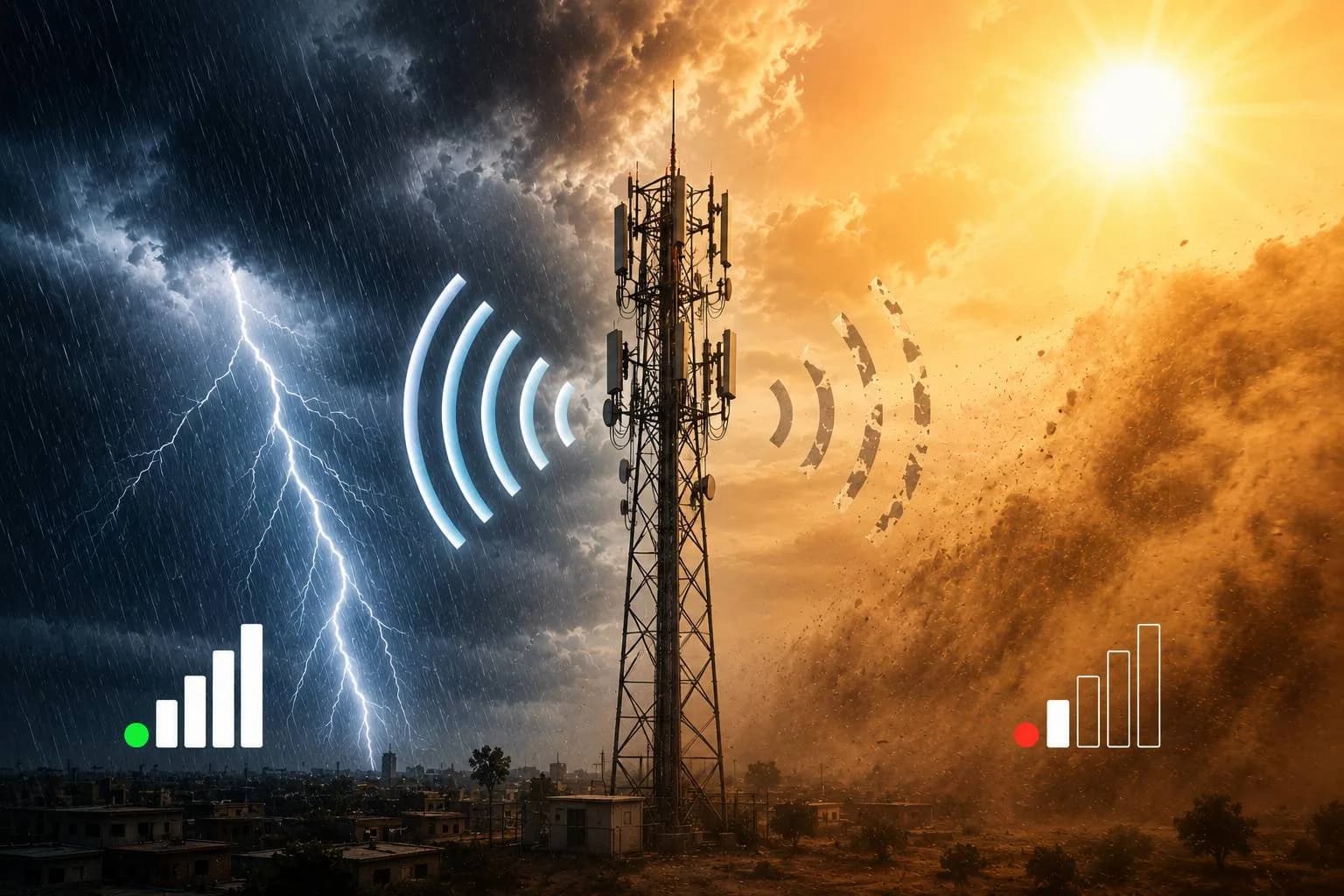
Ever noticed your mobile internet slowing down during heavy rain or a dust storm? Weather can quietly affect mobile signals, tower equipment, power systems, and the quality of everyday connectivity.
Why Weather Can Disturb Mobile Networks
Weather Affect Mobile Signals because mobile networks depend on radio waves, tower equipment, power supply, antennas, and transmission links. When the environment changes suddenly, the network has to work harder to keep users connected.
In many cases, the signal does not fully disappear. Instead, users notice slow internet, poor call quality, delayed messages, and failed video calls. The problem may come from the air, the tower, the power system, or heavy network usage during bad weather.
How Different Weather Conditions Affect Signals
| Weather Condition | Impact On Mobile Service |
|---|---|
| Heavy rain | Can weaken wireless links, increase packet loss, and slow mobile internet. |
| Heatwaves | Can stress tower equipment, batteries, cooling systems, and phone performance. |
| Dust storms | Dust can affect outdoor equipment, block solar panels, and damage exposed systems. |
| Strong winds | Can damage cables, shift antennas, or cause power and infrastructure faults. |
Rain Does Not Always Block Signals, But It Can Slow Them
One common mistake people make is assuming rain directly blocks all mobile signals. Light rain usually has little impact. Heavy rain, however, can affect microwave backhaul links and outdoor network equipment.
From experience, users often notice slower internet during storms because more people stay indoors, stream videos, make calls, and use mobile data at the same time. Weather creates pressure on both equipment and traffic capacity.
Why Heatwaves Are A Bigger Hidden Problem
Heat can be more damaging than people think. Telecom sites use batteries, power units, radios, and cooling systems. When temperatures rise, equipment may heat up, batteries may drain faster, and backup power systems may weaken.
Phones also struggle in extreme heat. A hot device may reduce performance, drain battery faster, or lose network stability. This is why mobile internet can feel weaker during long hot afternoons.
The Financial Burden On Families
Weather-linked signal problems can increase household costs. A student may buy another data bundle after a failed class. A freelancer may keep a backup SIM. A shopkeeper may lose digital payments during a storm.
It is like paying for a roof but still keeping buckets ready because rainwater leaks through. The main service exists, but families pay extra when it becomes unreliable.
What Users Can Do During Bad Weather
Weather Affect Mobile Signals less when users take simple steps. Move near a window, avoid basements, keep phones charged, close background apps, and use voice calls or SMS when mobile data is weak.
During storms, avoid large downloads and video uploads. If home WiFi and mobile data both slow down, wait for traffic to reduce or try a different location with clearer coverage.
Closing Thought
Rain, heatwaves, and dust storms can expose weak points in telecom networks, especially power backup, tower maintenance, and backhaul quality. As climate conditions become harsher, telecom companies will need stronger weather-resilient infrastructure. For users, understanding the cause can help them manage connectivity more wisely during extreme weather.
Quick Facts Box
- Heavy rain can affect wireless links and slow mobile internet in some areas.
- Heatwaves can stress tower batteries, cooling systems, and mobile phones.
- Dust storms can damage outdoor telecom equipment and reduce solar backup efficiency.
- Moving near windows and avoiding large uploads can improve connectivity during bad weather.
Article Details
Category: Telecom
Published:
Author: Pari Row
More Stories