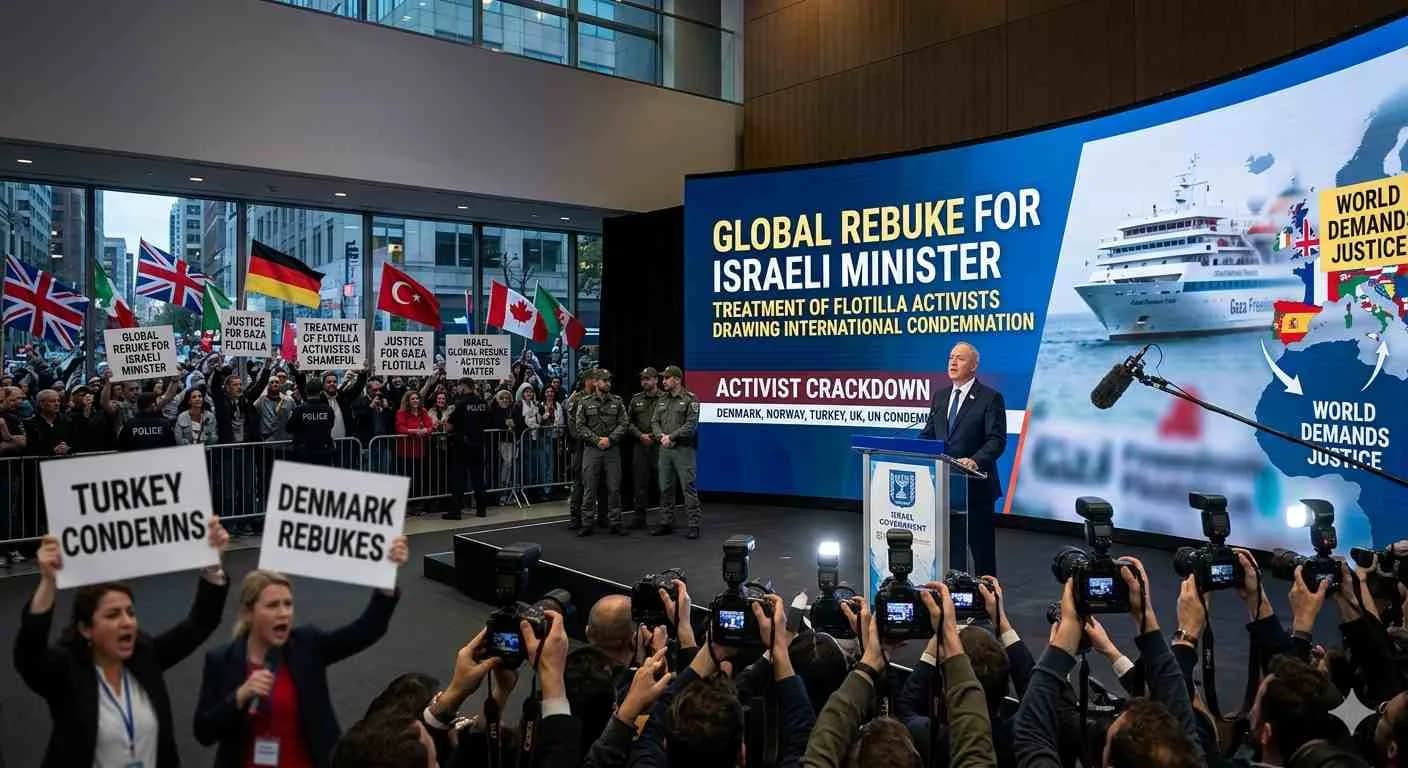
Israeli Minister Faces Global Criticism Over Flotilla Activist Treatment
When humanitarian missions turn into political flashpoints, even a single decision by a government official can trigger international backlash. That is exactly what is happening now, as an Israeli minister faces widespread criticism over the handling of detained flotilla activists.
Rising Diplomatic Pressure Over Activist Treatment
Global reactions intensified after reports emerged regarding the treatment of foreign activists linked to a Gaza-bound flotilla. Several countries and human rights organizations expressed concern over how the detainees were processed following interception at sea.
The controversy has quickly expanded beyond maritime enforcement into a broader diplomatic issue. Governments representing affected nationals have reportedly sought formal explanations, while advocacy groups are calling for greater transparency in detention procedures.
In many cases, such incidents escalate quickly because they involve both humanitarian narratives and state security arguments operating on completely different legal and moral frameworks.
Why the Incident Is Drawing Global Attention
The flotilla episode has become a focal point in ongoing debates about humanitarian access, maritime law, and political activism in conflict zones. Critics argue that the treatment of activists raises questions about proportionality and due process.
From experience, one common mistake people make is assuming these incidents remain isolated legal matters. In reality, they often evolve into long-term diplomatic tensions involving multiple governments, international institutions, and public opinion.
For ordinary observers, the situation can feel distant, but its ripple effects often reach everyday life. Rising political tension can influence trade relations, travel policies, and even humanitarian aid flows, indirectly affecting global economic stability.
The controversy has also reignited debate over the role of civilian activism in high-risk maritime zones and whether current international frameworks are sufficient to manage such operations.
Key Developments in the Flotilla Dispute
| Issue | Current Situation |
|---|---|
| Activist Detention | Subject of international criticism and review |
| Government Response | Defended actions citing security considerations |
| Diplomatic Reaction | Requests for clarification from multiple countries |
| Humanitarian Debate | Renewed focus on aid access and maritime rules |
Growing Debate Over Maritime Enforcement and Rights
Legal experts note that maritime enforcement actions involving humanitarian missions often sit at the intersection of international law and national security policy. This overlap creates room for disagreement over interpretation and implementation.
Several advocacy groups are urging clearer global guidelines to prevent future disputes from escalating into diplomatic crises. They argue that without standardized procedures, similar incidents are likely to recur.
Meanwhile, officials defending the interception maintain that maritime restrictions are necessary to manage security risks in sensitive regions, highlighting the complexity of balancing humanitarian access with operational control.
Quick Facts
- Israeli minister faces global criticism over flotilla activist treatment
- Multiple countries have requested diplomatic clarification
- Human rights groups raised concerns over detention procedures
- Debate intensifies on maritime law and humanitarian access
Closing Thought
The growing diplomatic fallout over the flotilla incident reflects how quickly humanitarian actions can evolve into international disputes. While governments continue to defend their positions, the broader discussion now centers on legal clarity, accountability, and the future of civilian-led humanitarian missions in conflict-sensitive waters.
Article Details
Category: Global
Published:
Author: Muhammad Sheikh
More Stories