Global Auto Industry
Japan’s Auto Shipments to Middle East Sink as Regional Conflict Hits Trade Routes
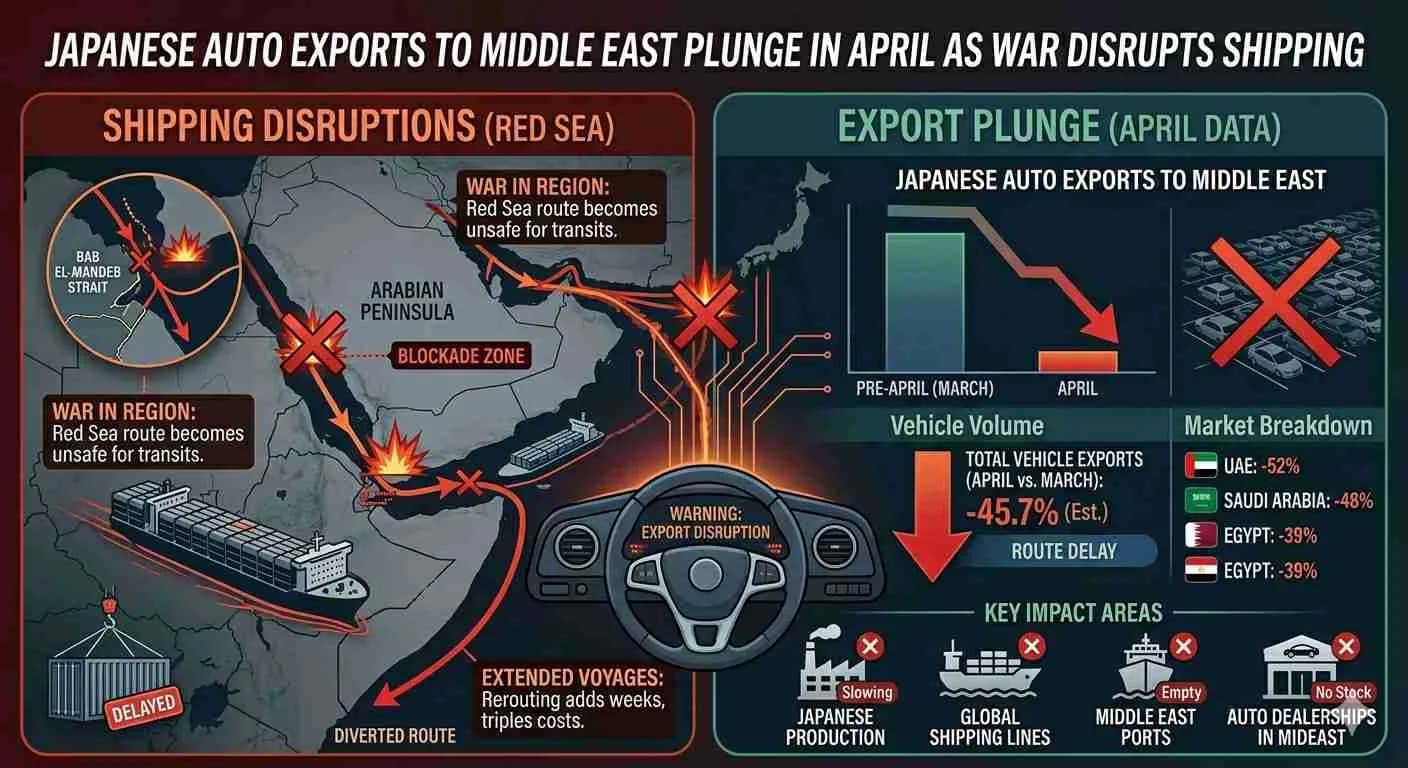
What happens when one of the world’s busiest shipping corridors suddenly becomes unstable? Japan’s automobile exports to the Middle East faced that harsh reality in April as regional conflict disrupted cargo movement and forced companies to rethink delivery schedules.
Shipping Disruptions Hit Japanese Carmakers Hard
Japanese automakers rely heavily on stable maritime routes to move vehicles into Gulf markets. However, rising tensions across key shipping lanes created delays, increased insurance costs, and reduced vessel availability during April.
Several exporters reportedly faced longer transit times as ships avoided high-risk waters. In many cases, rerouting cargo added fuel costs and logistical pressure at a time when global supply chains were only beginning to stabilize.
Middle East Demand Remains Strong Despite Delays
The decline does not necessarily reflect weaker consumer demand. Countries across the Middle East continue importing Japanese vehicles because of their fuel efficiency, reliability, and long-term resale value.
From experience, one common mistake people make is assuming export drops automatically mean customers stopped buying. In reality, logistics often become the bigger issue during geopolitical disruptions.
| Factor | Impact on Exports |
|---|---|
| Shipping Route Diversions | Longer delivery times and higher fuel costs |
| Rising Insurance Premiums | Increased operational expenses for carriers |
| Port Congestion | Slower unloading and customs processing |
| Vehicle Delivery Delays | Reduced showroom inventory in some markets |
Families and Businesses May Feel the Pressure
Supply disruptions eventually trickle down to consumers. Delayed imports can tighten dealership inventory, increase waiting periods, and raise prices for buyers already struggling with inflation.
It works much like grocery shortages during heavy flooding. Even if farms continue producing food, transportation bottlenecks can leave store shelves emptier and prices higher. The auto industry faces a similar challenge when shipping routes become unstable.
Automakers Are Looking for Alternative Strategies
Some Japanese companies are exploring flexible shipping schedules and regional storage hubs to reduce future disruptions. Others may increase coordination with logistics providers to improve delivery forecasting.
In many cases, automakers that adapt quickly during transport crises recover market stability faster than competitors relying on traditional shipping timelines.
Quick Facts Box
- Japanese auto exports to the Middle East dropped sharply in April
- Regional conflict disrupted major shipping routes
- Insurance and transport costs increased for exporters
- Consumer demand for Japanese vehicles remains relatively stable
Closing Thought
Global trade depends heavily on predictable transport networks, and even short-term instability can reshape supply chains across multiple industries. Japan’s export slowdown highlights how closely connected modern economies have become, especially in sectors where timing and logistics matter as much as manufacturing itself.
Article Details
Category: Auto
Published:
Author: Muhammad Sheikh
More Stories