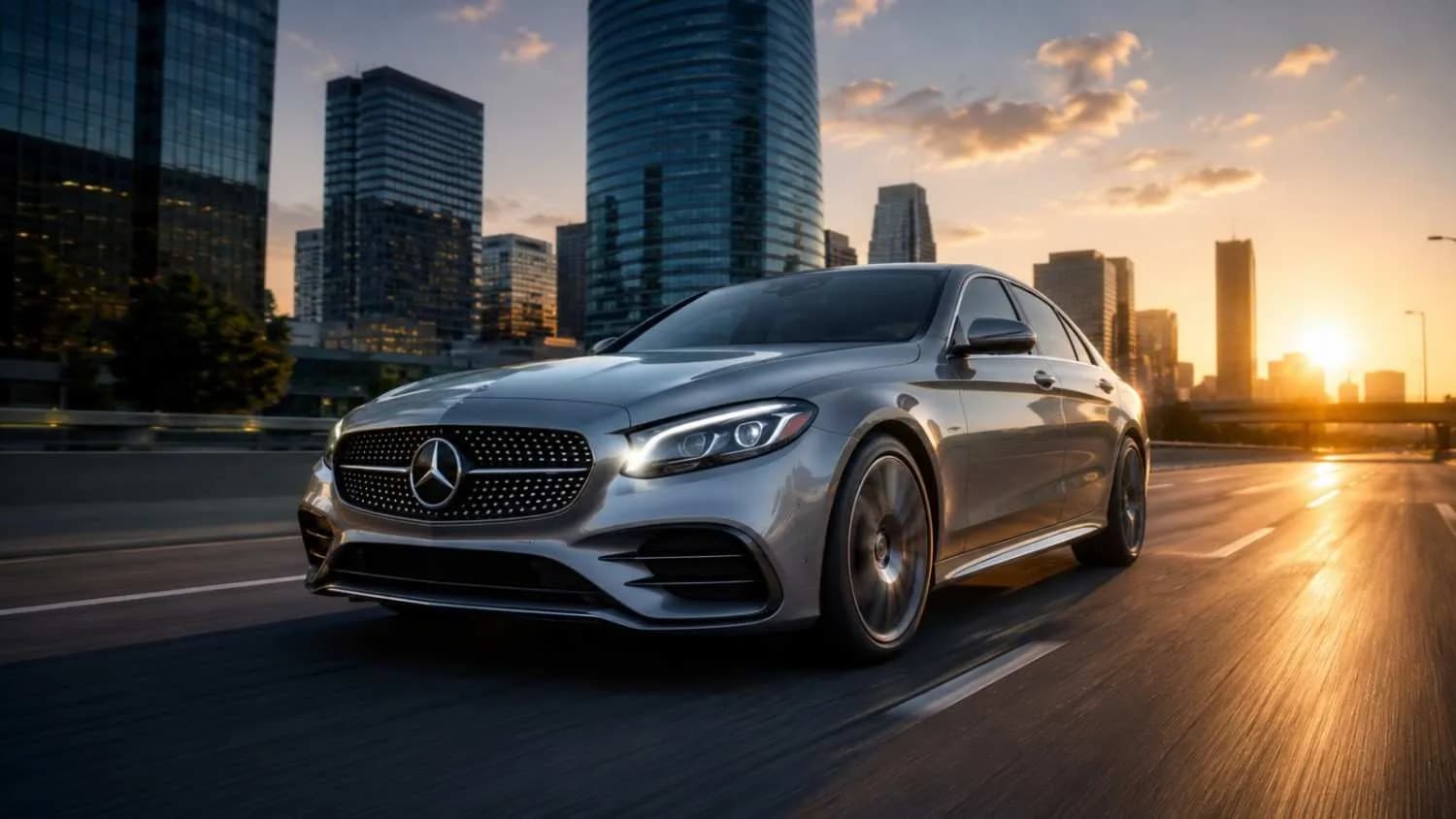
Mercedes Eyes Germany Expansion for Urban Assisted Driving Technology
What if your daily traffic jam could become the easiest part of your day? Mercedes-Benz believes that future is much closer than many drivers expect.
The German luxury carmaker is preparing a broader rollout of its urban assisted driving technology across Germany, marking another major step toward highly automated driving in real-world city conditions. The move reflects growing confidence in advanced driver assistance systems as automakers race to make autonomous mobility practical, safe, and legally accepted.
Mercedes Pushes Beyond Highway Automation
Mercedes has already built a strong reputation in automated driving through its Drive Pilot system, which received regulatory approval for limited hands-free driving on highways under certain conditions. Now the company wants to take that experience into urban environments where driving is far more unpredictable.
City traffic presents a different challenge altogether. Pedestrians cross unexpectedly, cyclists weave through lanes, and traffic signals change within seconds. From experience, urban driving tests even the most patient drivers. Mercedes is now investing heavily in software, sensors, mapping, and artificial intelligence to handle these situations with greater precision.
The planned Germany rollout is expected to focus on controlled urban conditions first. These may include low-speed zones, traffic-heavy streets, and mapped city routes where the system can safely operate with constant monitoring.
Why Germany Matters for Autonomous Driving
Germany has become one of the most important testing grounds for automated mobility. The country already has some of the world’s most advanced regulations for self-driving systems, giving manufacturers room to experiment under legal supervision.
Mercedes benefits from operating in its home market where regulators, suppliers, and engineering teams are closely connected. In many cases, companies prefer to refine autonomous systems locally before pushing them into larger international markets.
The expansion also helps Germany maintain its position as a global automotive innovation hub at a time when Chinese and American firms are aggressively investing in smart mobility technologies.
Urban Assisted Driving Could Change Daily Commuting
For many drivers, city traffic creates more stress than long-distance travel. Stop-and-go congestion increases fatigue and raises the risk of small accidents. Mercedes believes assisted driving can reduce that pressure by allowing vehicles to handle repetitive driving tasks more efficiently.
Think of it like using autopilot during a long flight. The pilot still remains responsible, but automated systems reduce constant manual adjustments. Urban assisted driving follows a similar concept.
One common mistake people make is assuming autonomous systems are designed to replace drivers entirely overnight. The reality is far more gradual. Most systems currently support drivers rather than remove them from the process completely.
Mercedes is expected to continue using a layered safety approach that combines cameras, radar, lidar sensors, high-definition maps, and real-time traffic analysis. These systems work together to detect obstacles, lane markings, pedestrians, and nearby vehicles.
Key Areas Mercedes Is Focusing On
| Technology Area | Purpose |
|---|---|
| Lidar Sensors | Detect surroundings with higher precision |
| AI Processing | Analyze traffic behavior in real time |
| HD Mapping | Support accurate navigation in city roads |
| Driver Monitoring | Ensure drivers remain alert when required |
Competition in the Autonomous Vehicle Market Is Intensifying
The push toward urban assisted driving is happening at a time when global competition is accelerating rapidly. Tesla, BMW, Volkswagen, and several Chinese EV brands are expanding their own automated driving systems.
Mercedes appears to be focusing more on regulatory approval and reliability instead of rushing large-scale deployment. That strategy could help the company avoid the public safety controversies that have affected parts of the autonomous vehicle industry in recent years.
Consumers are also becoming more selective. Buyers no longer look only at horsepower or luxury interiors. Smart driving capabilities are increasingly influencing purchasing decisions, especially among younger urban drivers.
At the same time, assisted driving technology remains expensive. Advanced sensors and computing systems significantly raise production costs. For many families, upgrading to vehicles with premium autonomous features can feel similar to upgrading from a standard smartphone to a flagship model every year. The convenience is attractive, but affordability remains a real concern.
Safety and Regulation Remain the Biggest Hurdles
Despite rapid progress, legal and ethical questions still surround autonomous mobility. Regulators continue to examine liability rules, cybersecurity risks, and data privacy concerns tied to connected vehicles.
Mercedes will likely face close scrutiny as urban assisted systems become more capable. Even minor incidents involving automated driving technologies often attract major public attention.
That is why most automakers are taking a cautious approach. Instead of promising fully driverless transportation immediately, companies are gradually introducing features that improve convenience while keeping drivers engaged.
Closing Thought
Mercedes’ urban assisted driving ambitions highlight how quickly the automotive industry is evolving beyond traditional engineering. German roads could soon become one of the largest real-world laboratories for next-generation mobility. Whether drivers fully embrace the shift will depend on trust, affordability, and how smoothly these systems handle the unpredictability of everyday city life.
Quick Facts
- Mercedes plans wider urban assisted driving deployment in Germany
- Technology focuses on low-speed and city traffic environments
- Systems rely on AI, lidar sensors, and HD mapping
- Germany remains a leading regulatory market for autonomous driving
Article Details
Category: Auto
Published:
Author: Muhammad Anus
More Stories