
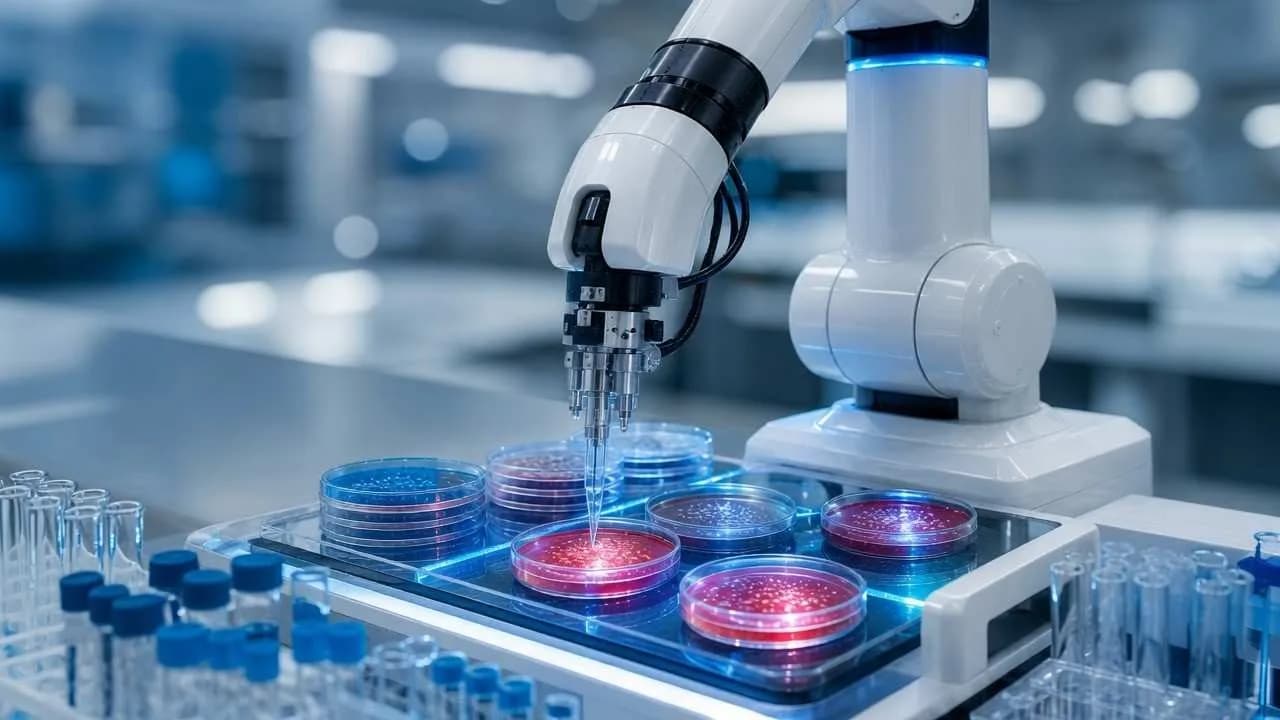
Bacteria Identified Rapidly Using New Robotic Sensing Platform
Scientists have introduced a breakthrough that could change how bacterial infections are detected. The new system, known as a Bacteria identified rapidly using new robotic sensing platform, uses a robotic gripper with a flexible sensor to identify bacteria in less than a second. Instead of relying on traditional laboratory staining methods, the robot simply touches the sample and reads its unique electrical fingerprint.
The technology was developed by researchers at National Taiwan University. According to the research team, the platform achieved an impressive accuracy of 90.93% while producing results in only 620 milliseconds. That speed could make a significant difference in hospitals, food testing laboratories, and public health monitoring.
In many cases, doctors must wait for laboratory reports before choosing the most effective treatment. A faster detection system can help medical teams make quicker decisions, especially when dealing with infections that require immediate attention.
Why This Research Matters
Rapid bacterial identification is important for several reasons:
Faster medical diagnosis
Better infection control
Improved food safety inspections
Reduced laboratory workload
Lower risk of handling dangerous bacteria
From experience, speed is often one of the biggest challenges in healthcare. Even a few hours can affect treatment decisions for patients with serious bacterial infections.
A Step Toward Smarter Healthcare
The new robotic sensing platform also reduces the need for chemical stains and repeated manual testing. This not only saves time but also lowers the chances of human error during laboratory analysis.
As healthcare systems continue adopting artificial intelligence and robotics, innovations like this could become part of everyday medical practice in the future.What Is the New Robotic Sensing Platform?
The newly developed robotic sensing platform is a smart diagnostic system that identifies bacteria through touch instead of traditional chemical testing. Researchers designed the device with a flexible sensor attached to a robotic gripper, allowing it to gently touch a bacterial sample and instantly record its electrical response.
Unlike conventional laboratory methods that require staining reagents and skilled technicians, this technology simplifies the detection process. The sensor captures tiny electrical signals produced by the bacteria's surface, while a computer model analyzes those signals to identify the bacterial group.
In many cases, reducing the number of testing steps also reduces the chances of contamination and human error. That makes the technology especially useful for busy laboratories and healthcare facilities.
How Does the Robotic System Identify Bacteria?
The platform works through a combination of robotics, sensing technology, and computer analysis. Each bacterium has a unique cell wall structure, which produces a different electrical pattern when touched by the sensor.
The detection process includes:
The robotic gripper gently touches the bacterial sample.
The flexible sensor records an electrical signal.
A computer analyzes the signal pattern.
The bacteria is classified within milliseconds.
Simple Detection Process
Step | What Happens |
|---|---|
Sample Contact | Robot gently touches the bacteria |
Signal Detection | Sensor captures an electrical fingerprint |
Data Analysis | Computer compares the signal pattern |
Final Result | Bacteria is identified quickly |
Why This Technology Is Different
Traditional Gram staining has remained the standard method for decades, but it requires multiple chemical steps and trained laboratory staff. The robotic sensing platform removes many of these requirements while delivering fast and reliable results.
From experience, healthcare professionals value technologies that save time without reducing accuracy. This innovation has the potential to improve laboratory efficiency while making bacterial testing safer and more automated.Why Gram Classification Is Important in Bacterial Detection
Before doctors can choose the right treatment, they often need to know whether bacteria belong to the Gram-positive or Gram-negative group. This basic classification is one of the first steps in microbiology because it provides important clues about how bacteria behave and which antibiotics may work best.
The new robotic sensing platform focuses on this crucial stage of identification. By detecting differences in bacterial cell walls, the system can quickly distinguish between the two major groups without using traditional staining methods.
In many cases, early classification helps doctors begin treatment while waiting for more detailed laboratory results. Faster information can be especially valuable in emergency situations and infection outbreaks.
Understanding Gram-Positive and Gram-Negative Bacteria
The main difference lies in the structure of the bacterial cell wall. These structural differences create unique electrical signals that the robotic sensor can detect.
Comparison of the Two Bacterial Groups
Feature | Gram-Positive Bacteria | Gram-Negative Bacteria |
|---|---|---|
Cell Wall | Thick | Thin |
Outer Membrane | Usually Absent | Present |
Signal Pattern | Distinct | Different Distinct Pattern |
Antibiotic Response | Often Different | Often Different |
Why Doctors Use Gram Classification First
Healthcare professionals rely on Gram classification because it provides a quick overview of the infection.
Benefits include:
Faster treatment decisions
Better infection management
Improved antibiotic selection
More efficient laboratory workflows
One common mistake people make is assuming all bacteria behave the same way. In reality, different bacterial groups respond differently to medicines and treatment strategies.
Why It Matters for Pakistan's Healthcare System
Pakistan faces challenges related to bacterial infections, hospital-acquired infections, and foodborne illnesses. A technology that can rapidly classify bacteria could help laboratories provide quicker support to doctors and healthcare workers.
From experience, faster diagnosis often leads to better patient outcomes. When healthcare teams receive information sooner, they can act sooner, which may improve treatment effectiveness and reduce complications.Which Bacteria Were Tested in the Research?
To evaluate the robotic sensing platform, researchers tested it on several well-known bacteria that are commonly found in hospitals, communities, and the environment. These bacteria are frequently studied because they can cause a wide range of infections and help scientists measure the accuracy of new diagnostic technologies.
The study included both Gram-positive and Gram-negative bacteria, allowing researchers to determine whether the system could correctly identify different bacterial groups through their electrical fingerprints.
Bacteria Included in the Study
Bacteria | Commonly Found In | Possible Health Impact |
|---|---|---|
Escherichia coli (E. coli) | Food, water, intestines | Food poisoning, urinary tract infections |
Staphylococcus aureus | Skin and nose | Skin infections, bloodstream infections |
Staphylococcus epidermidis | Human skin | Medical device and wound infections |
Pseudomonas aeruginosa | Water and hospital environments | Lung, wound, and hospital-acquired infections |
Why These Bacteria Were Selected
These bacteria represent some of the most frequently encountered microorganisms in healthcare settings. They also have different cell wall structures, making them suitable for testing the platform's ability to distinguish between Gram-positive and Gram-negative bacteria.
Researchers reported that the robotic system successfully identified these bacteria with an accuracy of 90.93%, demonstrating its potential for rapid laboratory screening.
Real-World Importance of These Bacteria
These microorganisms are not limited to research laboratories. They can be found in everyday environments and are responsible for many common infections worldwide.
For example:
E. coli may contaminate food or drinking water.
Staphylococcus aureus can spread through cuts or direct contact.
Pseudomonas aeruginosa is often linked to hospital-acquired infections.
Staphylococcus epidermidis may infect patients with catheters or other medical devices.
From experience, identifying these bacteria quickly is essential because delayed diagnosis can increase treatment time and, in some cases, raise the risk of complications. Rapid detection gives healthcare professionals a better chance to respond before an infection becomes more serious.Accuracy and Speed of the New Robotic Bacteria Detection System
One of the biggest strengths of this research is its combination of speed and accuracy. The robotic sensing platform identified bacteria with an accuracy of 90.93% while delivering results in just 620 milliseconds. That is much faster than many traditional laboratory procedures, which often require several preparation steps before analysis can begin.
Researchers achieved these results by combining signals from two sensing materials and processing them through a computer-based analysis model. This approach allowed the system to recognize unique electrical patterns produced by different bacterial cell walls.
In many cases, faster diagnosis can help doctors begin treatment sooner, especially when dealing with infections that require immediate medical attention.
Traditional Gram Staining vs. Robotic Detection
The new platform is designed to simplify bacterial testing while maintaining reliable performance.
Feature | Traditional Gram Staining | Robotic Sensing Platform |
|---|---|---|
Detection Method | Chemical staining | Touch-based electrical sensing |
Processing Time | Several minutes | About 620 milliseconds |
Chemical Reagents | Required | Not required |
Human Handling | High | Minimal |
Automation | Limited | High |
Why Faster Results Matter
Speed is critical in healthcare, particularly when laboratories process hundreds of samples every day. A system that produces results in less than a second can reduce waiting times and improve laboratory efficiency.
Potential advantages include:
Earlier diagnosis for patients
Faster treatment decisions
Reduced laboratory workload
Lower risk of sample contamination
Better support for emergency care
Recognition by the Scientific Community
The study was featured as a cover article in the scientific journal Nano Energy, highlighting its importance in biomedical engineering and healthcare technology.
From experience, research receives this level of recognition only when it introduces a meaningful advancement. While additional testing will still be needed before widespread clinical use, the results suggest that touch-based bacterial detection could become an important tool for future medical laboratories.Benefits of the New Robotic Platform for Bacteria Detection
The robotic sensing platform offers several advantages over conventional bacterial testing methods. By replacing chemical staining with touch-based sensing, it simplifies the detection process while reducing the time needed to identify bacteria.
Researchers also designed the system to minimize direct contact between laboratory staff and bacterial samples. This makes testing safer and supports the growing use of automation in modern healthcare.
As hospitals and diagnostic laboratories continue to adopt smart technologies, systems like this could improve both efficiency and patient care.
Key Benefits of the Robotic Sensing Platform
The technology introduces several practical improvements:
Delivers results in less than one second
Eliminates the need for chemical staining reagents
Reduces manual laboratory work
Lowers the risk of human error
Minimizes direct contact with bacterial samples
Supports automated diagnostic systems
Preserves bacterial samples for additional testing
One common mistake people make is assuming that faster testing reduces accuracy. In this case, researchers combined rapid detection with an accuracy rate of more than 90%, showing that speed and reliability can work together.
How It Could Improve Healthcare
Quick bacterial identification allows healthcare professionals to make informed decisions earlier. Instead of waiting for lengthy laboratory procedures, doctors may receive preliminary information much sooner.
Potential healthcare benefits include:
Faster diagnosis of bacterial infections
Earlier treatment decisions
Better infection control in hospitals
Improved laboratory productivity
More efficient emergency medical care
Beyond Hospitals: Wider Applications
The technology could also support industries outside healthcare.
Possible future uses include:
Food safety inspections
Drinking water quality monitoring
Pharmaceutical manufacturing
Environmental testing
Biomedical research laboratories
From experience, technologies that solve problems across multiple industries often have the greatest long-term impact. A platform that works in hospitals today could eventually become a valuable tool for food safety agencies, research centers, and public health organizations around the world.How This Technology Could Benefit Pakistan's Healthcare System
Pakistan's healthcare sector continues to face challenges such as delayed laboratory reports, overcrowded hospitals, and the growing threat of antibiotic-resistant infections. A faster bacterial detection system could help medical professionals identify infections earlier and begin treatment without unnecessary delays.
The robotic sensing platform is still in the research stage, but its technology could support hospitals, diagnostic laboratories, and public health agencies if adopted in the future. Faster identification may also improve infection control by helping healthcare workers isolate harmful bacteria more quickly.
From experience, timely diagnosis is often as important as the treatment itself. When doctors receive reliable laboratory information sooner, patients can receive the right medicines at the right time.
Where This Technology Could Make the Biggest Difference
Several sectors in Pakistan could benefit from rapid bacterial detection:
Government and private hospitals
Diagnostic laboratories
Food safety authorities
Water quality testing centers
Medical universities and research institutes
These organizations regularly test samples for bacteria. A faster system could reduce waiting times while improving laboratory efficiency.
Real-World Impact for Patients
Imagine a patient arriving at an emergency department with signs of a severe bacterial infection. Traditional laboratory testing may take time before doctors receive the first results.
With advanced robotic detection technology, laboratories could provide early bacterial classification much faster, helping doctors make informed treatment decisions while additional tests continue.
Looking Ahead
Researchers also believe the platform could eventually identify a wider range of microorganisms, including antibiotic-resistant bacteria. If future studies confirm its effectiveness, the technology may become part of next-generation diagnostic systems used around the world.
While more clinical testing is needed before widespread adoption, the research demonstrates how robotics, artificial intelligence, and biomedical engineering are working together to improve healthcare.
The development is another reminder that innovation is changing modern medicine. Technologies that once seemed futuristic are gradually becoming practical tools that may improve patient care, laboratory safety, and disease monitoring for years to come.
FAQ.s
What is the new robotic sensing platform for bacteria detection?
The robotic sensing platform is a technology that identifies bacteria through touch by detecting electrical signals from bacterial surfaces without chemical staining.
How quickly can the robotic system identify bacteria?
The new platform can identify bacteria in about 620 milliseconds, making it much faster than many traditional laboratory detection methods.
How accurate is the robotic bacteria detection system?
The system achieved 90.93% accuracy in distinguishing Gram-positive and Gram-negative bacteria during research testing.
Which bacteria were tested using this robotic platform?
Researchers tested bacteria including E. coli, Staphylococcus aureus, Staphylococcus epidermidis, and Pseudomonas aeruginosa.
Why is rapid bacterial detection important?
Fast bacterial detection helps doctors make quicker treatment decisions, improves infection control, and supports safer healthcare and food monitoring.
Can this technology help Pakistan’s healthcare system?
Yes, future use of this technology could help Pakistani hospitals and laboratories achieve faster diagnosis and improve bacterial infection management.
Topics in this story
Article Details
Category: Tech
Published:
Updated:
Author: Rabia
More Stories