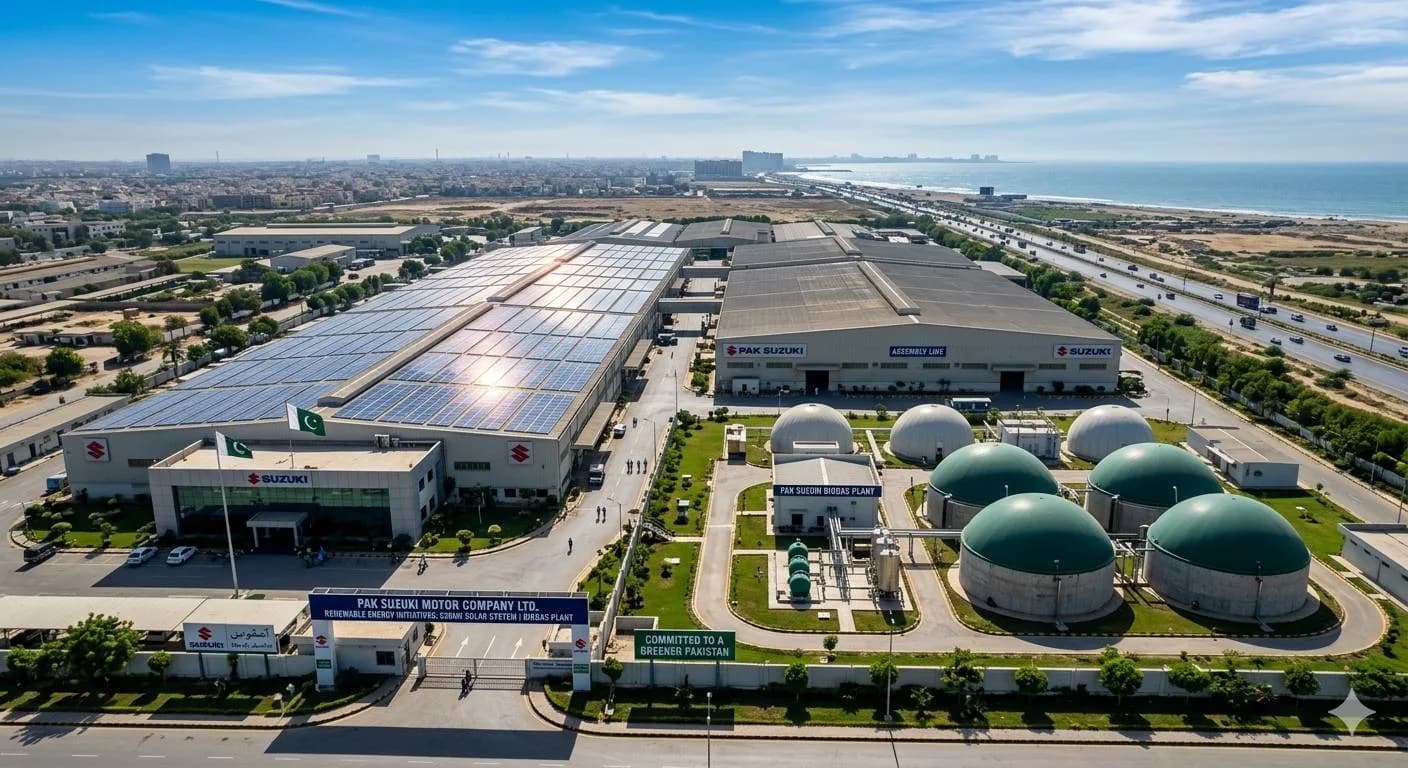
Pak Suzuki Launches Biogas Plant and 920kW Solar System in Karachi
Pakistan’s industrial sector has struggled with rising electricity prices for years. That is why the news that Pak Suzuki launches biogas plant and 920kW solar system in Karachi is getting serious attention across the automotive and energy industries.
This move is not just about corporate branding. It reflects a larger shift happening inside Pakistan’s manufacturing sector, where companies are actively searching for long-term energy stability.
In many cases, businesses wait until energy costs become unbearable before investing in renewable systems. Pak Suzuki appears to be moving earlier than many competitors, which could give the company long-term operational advantages.
Why This Project Matters Right Now
Pakistan’s power challenges continue to affect factories, production schedules, and business costs. Industrial electricity tariffs have increased sharply in recent years, making renewable energy more attractive than ever.
Along with renewable energy investments, businesses are also benefiting from lower fuel costs across Pakistan. Read our detailed coverage on the latest petrol and diesel price reduction to see how cheaper fuel could support transportation, logistics, and overall business operations.
From experience, companies that reduce dependency on the national grid usually gain more predictable operating costs over time.
A Bigger Shift Toward Industrial Sustainability
Globally, manufacturers are under pressure to adopt greener operations. Companies in the USA, Europe, and Asia have already started shifting toward solar-powered facilities to reduce fuel costs and improve public image.
A discussion on Quora highlighted how American manufacturing plants reduced long-term operational expenses through solar integration despite high upfront investment costs.
Pakistan’s automotive industry may now be entering a similar transition phase.
Why Consumers Also Care
Many buyers today pay attention to environmental responsibility. Brands investing in renewable energy often build stronger public trust over time.
That matters more than people realize.
Understanding Pak Suzuki’s Renewable Energy System in Karachi
The announcement that Pak Suzuki launches biogas plant and 920kW solar system in Karachi is more than just a sustainability headline. It is a practical business decision shaped by Pakistan’s energy crisis and rising industrial costs.
The company’s solar setup is designed to generate renewable electricity for manufacturing operations, while the biogas plant helps convert organic waste into usable energy. Together, both systems reduce dependency on conventional electricity sources.
From experience, businesses that combine multiple renewable energy sources usually gain better long-term stability compared to relying on only one solution.
How the 920kW Solar System Helps
A 920kW solar installation can significantly lower daytime electricity consumption. Karachi receives strong sunlight throughout most of the year, making solar energy highly practical for industrial facilities.
Main Advantages of the Solar System
Reduced electricity bills
Lower dependence on grid power
Cleaner manufacturing operations
Long-term operational savings
Better energy reliability during shortages
One common mistake people make is assuming solar energy only benefits households. In reality, industrial solar adoption often creates much larger financial impact because factories consume massive amounts of electricity daily.
Why Karachi Is a Smart Location
Karachi’s industrial sector faces frequent electricity cost pressures. Renewable energy systems help reduce exposure to unstable energy pricing.
In many cases, companies that invest early in alternative energy gain stronger financial control during economic uncertainty.
A Quora discussion on Quora mentioned how several manufacturing businesses in the USA recovered solar installation costs faster than expected because utility prices continued rising.
That same logic increasingly applies in Pakistan too.
How Pak Suzuki Compares to Other Auto Companies in Pakistan
Now that Pak Suzuki launches biogas plant and 920kW solar system in Karachi, many people are comparing the company’s sustainability efforts with other automobile manufacturers operating in Pakistan.
The interesting part is that Pakistan’s auto sector has traditionally focused more on production expansion than renewable energy investment. That’s why this move stands out.
From experience, companies that invest in operational efficiency during difficult economic periods usually position themselves better for the future.
Competitor Comparison in Pakistan’s Auto Industry
Sustainability Comparison Table
| Company | Renewable Energy Focus | Public Sustainability Visibility | Industry Position |
|---|---|---|
| Pak Suzuki | Solar + Biogas | Strong recent focus | Aggressive transition |
| Toyota Pakistan | Limited public renewable projects | Moderate | Established market leader |
| Honda Atlas | Sustainability initiatives discussed | Limited visibility | Strong brand presence |
| Hyundai Pakistan | Growing focus on efficiency | Developing stage | Expanding market share |
One common mistake people make is thinking renewable investment only improves environmental image. In reality, lower energy costs can directly improve production efficiency and profitability.
Pros and Cons of Renewable Energy Adoption
Pros
Lower long-term electricity expenses
Reduced dependency on national grid
Better environmental reputation
Improved operational stability
Positive public perception
Cons
High upfront investment
Maintenance and technical expertise required
Return on investment may take years
Energy output depends on system performance
In many cases, businesses hesitate because of installation costs. But rising electricity prices are forcing industries to rethink traditional operations.
What Customers and Industry Observers Think
A discussion on Quora highlighted how consumers increasingly support companies investing in cleaner manufacturing because it signals long-term thinking and responsibility.
That trend is visible globally.
Pakistani buyers are also becoming more aware of sustainability, especially younger consumers who closely follow corporate environmental practices online.
Practical Insight Most Competitors Ignore
Renewable energy is no longer just an environmental strategy. It is becoming a financial survival strategy for manufacturing industries facing unstable utility costs.
What Pak Suzuki’s Green Energy Move Means for Pakistan’s Future
The fact that Pak Suzuki launches biogas plant and 920kW solar system in Karachi sends a strong message to Pakistan’s industrial sector. Renewable energy is no longer a side project. It is becoming part of long-term business strategy.
Pakistan continues to face energy shortages, rising electricity prices, and growing environmental concerns. In this environment, companies investing in alternative energy solutions are likely preparing for long-term stability rather than short-term publicity.
From experience, industries that adapt early during economic transitions usually gain stronger competitive advantages later.
Why This Matters Beyond the Auto Industry
Pak Suzuki’s renewable energy investment could encourage other manufacturers to rethink energy planning as well.
Final Thoughts
Pakistan’s industrial future may depend heavily on how quickly businesses adapt to energy challenges.
Projects like this show that renewable energy is becoming a serious operational tool rather than just an environmental campaign. While upfront investment remains expensive, long-term savings and stability often justify the decision.
The companies that move early could gain significant advantages in the years ahead.
Stay Updated With Pakistan’s Latest Business and Energy News
If you want updates on Pakistan’s automotive industry, renewable energy developments, and major corporate initiatives, visit:
Stay informed about the trends shaping Pakistan’s future economy.
FAQs
1. Why did Pak Suzuki install a solar system in Karachi?
Pak Suzuki introduced the solar setup to reduce electricity dependency, lower operational costs, and improve sustainability in manufacturing operations.
2. What is the capacity of Pak Suzuki’s solar project?
The company launched a 920kW solar power system at its Karachi facility.
3. How does a biogas plant work in industries?
A biogas plant converts organic waste into usable energy through biological processing, helping industries manage waste and generate fuel.
4. Will renewable energy reduce manufacturing costs in Pakistan?
In many cases, renewable energy helps companies lower long-term electricity expenses and improve operational stability.
5. Are other automobile companies in Pakistan using renewable energy?
Some automotive companies have sustainability initiatives, but Pak Suzuki’s recent renewable energy project has gained significant public attention.
6. Why is solar energy becoming popular in Pakistan?
Rising electricity prices, frequent power issues, and better long-term savings are increasing solar adoption across homes and industries.
7. Can renewable energy improve Pakistan’s industrial future?
Yes. Cleaner and more stable energy sources can help industries reduce costs, improve efficiency, and strengthen long-term growth.
Article Details
Category: News
Published:
Updated:
Author: Iqra
More Stories