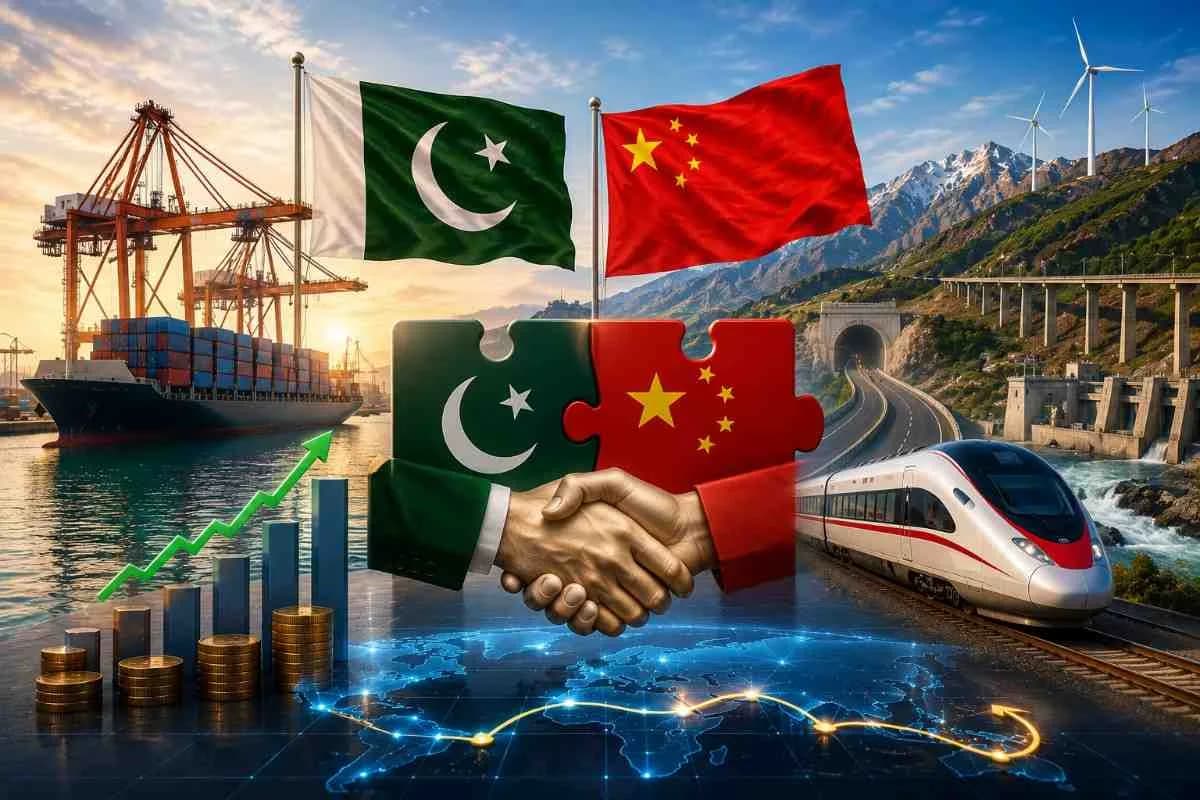
Pakistan-China investment ties strengthen under CPEC cooperation.
Pakistan-China Investment Ties Deepen as CPEC Enters New Growth Phase
Can one corridor keep reshaping Pakistan’s investment story for another decade? Pakistan-China investment ties are gaining fresh attention as both countries push deeper cooperation under CPEC, with focus moving from roads and energy toward industry, agriculture, mining, technology, and Special Economic Zones.
Closing Thought
The next phase of CPEC cooperation can help Pakistan attract stronger investment if projects are delivered with transparency, security, and commercial discipline. The relationship already has scale, but the real test now is turning infrastructure into factories, exports, jobs, and technology transfer.
Quick Facts Box
- China has invested around $25.9 billion in major CPEC transport and energy projects.
- CPEC cooperation now focuses on industry, agriculture, mining, and technology.
- Special Economic Zones remain central to Pakistan’s investment strategy.
- Gwadar, railways, energy, and industrial relocation are key areas under discussion.
CPEC Moves Beyond Roads and Power
The first phase of CPEC focused heavily on energy and transport infrastructure. That stage helped Pakistan address connectivity gaps and power shortages, though challenges remain in cost, repayment pressure, and project execution.
In many cases, infrastructure is only the starting point. Roads, ports, and power plants matter most when they support factories, warehouses, exports, and regional trade.
Key Areas of Pakistan-China Investment Cooperation
Why Chinese Investment Matters for Pakistan
Chinese investment has played a major role in Pakistan’s infrastructure push since CPEC began. The partnership connects Pakistan’s need for capital and industrial upgrading with China’s interest in regional connectivity and overseas business expansion.
From experience, foreign investors do not only bring money. They bring supply chains, machinery, project management systems, and market access. Pakistan needs to absorb these benefits more effectively in the next phase.
The Family Budget Analogy
A household cannot improve income only by building a bigger front gate. It also needs a working shop, reliable electricity, inventory, and customers. Pakistan faces a similar challenge under CPEC. Infrastructure is the gate, but industry and exports are the shop.
If the country fails to convert infrastructure into production, the financial burden can rise. Loan repayments, maintenance costs, and power sector pressure eventually affect taxpayers and consumers.
What Pakistan Must Get Right
One common mistake people make is assuming every large investment automatically creates prosperity. Projects create value only when they are commercially viable, well-managed, and connected to wider economic activity.
Pakistan needs faster approvals, better security for foreign workers, reliable utilities in industrial zones, and transparent contract management. Investors will also watch whether profits can be moved smoothly and whether policies remain stable.
SEZs Could Decide the Next Phase
Special Economic Zones are expected to play a central role in the next stage of Pakistan-China cooperation. These zones can attract Chinese manufacturers looking for regional production bases, especially if land, power, taxation, and logistics are handled properly.
Local businesses should prepare for joint ventures instead of waiting for benefits to arrive automatically. Suppliers, transport firms, packaging companies, engineering services, and skilled workers can all gain if industrial activity grows.
Practical Takeaway for Businesses
Pakistani companies should improve documentation, quality standards, digital systems, and export readiness. Chinese partners usually prefer businesses that can show compliance, consistency, and delivery capacity.
The opportunity is real, but competition will also rise. Companies that invest early in skills, certification, logistics, and technology will be better placed to benefit from stronger Pakistan-China investment ties.
Article Details
Category: Investment
Published: 24 May 2026
Time: 2:04 pm
Author: Muzamil Ahmad
More Stories