FDI Decline Signals Pressure on External Investment Climate
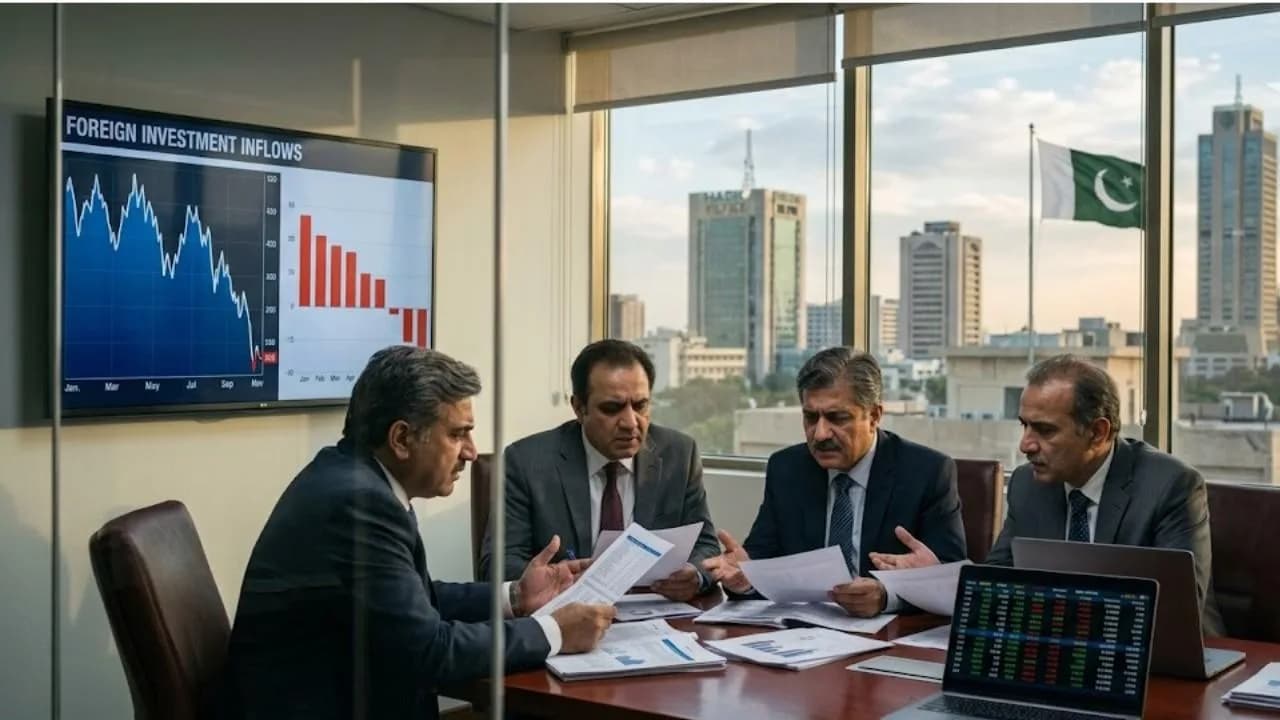
Foreign investment momentum in Pakistan has weakened significantly as the country recorded a 31% drop in Foreign Direct Investment Pakistan over the first ten months of the current fiscal year. The slowdown reflects shifting global investor sentiment and persistent macroeconomic pressures. In April alone, inflows fell to a multi-year low, highlighting growing challenges for the country’s investment landscape. Pakistan FDI decline has become a key concern for policymakers as they attempt to stabilize external financing and attract long-term capital.
In many cases, foreign investors reassess emerging markets when currency volatility, policy uncertainty, and energy constraints persist. Pakistan is currently facing a combination of these issues, which is influencing foreign investment in Pakistan and shaping Pakistan investment trends across multiple sectors.
Pakistan FDI Inflows: 10-Month Snapshot
The latest Pakistan financial year FDI data shows uneven performance across sectors, with limited inflows concentrated in energy, financial services, and communications. However, the overall trajectory remains downward, particularly when compared with previous fiscal cycles.
| Indicator | Value |
|---|---|
| FDI Drop (10 Months) | 31% |
| April FDI Pakistan | Multi-Year Low |
| Key Sectors | Energy, Finance, Telecom |
Why Investment Flows Are Slowing
Several structural factors are weighing on FDI inflows Pakistan 2026 outlook. Rising production costs, delayed regulatory approvals, and foreign exchange restrictions have made investors cautious. From experience, one common mistake people make is assuming short-term policy announcements alone can reverse long-term investment hesitation. Investors typically look for consistency, not just incentives.
Another issue is the global reallocation of capital toward more stable markets, which is affecting Pakistan economy foreign investment performance. This shift is particularly visible in manufacturing and large-scale infrastructure projects, where long-term confidence is essential.
Impact on Economy and Everyday Life
A slowdown in Pakistan investment trends does not only affect government accounts. It also filters down to employment and household stability. For example, when a major factory delays expansion due to uncertain foreign funding, it is similar to a family postponing home renovation because income is unstable. The result is reduced job creation and slower local economic activity.
In practical terms, lower foreign investment in Pakistan can limit technology transfer, reduce export capacity, and slow infrastructure development. These effects accumulate gradually but are felt widely across urban and industrial centers.
Closing Thought
The latest data suggests that Pakistan is at a critical point where restoring investor confidence will depend on consistent policy direction and improved economic stability. While short-term fluctuations in Pakistan FDI decline are expected, sustained recovery will require deeper structural adjustments and predictable business conditions.
Quick Facts Box
- FDI dropped 31% during the first 10 months of the fiscal year
- April recorded multi-year low inflows
- Key sectors included energy, finance, and telecom
- Investor sentiment remains cautious amid macroeconomic uncertainty
Article Details
Category: Investment
Published:
Updated:
Author: Aliya
More Stories