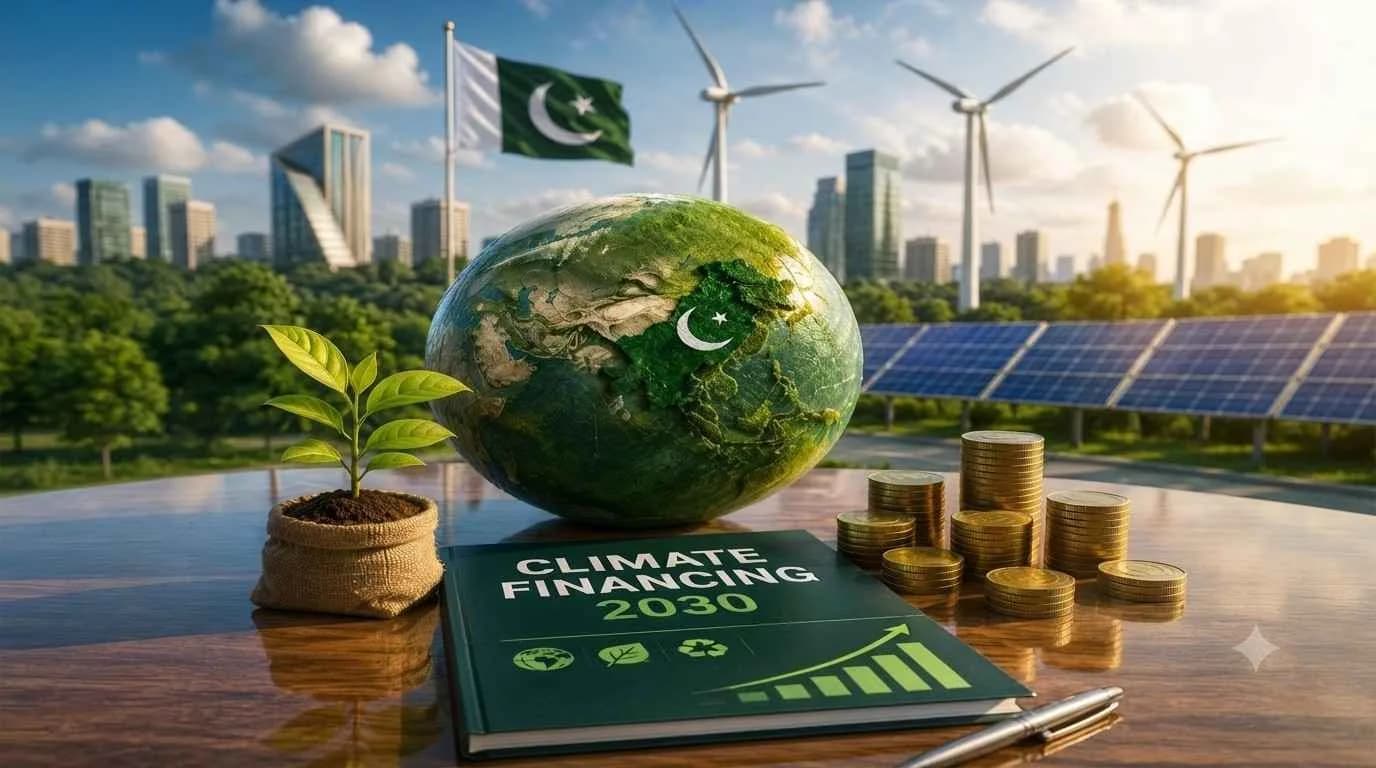
Pakistan will require around USD 331 billion in climate financing during 2024–2030 to strengthen resilience against rising climate risks and reduce large-scale economic losses caused by climate change, according to the State Bank of Pakistan (SBP). The country remains among the most climate-affected nations, ranking 15th globally in climate-related events between 1995 and 2024.
Rising Need for Climate Financing
The SBP, citing Climate Policy Initiative (CPI) estimates, stated that Pakistan’s climate financing requirement equals about 10 percent of cumulative GDP, or nearly USD 47 billion per year during 2024–2030. The funds are needed to protect infrastructure, livelihoods, and long-term economic growth from increasing climate disasters.
Government and Policy Estimates
According to the SBP report, Government of Pakistan estimates place climate finance needs between USD 200–348 billion by 2030 for climate-resilient development and implementation of Nationally Determined Contributions (NDCs).
The Pakistan Climate Prosperity Plan has further identified a long-term investment requirement of around USD 1.6 trillion by 2050, focusing on development, climate adaptation, and nature-based solutions.
High Vulnerability Despite Low Emissions
The report highlights that Pakistan contributes only 1 percent of global greenhouse gas emissions, yet remains highly vulnerable to climate change impacts. In contrast, the top ten emitting economies are responsible for around 70 percent of global emissions.
Economic Losses from Climate Disasters
Climate-related disasters have already caused significant damage to Pakistan’s economy. Total losses have reached approximately USD 58.8 billion by 2025.
This includes USD 29.3 billion (1992–2021), USD 28 billion from the 2022 floods, and USD 1.5 billion from the 2025 floods.
The SBP noted that floods have had a strong negative impact on GDP, partially offset by post-disaster recovery and agricultural improvements, but indirect effects through higher input costs have further hurt economic performance.
Climate Finance Gap
Despite rising needs, Pakistan receives only limited international climate funding. Over the past decade, inflows averaged USD 1.4–2 billion annually, peaking at around USD 4 billion in 2021.
The report states that these inflows remain far below Pakistan’s financing requirements and are insufficient to meet conditional climate commitments.
Global Comparison
Pakistan also lags behind peer countries such as Bangladesh, the Philippines, Kenya, and India in per-capita climate finance inflows, reflecting a widening global financing gap.
Key Reasons Behind Financing Gaps
The SBP identifies several key challenges behind the shortfall. Globally, mitigation projects are considered more bankable than adaptation projects, while Pakistan’s needs are largely adaptation-focused.
Domestic challenges include macroeconomic instability, exchange rate volatility, political uncertainty, weak financial markets, and an underdeveloped institutional and regulatory environment, all of which reduce project bankability.
Weak Project Pipeline and Donor Confidence
The report also highlights Pakistan’s limited capacity to develop strong project pipelines, which are essential to attract international funding from Multilateral Development Banks (MDBs) and private investors.
MDBs have also pointed to bureaucratic delays and shifting policy priorities as key barriers to disbursement.
World Bank Project Challenges
The World Bank’s Pakistan Hydromet and Climate Services Project reportedly faced implementation issues, with key components such as weather radars, automatic weather stations, and observatories dropped due to procurement delays and institutional friction.
Data and Monitoring Issues
The absence of a strong integrated Monitoring, Reporting and Verification (MRV) system makes it difficult for donors to track project outcomes, increasing risk perceptions among international lenders.
Future Economic Outlook
According to the World Bank, Pakistan’s GDP could decline by 4.5–6.5 percent by 2050 in an optimistic scenario, and by 7–9 percent in a pessimistic scenario, with agriculture and industry expected to be the most affected sectors.
(source:brecorder)
Topics in this story
Article Details
Category: Industry
Published:
Updated:
Author: Rabia
More Stories