Introduction
The Pakistan New Auto Policy is once again making headlines as discussions continue over the country's automotive future. The government was expected to introduce a fresh policy, but recent negotiations with the International Monetary Fund (IMF) have delayed the process, leaving buyers, manufacturers, and investors waiting for clarity.
For many Pakistanis, a new auto policy is more than just a government announcement. It can directly influence car prices, import rules, financing options, and the arrival of new vehicle brands. Whether someone plans to buy their first hatchback or invest in an electric vehicle, policy changes often affect purchasing decisions.
In many cases, uncertainty in government policies causes customers to postpone buying a vehicle. Dealers also become cautious about inventory because pricing and taxation may change after a new policy is introduced.
From experience, every auto policy shapes the market for several years. A well-balanced policy can encourage competition, improve vehicle quality, attract foreign investment, and provide consumers with better choices. On the other hand, delayed decisions can slow industry growth and create uncertainty for manufacturers.
In this guide, we'll explain the latest updates on the Pakistan New Auto Policy, why the government is reconsidering its timeline, how IMF discussions are influencing the process, and what these developments could mean for car buyers across Pakistan.
Key Highlights
Latest update on the Pakistan New Auto Policy
Why IMF discussions matter
Possible changes for local and imported vehicles
Impact on car prices and taxes
Expected benefits for buyers and manufacturers
Future of electric and hybrid vehicles in PakistanWhy Pakistan Needs a New Auto Policy
Pakistan's automobile sector has grown over the past decade, but it still faces several long-standing challenges. The government believes a revised policy can improve competition, encourage investment, and provide consumers with better choices.
For many buyers, purchasing a new vehicle has become increasingly difficult because of rising prices, higher taxes, and limited model availability. At the same time, manufacturers are looking for clearer regulations to plan future investments.
One common mistake people make is assuming an auto policy only affects car companies. In reality, it also influences vehicle prices, financing options, spare parts, employment, and even the resale market.
Challenges Facing Pakistan's Auto Industry
The local automotive market is dealing with several issues that have slowed growth in recent years.
Some of the biggest challenges include:
Rising production costs
High import duties on parts
Limited competition in certain segments
Currency fluctuations
Delays in vehicle deliveries
Uncertainty in government policies
These factors have made it difficult for both manufacturers and consumers to plan long-term decisions.
What the Government Wants to Achieve
The upcoming policy is expected to focus on creating a more competitive and sustainable automobile industry.
The government's likely objectives include:
Encouraging local vehicle manufacturing
Attracting new international brands
Supporting electric and hybrid vehicles
Increasing investment in the auto sector
Improving affordability for consumers
Expanding employment opportunities
A balanced policy can help manufacturers increase production while giving buyers access to more options.
Why Consumers Are Waiting for Policy Changes
Many Pakistani families delay buying a vehicle whenever a new policy is expected. They hope taxes may decrease, financing could become easier, or newer models might enter the market.
From experience, uncertainty often affects buyer confidence more than price increases. When people are unsure about future regulations, they usually wait instead of making immediate purchasing decisions.
Customer Testimonial Highlights
Many discussions on Pakistani automotive forums and Quora show that buyers are looking for three things:
Better value for money
More reliable vehicle options
Stable pricing without sudden policy changes
These concerns highlight why the Pakistan New Auto Policy is being closely watched by consumers, dealerships, and manufacturers alike.What the Government Is Planning Under the Pakistan New Auto Policy
The upcoming policy is expected to reshape Pakistan's automotive sector by encouraging investment, improving competition, and supporting modern vehicle technologies. While the final framework has not been officially announced, industry discussions suggest several important reforms are under consideration.
From experience, successful auto policies do more than reduce prices. They create an environment where manufacturers can invest confidently while giving consumers access to better products and services.
Possible Tax and Duty Reforms
One of the biggest expectations is a review of taxes and import duties affecting vehicle production and sales.
Possible areas of reform include:
Revision of customs duties on auto parts
Lower taxes on locally assembled vehicles
Simplified tariff structure
Incentives for fuel-efficient cars
Support for value-added manufacturing
These measures could reduce production costs and improve market competitiveness.
Greater Support for Local Manufacturing
The government is also expected to strengthen Pakistan's local automotive industry by encouraging companies to manufacture more components within the country.
Key objectives may include:
Increasing local parts production
Reducing dependence on imported components
Supporting technology transfer
Encouraging joint ventures with international companies
Creating new employment opportunities
A stronger local supply chain can help stabilize prices during currency fluctuations.
Opportunities for New Auto Brands
Industry experts believe the revised policy could make Pakistan more attractive for international automakers.
If new companies enter the market, buyers may benefit from:
More vehicle choices
Better pricing through competition
Improved after-sales services
Faster technology adoption
Enhanced safety features
Healthy competition often encourages existing manufacturers to improve product quality and customer service.
Focus on Electric and Hybrid Vehicles
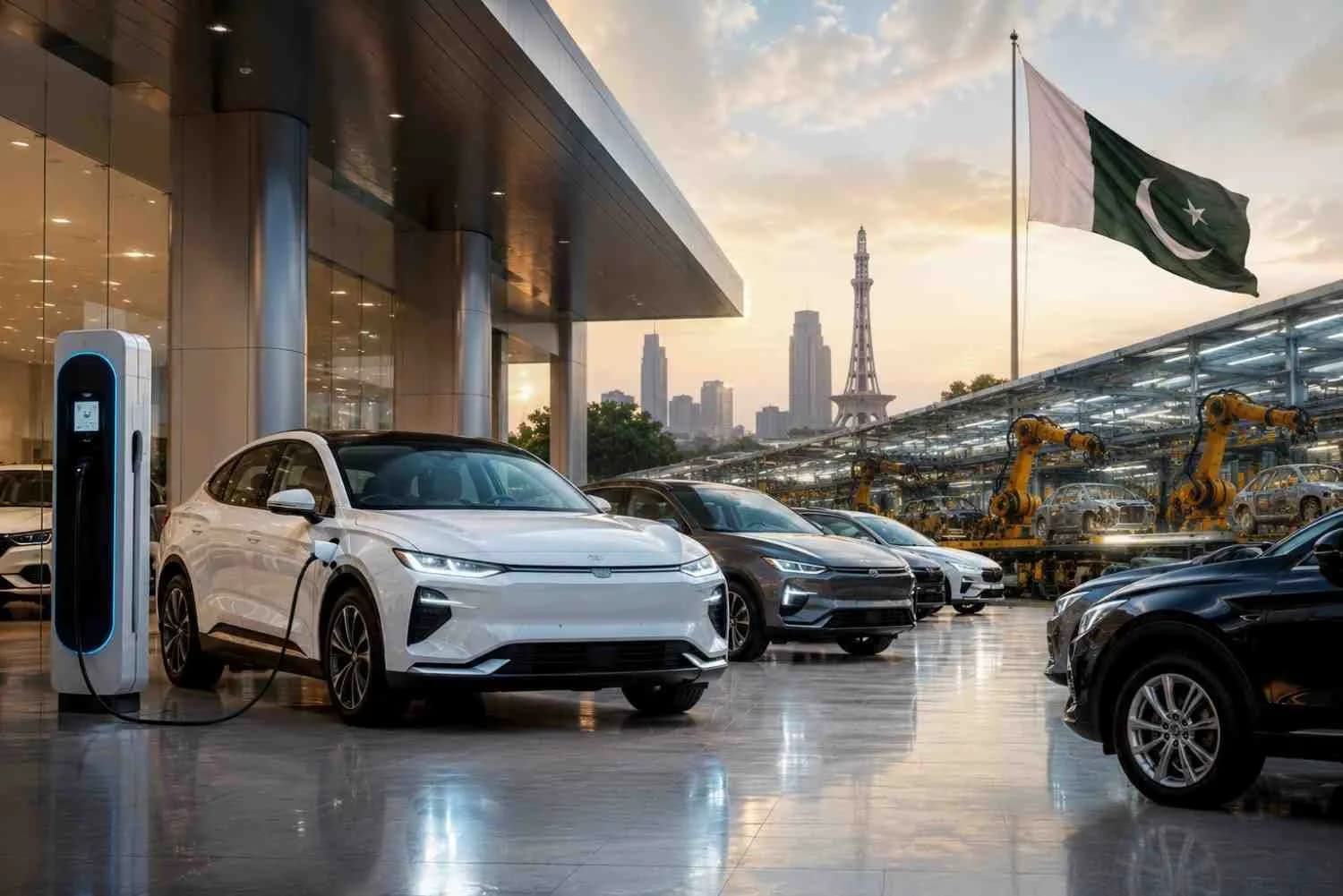
The government is also expected to continue promoting cleaner transportation through incentives for electric and hybrid vehicles.
Potential areas of support include:
Reduced duties on EV components
Investment in charging infrastructure
Incentives for local EV assembly
Promotion of environmentally friendly transport
Long-term sustainability goals
As fuel prices continue to fluctuate, interest in electric vehicles is steadily increasing among Pakistani consumers.
Expected Policy Priorities
Area | Expected Focus |
|---|---|
Local Manufacturing | Increase domestic production |
Competition | Encourage new auto brands |
Electric Vehicles | Expand EV adoption |
Taxes | Review duties and tariffs |
Investment | Attract local and foreign investors |
Consumers | Improve affordability and choices |
The final shape of the policy will depend on ongoing consultations and economic priorities, but these areas are widely viewed as the foundation of Pakistan's next automotive roadmap.Why IMF Talks Are Delaying the Pakistan New Auto Policy
The government had planned to introduce a revised auto policy, but ongoing discussions with the International Monetary Fund (IMF) have slowed the process. Officials are reviewing key proposals to ensure any new incentives or tax changes align with Pakistan's broader economic commitments.
For buyers, this delay may seem frustrating. However, major policy decisions often require careful coordination because they affect government revenue, local industries, and foreign investment.
In many cases, economic reforms take longer than expected because multiple stakeholders need to reach a common understanding before new rules are introduced.
What Happened During the Discussions?
According to officials, some proposed measures under the new policy did not receive immediate approval during consultations. As a result, authorities are considering extending the current framework until a revised plan is finalized.
The discussions reportedly focused on:
Tax incentives for the auto industry
Import duty structure
Local manufacturing targets
Investment-friendly regulations
Long-term fiscal impact
The objective is to introduce a policy that supports industry growth while remaining consistent with Pakistan's economic reform commitments.
Why an Extension Is Being Considered
Rather than introducing incomplete reforms, policymakers may continue with the existing auto policy for a limited period.
This approach could help:
Prevent uncertainty in the automobile market
Give manufacturers time to plan production
Allow further consultation with stakeholders
Finalize a more comprehensive policy
Maintain business continuity
From experience, extending an existing policy is often seen as a practical solution when major economic negotiations are still underway.
What It Means for Car Buyers
For consumers, the immediate impact is likely to be limited. Current pricing structures, taxes, and regulations are expected to remain in place until the government announces a final decision.
Buyers should keep an eye on:
Future tax announcements
Changes in vehicle prices
Import policy updates
Financing options
Incentives for electric and hybrid vehicles
Anyone planning to purchase a new vehicle in the coming months may benefit from following official announcements before making a final decision.
What to Expect Next
The government is expected to continue consultations with relevant stakeholders before introducing the revised policy. Once approved, the new framework is likely to define Pakistan's automotive direction for the coming years, covering manufacturing, investment, taxation, and consumer incentives.
How the Pakistan New Auto Policy Could Affect Car Buyers
For most people, the biggest question is simple: Will the new policy make buying a car easier or more expensive? While the final details are still pending, any changes to taxes, duties, or incentives can directly affect vehicle prices and ownership costs.
The impact will not be the same for every buyer. Someone looking for an entry-level hatchback may face different outcomes than a customer interested in a hybrid SUV or an imported vehicle.
Will Car Prices Change?
Vehicle prices depend on several factors, including taxes, exchange rates, production costs, and import duties. If the government introduces incentives for local manufacturing, some models could become more competitively priced over time.
Possible price factors include:
Changes in sales tax
Import duty revisions
Currency exchange rates
Cost of raw materials
Local production expenses
However, prices are unlikely to change overnight, as manufacturers usually adjust them after official policy announcements.
Impact on Imported Vehicles
Imported vehicles could also be affected if customs duties or regulatory requirements are revised.
Possible outcomes include:
Easier access to selected imported models
Revised import taxes
More competition in premium segments
Better availability of hybrid and electric vehicles
The final impact will depend on how the government balances consumer demand with support for local manufacturers.
Auto Financing and Ownership Costs
Many buyers rely on bank financing when purchasing a vehicle. Although the auto policy does not directly control loan rates, a stable market often encourages financial institutions to offer more attractive financing options.
From experience, buyers should calculate the total cost of ownership instead of focusing only on the vehicle's purchase price.
This includes:
Monthly installments
Insurance
Fuel expenses
Maintenance costs
Registration charges
Choosing a vehicle that fits your long-term budget is usually a smarter decision than selecting the most feature-packed model.
Tips for Buyers Before Purchasing
If you're planning to buy a new car, consider these practical steps:
Compare multiple vehicle options
Follow official policy announcements
Check updated prices before booking
Evaluate fuel and maintenance costs
Consider resale value
Review financing offers from different banks
Customer Testimonial Highlights
Many discussions on Quora and Pakistani automotive communities show that buyers are looking for predictable pricing and greater model availability. Consumers also want policies that encourage healthy competition without causing sudden price hikes.
A clear and balanced auto policy can help buyers make informed decisions while giving manufacturers the confidence to invest in Pakistan's growing automotive market.
What the Future Holds for Pakistan's Auto Industry
The future of Pakistan's automotive sector will depend heavily on how effectively the government balances consumer needs, industry growth, and economic conditions. A successful policy should not only attract investment but also make vehicles more accessible for ordinary buyers.
The Pakistan New Auto Policy has the potential to bring significant changes if it focuses on competition, technology, and long-term industry development. However, implementation will be just as important as the policy itself.
From experience, policies create real impact when manufacturers, consumers, and regulators move in the same direction. Simply announcing incentives is not enough; the market needs consistency and transparency.
Expected Benefits for Pakistan's Auto Market
A well-designed auto policy could create several opportunities:
More competition among vehicle manufacturers
Increased foreign investment
Better quality vehicles
Improved safety standards
Growth of electric vehicle adoption
More employment opportunities
Development of local auto parts industry
New brands entering Pakistan could encourage existing companies to improve pricing, features, and customer support.
Possible Challenges Ahead
Despite potential benefits, some challenges may continue affecting the sector.
These challenges include:
Economic uncertainty
Currency exchange fluctuations
High production costs
Dependence on imported components
Consumer affordability issues
A policy that ignores these realities may struggle to deliver the expected results.
Market Outlook for 2026 and Beyond
Pakistan's automotive market is gradually moving toward modernization. Consumers are showing greater interest in electric vehicles, advanced safety features, fuel efficiency, and technology-focused cars.
The next phase of growth could depend on:
Affordable EV options
Better charging infrastructure
Increased local manufacturing
Competitive pricing strategies
Stable government policies
Final Verdict on Pakistan New Auto Policy
The upcoming policy could become an important turning point for Pakistan's automobile industry. If implemented with a focus on affordability, innovation, and competition, it may benefit both consumers and manufacturers.
For buyers, the best approach is to stay informed and avoid making decisions based only on rumors. Official announcements, pricing changes, and market conditions should guide vehicle purchasing choices.
The success of the Pakistan New Auto Policy will ultimately be measured by one factor: whether it creates a better automotive experience for everyday Pakistanis.
Frequently Asked Questions
What is the new vehicle policy in Pakistan?
Pakistan’s new auto policy focuses on lower duties, EV growth, local manufacturing, and easier vehicle access for consumers.
What is Pakistan Auto Policy 2026?
Pakistan Auto Policy 2026 aims to boost local production, reduce tariffs, attract investment, and support electric vehicle adoption.
How many IMF programs has Pakistan taken?
Pakistan has received 24 IMF programs since becoming a member of the International Monetary Fund in 1950.
What is the new policy for imported cars in Pakistan?
New rules focus on controlling used car imports, improving standards, and reducing misuse of import schemes.
Can I import a 10-year-old car in Pakistan?
Import rules depend on the scheme used. Personal import categories have age limits, while commercial imports follow updated regulations.
What is the 80% rule for EV?
The 80% EV charging rule recommends charging batteries up to 80% daily to improve battery health and lifespan.
Who owns BYD in Pakistan?
BYD is represented in Pakistan by Mega Motor Company, a subsidiary of The Hub Power Company Limited (HUBCO).
Which car loan is zero interest in Pakistan?
True zero-interest car loans are rare, but some brands offer limited-time low or zero markup promotions with banks.
Who are the big 3 in automotive?
The global automotive leaders include Toyota, Volkswagen Group, and Hyundai Motor Group based on vehicle sales.
Who is the biggest borrower of IMF?
Argentina is currently the largest IMF borrower, with outstanding loans exceeding other major borrowing countries.
Who gave 1 billion loans to Pakistan?
The IMF approved a $1 billion financial package for Pakistan to support economic stability and reforms.
Did Imran Khan take a loan from IMF?
Yes, Imran Khan’s government secured a $6 billion IMF program in 2019 to address economic challenges.
Topics in this story
Article Details
Category: Industry
Published:
Updated:
Author: Rabia
More Stories