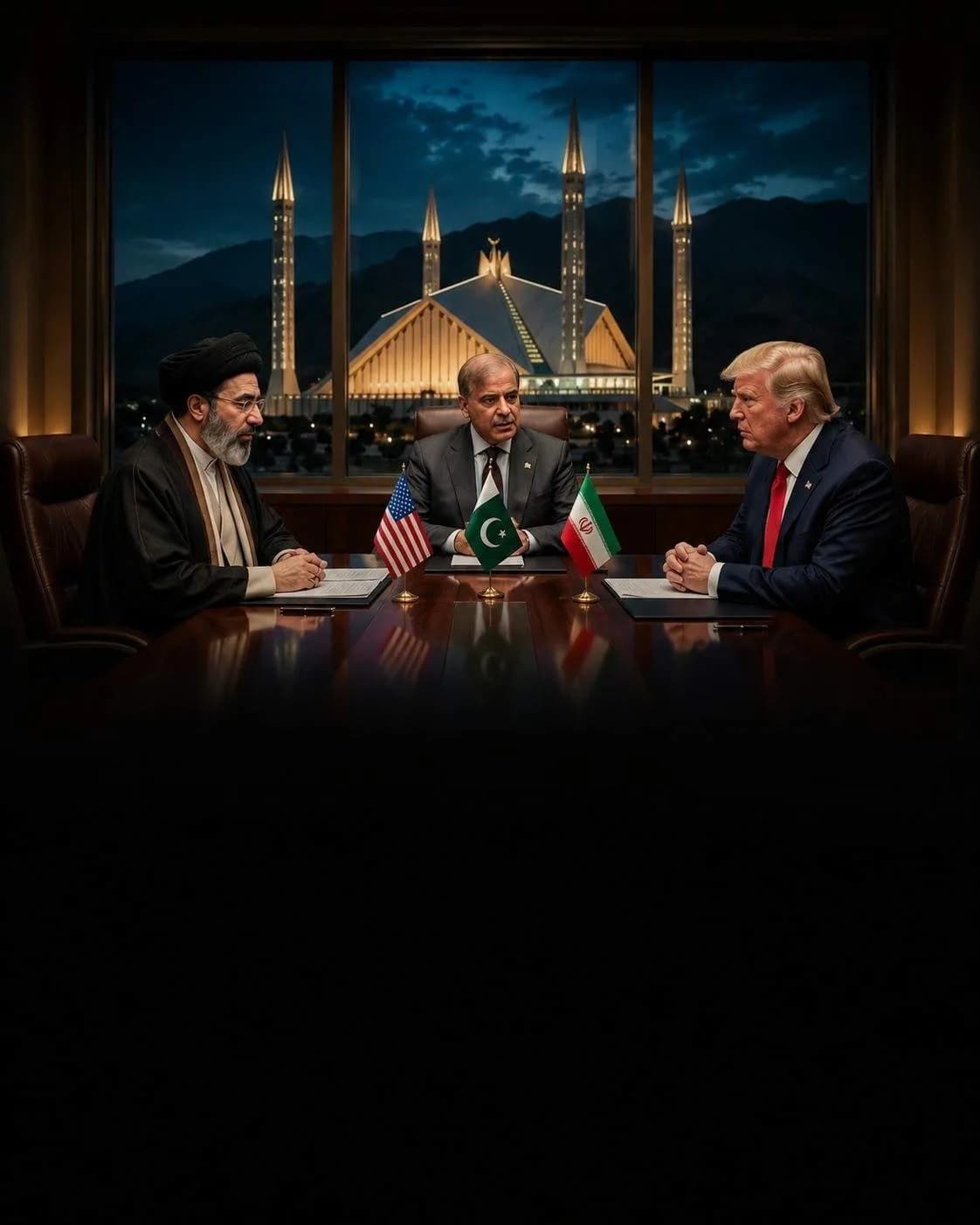
Could Pakistan become the quiet bridge between two long-standing geopolitical rivals? Prime Minister Shehbaz Sharif’s recent remarks suggesting that Pakistan may host future Iran–US talks have added a new dimension to the country’s diplomatic positioning.
The statement reflects Islamabad’s continued push for constructive engagement in global affairs, especially at a time when regional tensions and energy security concerns are shaping international discussions.
Quick Facts
- Pakistan may offer venue for Iran–US diplomatic talks
- Statement attributed to Prime Minister Shehbaz Sharif
- Focus on regional stability and dialogue promotion
- Iran–US relations remain diplomatically sensitive
Pakistan’s Diplomatic Position in a Changing World
Pakistan has long maintained a foreign policy rooted in balancing relationships across competing global blocs. In recent years, Islamabad has increasingly emphasized diplomacy as a tool for regional stability rather than confrontation.
The idea of hosting Iran–US talks signals an ambition to position Pakistan as a neutral facilitator. While no official confirmation of a finalized negotiation schedule exists, the statement itself highlights Pakistan’s desire to contribute to global peace efforts.
From experience, countries that position themselves as mediators often gain long-term diplomatic leverage, even if initial talks do not immediately materialize. It is less about instant outcomes and more about strategic presence on the global negotiation map.
Understanding Iran–US Relations and Global Stakes
Relations between Iran and the United States have remained complex for decades, shaped by political disagreements, sanctions, nuclear discussions, and regional security concerns. Periodic attempts at dialogue have taken place through indirect channels and international intermediaries.
At the heart of the matter lies a broader question of trust and regional security. Energy routes, maritime stability, and nuclear compliance have all played roles in shaping negotiations.
One common mistake people make when analyzing such diplomacy is viewing it as a single-track issue. In reality, it involves multiple layers including economic pressure, regional alliances, and internal political considerations on both sides.
Key Milestones in Iran–US Diplomatic Engagement
| Event | Context | Impact |
|---|---|---|
| JCPOA Agreement | Nuclear deal framework involving Iran and global powers | Temporary easing of sanctions and improved dialogue channels |
| Post-Deal Tensions | Political shifts and withdrawal from agreements | Renewed diplomatic uncertainty |
| Indirect Negotiations | Third-party mediated talks in recent years | Limited progress on select issues |
Why Pakistan Could Matter as a Mediator
Geographically and politically, Pakistan sits at a critical intersection of South Asia, the Middle East, and Central Asia. This unique position allows it to maintain communication channels with multiple stakeholders.
If Pakistan were to host Iran–US talks, it would not only highlight its diplomatic relevance but also strengthen its image as a stabilizing force in the region.
Think of it like a neutral meeting room in a tense neighborhood dispute. Even if the dispute is not resolved immediately, providing a space for conversation reduces pressure and opens the door for future solutions.
Potential Benefits for Pakistan
Hosting high-level diplomatic discussions can bring both symbolic and practical advantages. On the symbolic side, it positions Pakistan as a responsible global actor. On the practical side, it can improve diplomatic ties and economic engagement opportunities.
In many cases, countries that facilitate peace talks often see indirect benefits such as increased foreign investment interest, stronger bilateral relations, and improved international perception.
For Pakistan, which continues to navigate economic pressures and external financing needs, enhanced diplomatic credibility can play a supportive role in long-term stability.
Challenges and Realities on the Ground
Despite the optimism, organizing Iran–US talks would not be straightforward. Diplomatic negotiations of this scale require extensive coordination, mutual agreement on agendas, and trust-building measures.
Security arrangements, geopolitical sensitivities, and external pressure from allied nations could also influence the feasibility of such an initiative.
From experience, mediation efforts often take months or even years before materializing into formal meetings. Announcements at the political level usually represent intent rather than immediate execution.
What This Means for Regional Stability
If such talks were to take place in Pakistan, the impact could extend beyond just two countries. It could influence energy markets, regional security dynamics, and diplomatic engagement across the broader Middle East and South Asia.
However, outcomes depend heavily on sustained dialogue and political will from all parties involved.
Closing Thought
Prime Minister Shehbaz Sharif’s statement reflects a broader diplomatic aspiration rather than an immediate arrangement. Still, it places Pakistan within important global conversations about peace and stability.
Whether or not the Iran–US talks eventually take place in Islamabad, the message is clear: Pakistan aims to be seen as a facilitator of dialogue in a region where silence often leads to escalation.
Article Details
Category: News
Published:
Updated:
Author: Rabia
More Stories