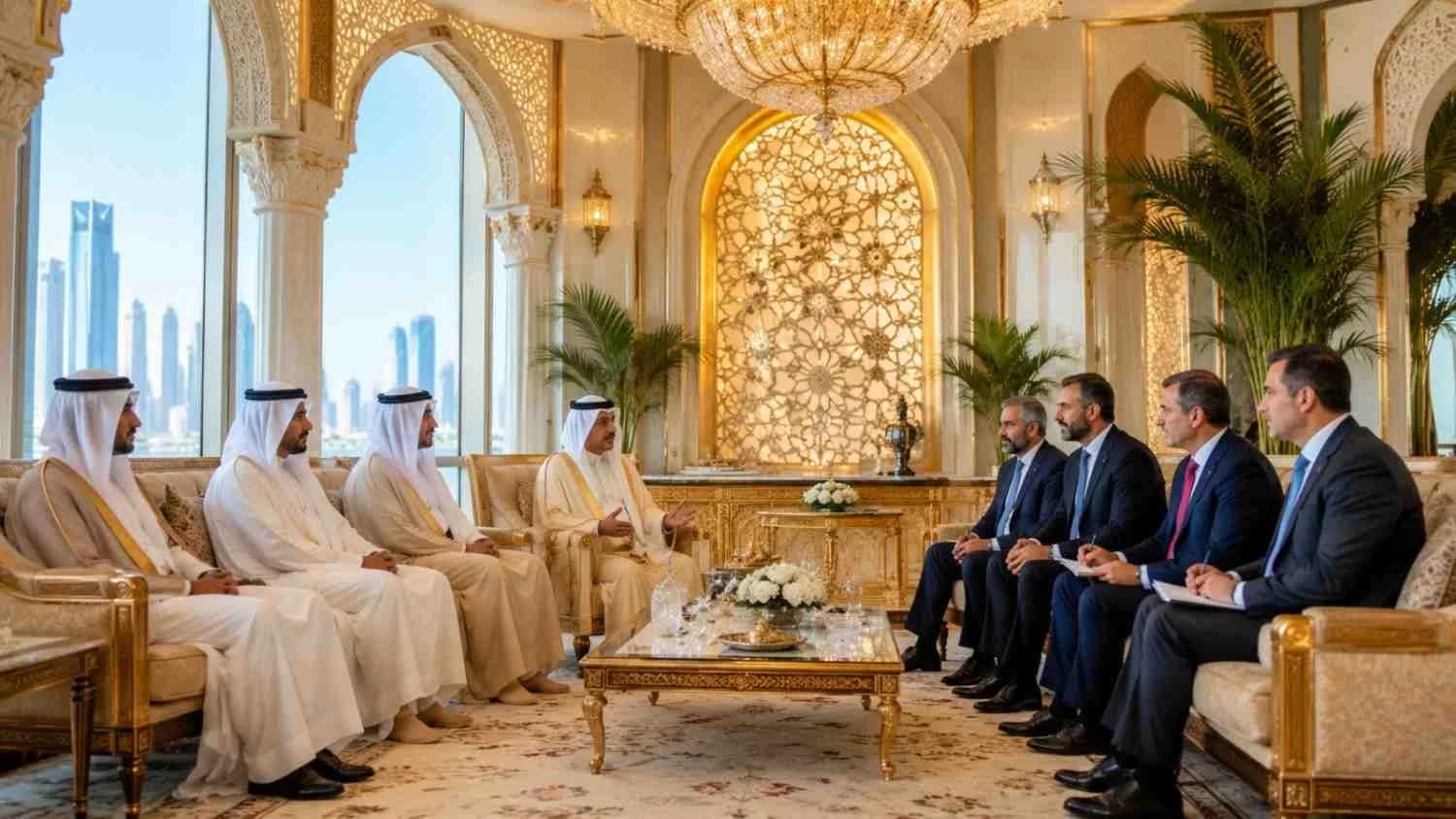
PM Tells Qatars Taameer Group Steps Taken Remove Barriers SIFC
Pakistan Signals Strong Investment Push as PM Meets Qatar’s Taameer Group Over SIFC Reforms
Opening Hook: What happens when a country tries to rewrite its investment story in front of global investors? Pakistan is now making that attempt more visible than ever.
Prime Minister has conveyed to Qatar’s Taameer Group that Pakistan has taken concrete steps to remove long-standing barriers for investors under the Special Investment Facilitation Council (SIFC). The message reflects a broader effort to rebuild investor confidence and simplify the business environment for foreign capital entering the country.
Pakistan–Qatar Economic Push Under SIFC
Economic engagement between Pakistan and Qatar has entered a more structured phase, with SIFC acting as a central platform. The government has positioned this framework as a one-window solution to speed up approvals and reduce bureaucratic delays.
During discussions with Taameer Group representatives, the Prime Minister highlighted that policy-level reforms are now being backed by implementation on the ground. This includes coordination between federal and provincial institutions to streamline decision-making.
Taameer Group Engagement Highlights
Investors from Qatar were briefed on improved facilitation processes, especially in infrastructure, housing, and energy-related projects. Officials emphasized that Pakistan is now focusing on long-term partnerships rather than short-term inflows.
From experience, foreign investors often hesitate not because of opportunity gaps but due to procedural uncertainty. The current approach aims to address that exact concern.
Government Steps To Remove Investment Barriers
Under SIFC, multiple reforms have been introduced to reduce friction in the investment pipeline. These include faster licensing mechanisms, digital coordination between departments, and clearer regulatory pathways for foreign companies.
One common mistake people make is underestimating how much time is lost in approvals. For example, a mid-sized infrastructure project can sometimes take months just to clear documentation layers. The new framework attempts to cut that delay significantly.
| Area | Previous Process | Current Reform Direction |
|---|---|---|
| Investment Approval | Multi-layer manual clearance | Centralized facilitation via SIFC |
| Documentation | Paper-based submissions | Digital coordination between departments |
| Project Timeline | Extended due to delays | Streamlined processing approach |
Sector Opportunities Opening Up
Key sectors being prioritized include energy, infrastructure development, and housing. These sectors are considered critical for both economic stability and job creation.
In many cases, large-scale housing projects alone can create ripple effects across cement, steel, and labor markets, similar to how a single construction project can support an entire local supply chain.
Impact On Investors And Economy
The government’s assurance to Qatar’s Taameer Group is aimed at sending a broader signal to international investors. Reduced friction in investment processes is expected to improve confidence and encourage medium to long-term commitments.
However, the real test will be consistency in implementation. Investors typically evaluate not only policy announcements but also how smoothly systems operate over time.
- SIFC is acting as a centralized investment facilitation platform
- Qatar’s Taameer Group engaged in multi-sector discussions
- Focus areas include energy, infrastructure, and housing
- Reforms target faster approvals and reduced procedural delays
Forward Outlook For Bilateral Cooperation
Pakistan’s engagement with Qatar’s investment community signals a continued effort to attract stable foreign capital through structured reforms. If implementation remains consistent, it could help unlock new economic partnerships and improve long-term investor sentiment.
Closing Thought: The direction is clear, but execution will define the outcome. For Pakistan’s investment landscape, the next phase will depend on how effectively policy changes translate into real-world ease for investors navigating the system.
Article Details
Category: Business
Published: 23 May 2026
Time: 12:52 pm
Author: Muhammad Anus
More Stories