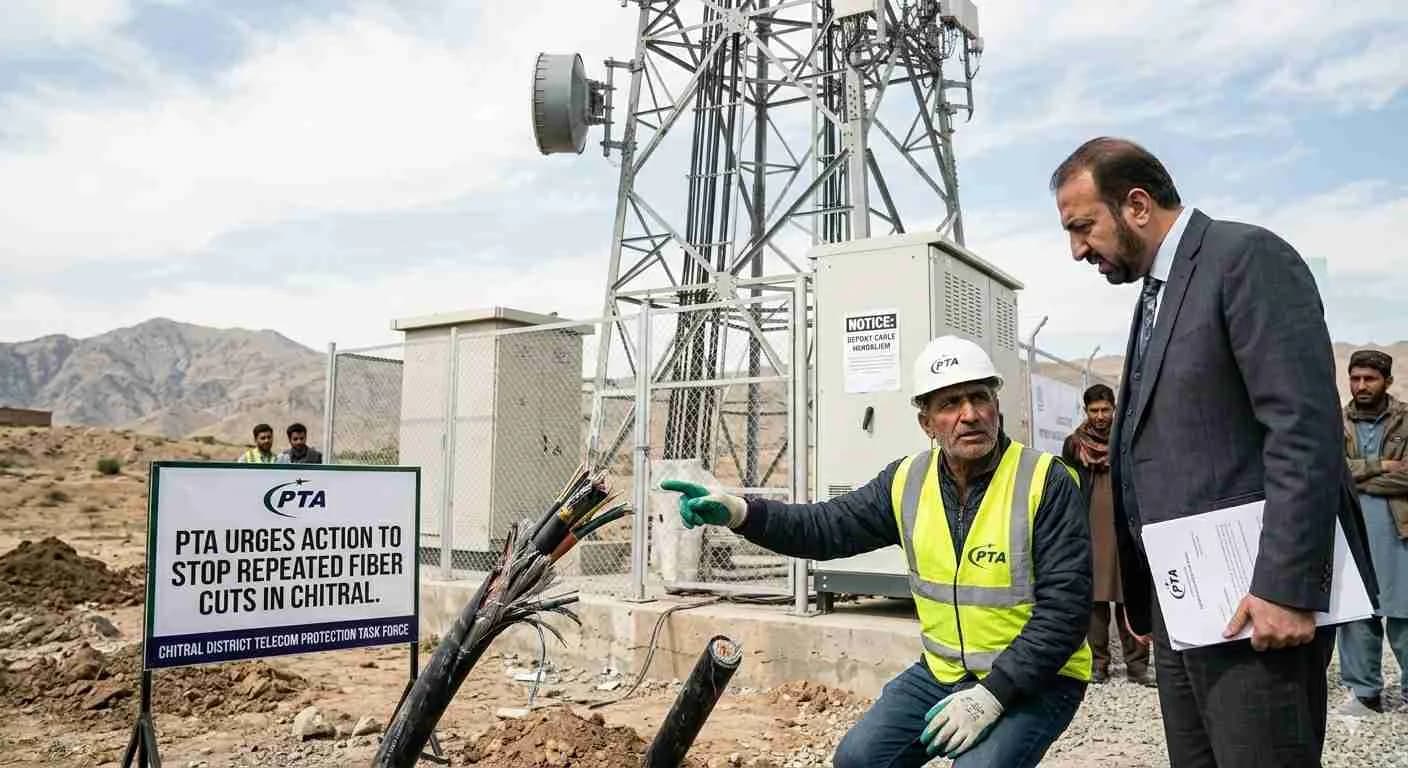
PTA Pushes for Urgent Action as Fiber Cuts Keep Disrupting Chitral
Bold reality: one damaged fiber line can disconnect students, businesses, hospitals and families across a difficult mountain region.
Closing Thought
The repeated fiber cuts in Chitral show why digital infrastructure needs the same protection as roads, bridges and power lines. Better coordination between public departments, contractors and telecom operators can reduce outages, but long-term resilience will require backup routes, stronger monitoring and serious planning for remote regions.
Quick Facts Box
- PTA has urged coordination to stop repeated fiber cuts in Chitral.
- Earlier coordination letters were issued on August 27, 2025 and November 24, 2025.
- Chitral reportedly has 142 telecom towers after recent additions.
- The region remains vulnerable because it relies heavily on limited fiber infrastructure.
The Pakistan Telecommunication Authority has called for stronger action to stop repeated telecom fiber cuts in Chitral, where damaged optical fiber lines continue to disrupt public communication services. The authority has asked government departments, contractors and telecom operators to improve coordination before carrying out development or excavation work.
According to publicly reported details, PTA had already issued coordination requests through letters dated August 27, 2025 and November 24, 2025. The issue has still continued, creating repeated service problems in a region where geography already makes connectivity difficult.
Why Chitral Faces Bigger Connectivity Risks
Chitral is not like a major urban centre where multiple network routes can support users if one line goes down. The region has difficult terrain, long routes and limited infrastructure. Reports presented before a Senate committee earlier this year noted that Chitral had reached 142 telecom towers, but network problems continued because of power outages, congestion and reliance on limited fiber routes.
From experience, people often think a tower alone solves the problem. It does not. A tower still needs power, spectrum and strong backhaul. If the fiber behind the tower is cut, the signal may exist but the service can still collapse.
The Real Cost for Families and Businesses
Fiber cuts create more than inconvenience. Students miss online classes, shopkeepers lose digital payments, freelancers miss deadlines, and families struggle to contact relatives during emergencies.
For many households, the financial burden is quiet but real. It is like paying rent for a shop where the shutter keeps getting stuck. The business exists, the customers exist, but work cannot continue smoothly. In many cases, users pay for packages and backup options just to survive repeated outages.
What PTA Wants Stakeholders to Do
PTA’s main concern is prevention. Departments and contractors need to inform telecom operators before road work, digging or construction begins near fiber routes. This allows operators to mark cable paths, deploy technical teams and reduce accidental damage.
One common mistake people make is treating telecom fiber as an invisible utility. But modern life now depends on it as much as electricity in many areas. A broken line can stop banking apps, emergency calls, school portals and office work.
Practical Steps That Can Reduce Outages
Local administrations should maintain updated maps of underground telecom routes. Contractors should get clearance before excavation. Telecom companies should improve warning markers and response teams. Public departments should also share project schedules in advance.
For users, the practical advice is simple. Keep an alternate SIM where possible, download important documents offline, and avoid depending on one connection for work, exams or emergency communication. Small businesses should keep backup payment options during service disruptions.
Article Details
Category: Telecom
Published:
Author: Muhammad Umer
More Stories