Quetta Railway Line Blast Triggers Panic as Dozens Injured in Sudden Explosion
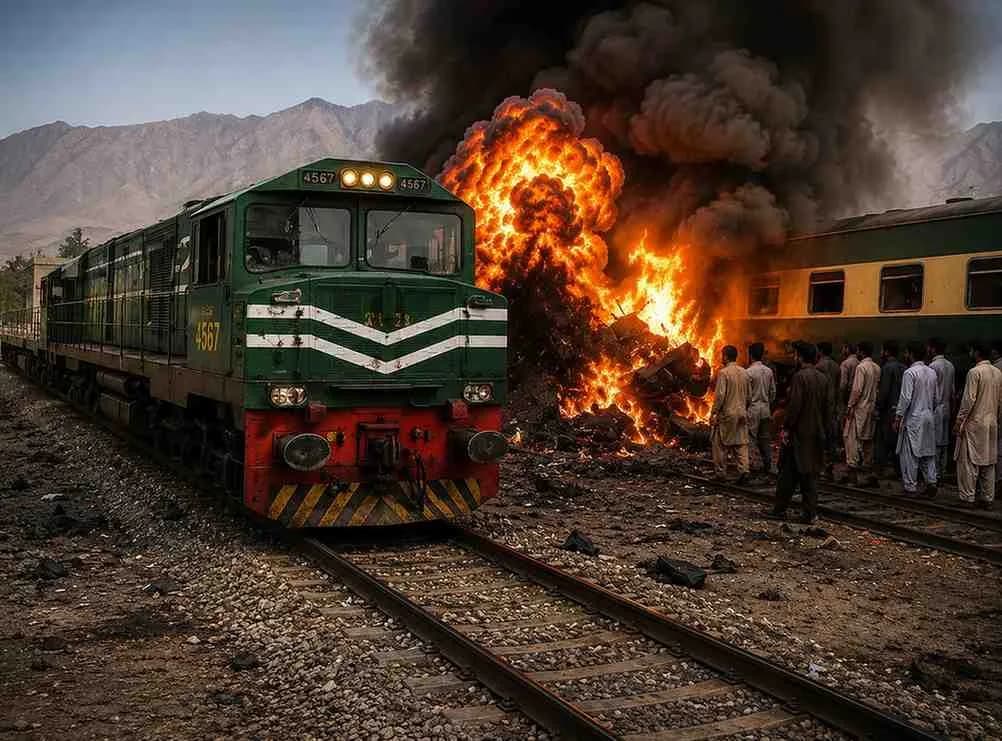
What happens when a routine train journey suddenly turns into chaos within seconds? In Quetta, that question became reality after an explosion near a railway track left dozens of passengers injured and triggered widespread panic among commuters and nearby residents.
The incident disrupted rail traffic and raised fresh concerns about the safety of transportation infrastructure in sensitive regions, where thousands of people rely on trains daily for affordable and long-distance travel.
Sudden Explosion Near Railway Track Shakes Quetta
According to initial information from local authorities and rescue teams, the blast occurred near a busy railway line where a passenger train was either passing or had recently crossed the area. The explosion created a loud shockwave that was heard in surrounding neighborhoods, sending people into panic.
Dozens of passengers sustained injuries, ranging from minor wounds to more serious trauma caused by broken glass, sudden impact, and panic-induced stampedes inside train compartments.
Emergency response teams were quickly mobilized to the site. Ambulances transported the injured to nearby medical facilities while security forces cordoned off the area to begin an investigation.
Emergency Response and Rescue Operations
In many cases involving rail accidents or explosions, the first hour is critical. Rescue teams in Quetta worked under pressure to ensure injured passengers received immediate medical attention.
Local hospitals declared emergency protocols to handle the sudden influx of patients. Doctors and paramedics treated victims for fractures, burns, and shock-related complications.
One common challenge during such incidents is coordination between transport authorities and rescue services. Delays in communication can sometimes slow down evacuation efforts, but in this case, response units were deployed rapidly to minimize risk.
Impact on Railway Operations and Public Movement
Following the explosion, railway operations in the affected zone were suspended temporarily. Train schedules were disrupted, and passengers at nearby stations faced delays and uncertainty.
Security officials began inspecting tracks for possible additional threats before allowing train movement to resume. Such precautionary measures are standard practice in situations involving suspected sabotage or unexplained blasts.
For daily commuters, this disruption creates more than inconvenience. Many passengers depend on trains as their primary mode of affordable travel between cities, and even a short suspension can affect work schedules, business deliveries, and family travel plans.
Human Impact: Beyond Numbers and Reports
While official updates focus on injured counts and damage assessments, the human side of such incidents tells a deeper story. Families waiting at stations often experience anxiety when news of an accident spreads without clear details.
A relatable example is a long-distance bus breakdown on a remote highway. Even if injuries are minor, uncertainty and lack of communication can create fear that feels much larger than the actual situation.
Similarly, passengers aboard trains during the Quetta blast likely experienced confusion, fear, and sudden disruption, which can leave lasting psychological effects even after physical recovery.
Investigation Underway to Determine Cause
Security agencies and railway authorities have launched a detailed investigation to determine the cause of the explosion. Early assessments typically examine multiple possibilities, including technical failure, external explosive devices, or other forms of sabotage.
Officials are also reviewing surveillance data from nearby stations and monitoring systems, if available, to trace activity before the incident.
From experience, such investigations take time, especially when evidence is scattered or affected by environmental conditions. Authorities generally avoid early conclusions until forensic analysis is complete.
Rail Safety Challenges in High-Risk Zones
Railway networks passing through sensitive regions often face unique security challenges. These include long stretches of isolated track, limited monitoring infrastructure, and high passenger dependency.
Strengthening rail safety requires a combination of physical surveillance, modern detection systems, and community reporting mechanisms. In recent years, several countries have upgraded rail security using smart sensors and AI-based monitoring tools.
However, implementation in large and geographically complex regions remains a gradual process, often limited by budget and terrain challenges.
Comparison of Emergency Response Scenarios
To understand the scale of response required in incidents like the Quetta blast, here is a comparison of typical emergency scenarios involving transportation accidents.
| Incident Type | Response Time | Resources Used | Risk Level |
|---|---|---|---|
| Minor Train Accident | 30–60 minutes | Local ambulances, police | Low to Medium |
| Rail Explosion Incident | Immediate emergency deployment | Rescue teams, bomb disposal units, hospitals | High |
| Major Urban Disaster | Multi-agency response | National emergency systems | Very High |
Financial Strain on Affected Families
Beyond physical injuries, such incidents often create financial pressure on affected families. Hospital treatment, travel for relatives, and recovery costs can add up quickly.
A simple analogy is unexpected car repair during a long road trip. What starts as a small disruption can turn into a significant financial burden, especially for middle-income households already managing tight budgets.
In similar cases, families often rely on community support, emergency funds, or assistance programs to manage immediate medical expenses.
Ongoing Concerns and Public Reaction
The incident has sparked concern among regular railway users, many of whom are now questioning safety measures along long-distance routes.
Social discussions often highlight the need for stronger surveillance and faster emergency coordination systems. At the same time, authorities emphasize that investigations must conclude before drawing final conclusions.
Public confidence in rail travel is closely tied to how quickly safety is restored after such incidents.
Closing Thought
Events like the Quetta railway explosion serve as a reminder of the importance of resilient infrastructure and coordinated emergency systems. As investigations continue, the focus remains on recovery, safety improvements, and ensuring that passengers can return to rail travel with confidence and security.
Quick Facts Box
- Explosion occurred near railway track in Quetta
- Dozens of passengers reported injured
- Train operations temporarily suspended in affected zone
- Emergency and security teams launched full investigation
Article Details
Category: News
Published:
Author: Rabia
More Stories