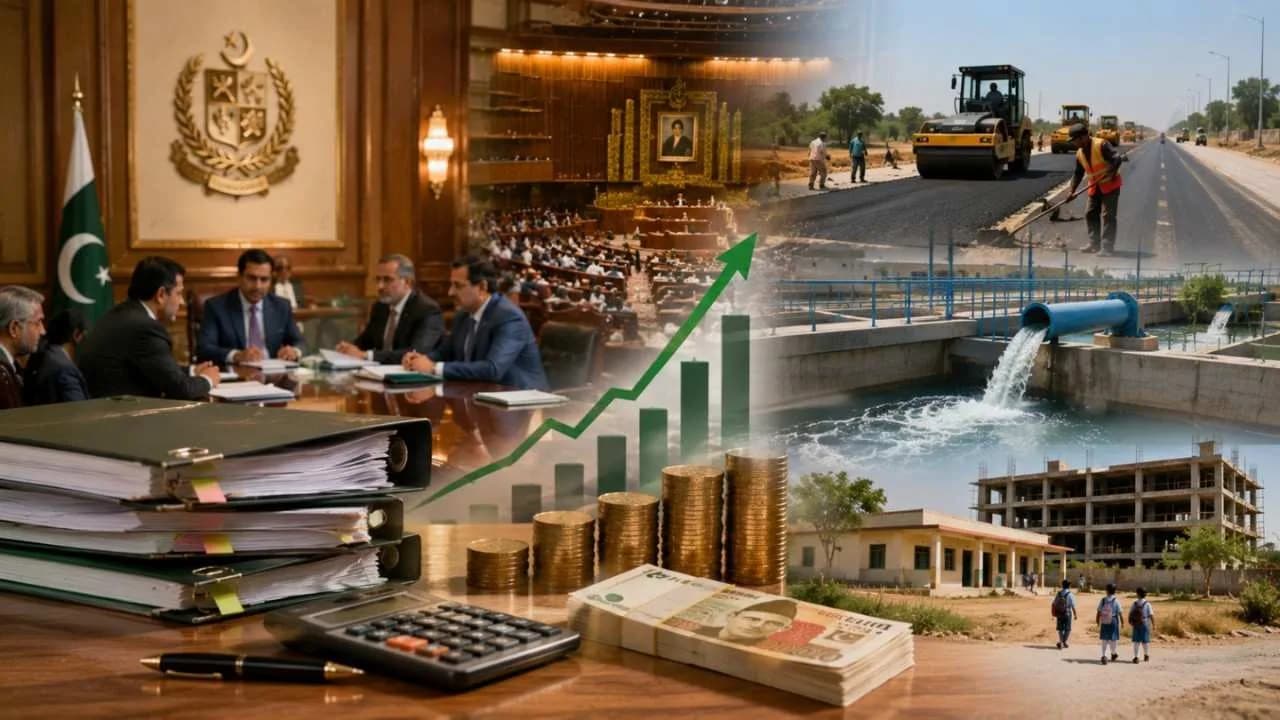
SAP Scheme Spending Rules Revised Ahead of Budget 2026
What happens when billions in development funds are released without strict oversight? Taxpayers begin asking hard questions, especially at a time when inflation continues to squeeze household budgets across Pakistan.
Government Updates SAP Spending Framework
The federal government has introduced revised spending guidelines for the Sustainable Development Goals Achievement Programme (SAP) just days before the announcement of Budget 2026. The move comes alongside a proposed allocation of Rs70 billion for parliamentarians under the programme.
According to official details, the Cabinet Division amended policy instructions to improve monitoring, transparency and utilisation of development funds. The programme has remained under public scrutiny for years due to concerns over political influence and inefficient use of taxpayer money.
In many cases, development funds are announced with high expectations but fail to produce visible improvements on the ground. Roads remain incomplete, water supply projects stall midway and local communities continue waiting for promised facilities.
Why the SAP Scheme Continues to Face Criticism
The SAP programme has often been criticised for functioning more as a political management tool than a structured development initiative. Critics argue that lawmakers receive discretionary project funding without strong accountability mechanisms.
Over the past five years, more than Rs300 billion has reportedly been utilised under the programme. However, questions continue to surface regarding the actual impact of these expenditures.
From experience, one common mistake people make is assuming that every announced development budget automatically translates into public benefit. In reality, implementation quality matters more than headline figures.
Financial Pressure on Ordinary Citizens
For many Pakistani families, rising inflation already feels like carrying an extra monthly utility bill that never disappears. When public development funds are questioned, frustration grows because citizens expect better roads, schools and hospitals in return for taxes and government spending.
Analysts believe the updated guidelines could help create stricter checks on project approvals and fund distribution. However, the effectiveness of these changes will only become clear after implementation begins.
Quick Facts Box
- Rs70 billion proposed allocation for SAP in Budget 2026
- More than Rs300 billion reportedly utilised in five years
- New policy guidelines issued by Cabinet Division
- Focus placed on improving fund utilisation and oversight
SAP Scheme Funding Snapshot
| Category | Details |
|---|---|
| Programme Name | Sustainable Development Goals Achievement Programme |
| Proposed Allocation | Rs70 Billion |
| Funds Used in Five Years | Over Rs300 Billion |
| Purpose of Amendments | Better monitoring and effective utilisation of funds |
What to Watch in Budget 2026
The revised SAP guidelines arrive at a sensitive economic moment. Pakistan is balancing development needs with fiscal pressure, debt obligations and public demand for transparency.
Observers will closely watch whether the revised framework leads to measurable development outcomes or simply becomes another administrative adjustment. The coming budget may reveal how serious the government is about improving accountability in public spending.
For citizens, the real test is simple. They want to see roads completed on time, clean water reaching neighbourhoods and public money delivering visible change instead of paperwork.
Article Details
Category: Scheme
Published:
Updated:
Author: Fiza
More Stories