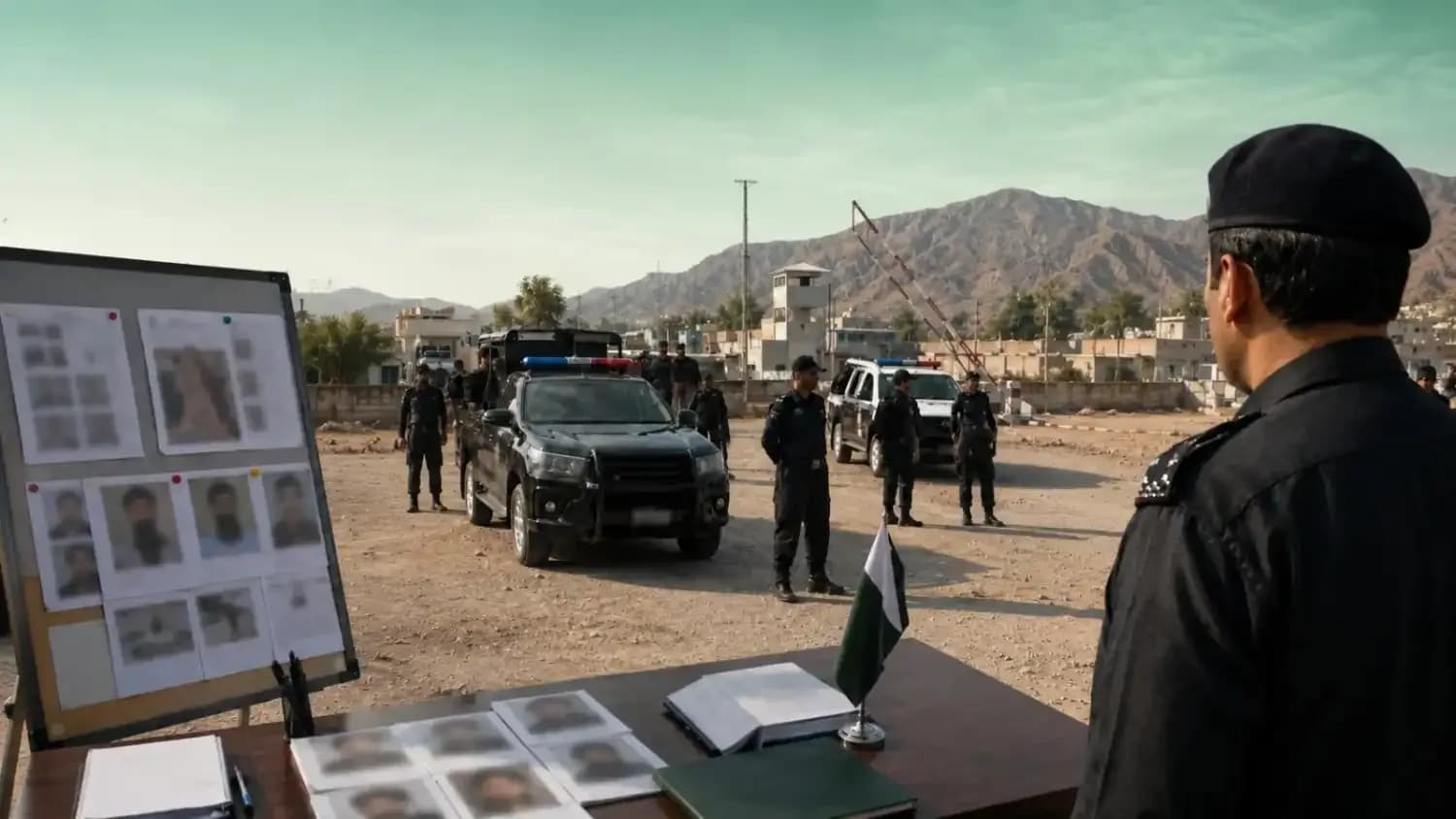
Security Forces Kill 11 Militants in KP

Security Forces Kill 11 Militants in KP
Security Forces Kill 11 Militants in North Waziristan IBOs as Operations Continue
Can one operation change the security mood of an entire district? In North Waziristan, the latest intelligence-based actions have again brought Pakistan’s counter-terrorism campaign into sharp focus.
Security forces killed 11 militants during a series of intelligence-based operations in the Datta Khel area of North Waziristan over the past 48 hours, according to the Inter-Services Public Relations. The military’s media wing said the operations were launched after information pointed to multiple militant locations in the area.
The development comes at a sensitive time for Khyber Pakhtunkhwa, where repeated militant activity has placed heavy pressure on law enforcement agencies, local communities, traders, transporters and families living near affected zones.
Closing Thought
Pakistan’s security challenge will not be solved through one operation alone. However, consistent intelligence work, stronger local policing, better border management and community support can help reduce the space available to militant networks. The real test now is whether these gains can translate into lasting peace for residents who have lived with instability for years.
Quick Facts Box
- 11 militants were killed in Datta Khel, North Waziristan.
- The operations continued for 48 hours, according to ISPR.
- Weapons and ammunition were recovered from the killed militants.
- Sanitisation operations were continuing in the area.
What Happened in Datta Khel?
According to the ISPR, security forces engaged multiple militant positions in the Datta Khel area of North Waziristan. The operation involved intense exchanges of fire before 11 militants were neutralised.
The military said the killed militants were involved in terrorist activities in the region. Weapons and ammunition were also recovered after the operation. Officials said sanitisation work was continuing to clear any remaining militants who may still be hiding in the area.
Datta Khel has remained one of the more sensitive pockets of North Waziristan due to its difficult terrain, scattered settlements and historic militant movement. In many cases, such areas require repeated follow-up operations because armed groups can use natural cover, local tracks and remote hideouts to avoid detection.
Why Intelligence-Based Operations Matter
Unlike broad security sweeps, intelligence-based operations are usually more targeted. They rely on information gathered through surveillance, local inputs, field intelligence and movement tracking. This approach helps security forces focus on specific hideouts instead of disrupting a wider civilian population.
From experience, the success of such operations depends on two things: timely intelligence and quick execution. If the information is delayed, militants often move. If the response is slow, the area becomes harder to secure.
One common mistake people make is assuming that a militant hideout is always a large camp. In reality, it can be a small compound, a temporary shelter, a cave-like position or even a shifting safe point used only for movement and storage.
Key Details at a Glance
Impact on Local Communities
For people living in North Waziristan and nearby districts, security operations are not just headlines. They affect daily routines, school attendance, market hours, transport movement and family decisions.
A family planning to send a child to school or a trader moving goods to a local market often faces uncertainty when an area becomes tense. The financial burden can feel like running a household during load-shedding with a broken generator: every extra hour costs money, patience and peace of mind.
When security conditions improve, business activity usually returns gradually. Shops reopen for longer hours. Public transport becomes more predictable. Families feel more confident about movement. But when violence rises again, people quickly become cautious.
Bannu Operation Also Reported
Separately, security sources said at least 16 militants, including two ring leaders, were killed during an ongoing joint operation in Bannu involving the Pakistan Army, police and Counter Terrorism Department. Two policemen were also martyred during that operation, according to the information available so far.
These linked developments show that the militant threat is not limited to one district. Khyber Pakhtunkhwa’s security environment remains complex, especially in areas where militants attempt to regroup, move weapons or target security personnel.
Why KP Remains a Security Flashpoint
Khyber Pakhtunkhwa has faced repeated attacks on police, security forces and civilians in recent years. The geography of the province, its border proximity and the presence of remote mountainous routes make counter-terrorism work difficult.
Militant networks often rely on mobility. They move between hideouts, use small cells and avoid large visible gatherings. That is why intelligence-based operations remain central to the state’s security response.
In many cases, the most important work happens before a single shot is fired. Mapping movement, identifying support channels and cutting supply routes can be just as important as the final raid.
What Residents Should Keep in Mind
During security operations, local residents should avoid travelling through restricted routes unless authorities allow movement. Families should follow official instructions, avoid spreading unverified claims and report suspicious activity through proper channels.
People should also be careful with social media updates. Unverified posts can create panic, expose security movements or put civilians at risk. Responsible communication matters during sensitive operations.
Practical Safety Tips
Residents in affected areas should keep essential documents accessible, maintain contact with trusted family members and avoid unnecessary travel during active operations. Transporters and shopkeepers should confirm road conditions before sending goods or opening businesses in tense zones.
Parents should rely on school administration updates instead of rumors. Community elders and local representatives can also help by sharing verified information with residents.
What Happens Next?
The ISPR said sanitisation operations were continuing in the area. This usually means security forces are checking possible hideouts, clearing suspicious locations and making sure no remaining militants are present.
Such follow-up work is important because militants may leave behind weapons, ammunition, communication material or improvised explosive devices. Clearing an area properly helps reduce the risk of future attacks.
Final Analysis
The killing of 11 militants in North Waziristan highlights the continuing pressure on militant networks in Khyber Pakhtunkhwa. It also shows the scale of the challenge facing Pakistan’s security forces, police and counter-terrorism teams.
For ordinary citizens, the bigger concern is simple: safety, stability and normal life. Counter-terrorism success will be judged not only by the number of militants killed, but by whether families can travel, work, study and live without fear.
Raw Meta Title
Security Forces Kill 11 Militants in KP
Raw Meta Description
Security forces killed 11 militants in North Waziristan IBOs as weapons were recovered and sanitisation operations continued.
Article Details
Category: Pakistan
Published: 25 May 2026
Time: 1:29 am
Updated: 25 May 2026 at 6:58 pm
Author: Muhammad Umer
More Stories