Why does a mobile recharge feel smaller than the amount you paid? For millions of Pakistani users, telecom taxes are not just numbers hidden in a receipt. They directly affect calls, internet packages, mobile banking, online classes, freelancing, and everyday communication.
Why Users Feel Their Balance Disappears Quickly
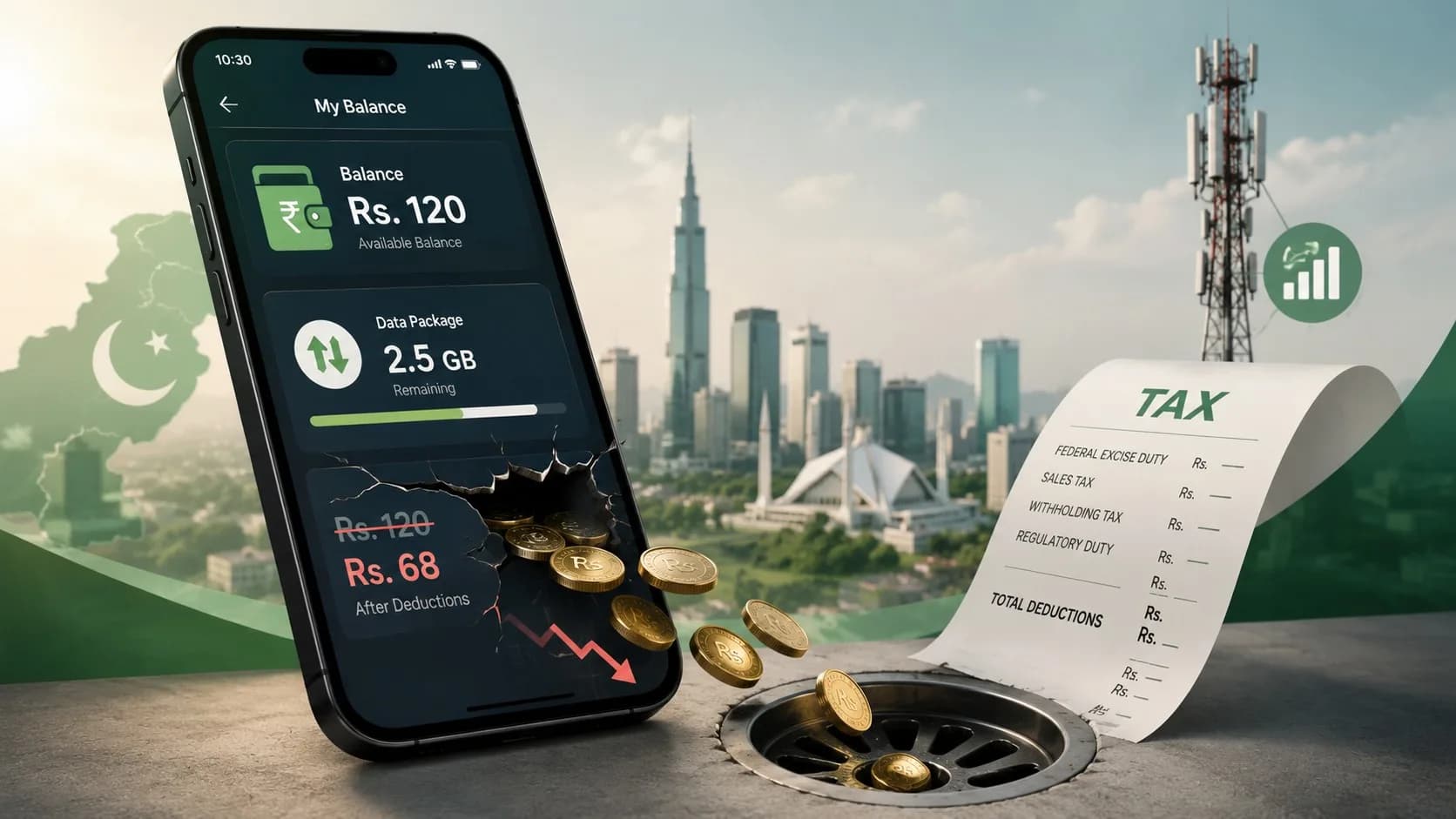
In Pakistan, mobile users usually pay taxes at two points. First, advance income tax can be deducted on recharge. Then sales tax applies when users consume balance or subscribe to calls, SMS, or data bundles. PTA’s own explanation says a Rs200 prepaid recharge becomes Rs177.778 after withholding tax, while GST is charged on usage or bundles.
This system makes telecom services feel more expensive than the advertised package price. A user may think they have loaded enough balance for a weekly internet bundle, but after tax deductions, the available amount may not match expectations.
The Real Burden Falls on Regular Families
From experience, the biggest issue is repeat spending. A student needs data for lectures. A freelancer needs backup internet. A shopkeeper needs mobile payments. A parent needs calling balance and WhatsApp access. When every recharge and package includes tax impact, the monthly cost rises quietly.
It is like buying groceries and finding that every item has a small extra cut at checkout. One deduction may look manageable, but by the end of the month, the total becomes noticeable for lower and middle-income families.
Why Telecom Taxes Matter for Digital Growth
Pakistan has crossed 200 million telecom subscribers and around 150 million broadband connections, according to PTA’s public milestone update. That means telecom is no longer a luxury sector. It is basic digital infrastructure for work, education, banking, delivery services, and public access.
One common mistake people make is treating telecom taxes as a small policy detail. In reality, higher telecom costs can discourage usage. People may reduce video classes, delay online work, avoid digital payments, or buy smaller data bundles even when their needs are bigger.
| Tax or Cost Factor | How It Affects Users | Practical Tip |
|---|---|---|
| Advance Tax | Reduces usable balance after recharge | Check balance before subscribing to packages |
| Sales Tax | Raises the final cost of bundles and usage | Compare final payable amount, not only package headline |
| Multiple SIM Usage | Families pay taxes across more than one number | Use one main network where coverage is strongest |
Operators Also Face a Difficult Balance
Telecom companies also argue that taxes, energy costs, tower upgrades, spectrum expenses, and network investment increase their operating pressure. If user spending is heavily affected by taxes, operators may have less room to improve coverage, speed, and service quality.
This creates a difficult cycle. Users want cheaper packages and better service. Operators need investment for better networks. The government collects revenue from telecom usage. The challenge is finding a balance that does not slow digital inclusion.
Closing Thought
Telecom taxes in Pakistan are slowly draining users’ wallets because they affect almost every recharge, package, and daily connection. A fairer and clearer tax structure could help users understand what they pay, support digital access, and make mobile internet more affordable for the people who now depend on it every day.
Quick Facts Box
- PTA explains that Rs200 prepaid recharge leaves Rs177.778 after withholding tax.
- GST is applied on calls, SMS, data usage, or additional bundles.
- Pakistan has crossed 200 million telecom subscribers.
- Broadband connections have reached around 150 million nationwide.
Topics in this story
Article Details
Category: Telecom
Published:
Author: Kaif
More Stories