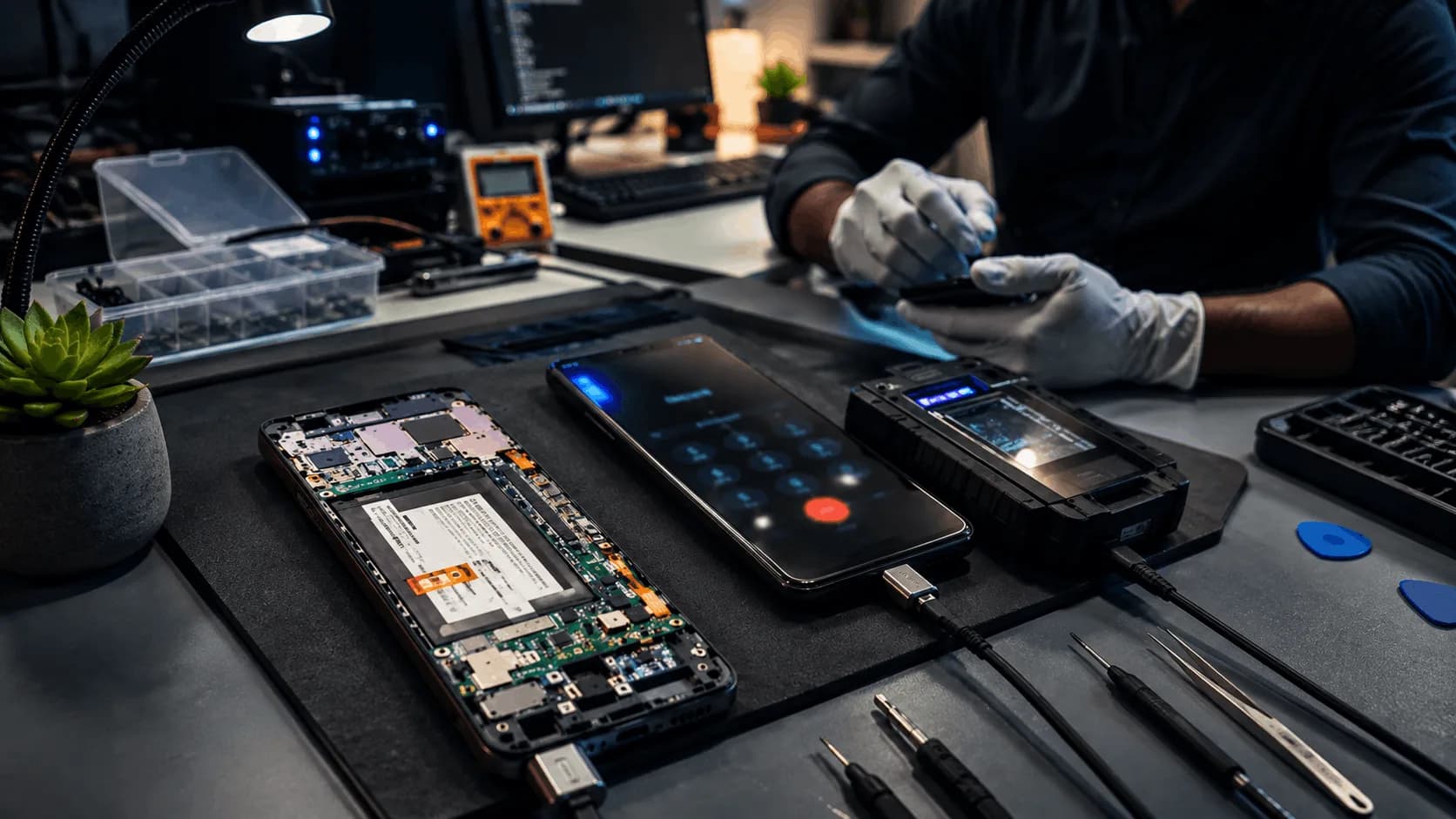

If you bought an iPhone or MacBook in the last few years, you already know Apple does not come cheap. But brace yourself, because Apple to raise prices is no longer just a rumor or analyst prediction. It is now a confirmed reality, straight from the top. On June 18, 2026, Apple CEO Tim Cook told The Wall Street Journal that price increases across Apple products are "unavoidable." The reason? A severe global memory chip shortage driven by the explosive demand for AI data centers.
Major chip suppliers have shifted their production away from consumer devices, leaving companies like Apple squeezed on costs. Cook admitted Apple has been absorbing these rising expenses for as long as possible, but the situation has simply become unsustainable. For millions of Apple users in the US and around the world, this announcement changes how they think about their next upgrade.
Related Article
Apple iPhone 17 Pro Max Price in Pakistan
Global Memory Chip Shortage Driven by AI Boom
The global memory chip shortage did not happen overnight. It has been building quietly for the past two years, and the AI revolution is the single biggest reason behind it.
Rising Demand From AI Data Centers
AI is hungry. Every ChatGPT query, every Gemini search, every enterprise AI model running in the cloud needs massive amounts of high-speed memory to function. Data centers operated by Microsoft, Google, Amazon, and Meta are consuming memory chips at a scale the industry has never seen before.
In many cases, a single AI server rack requires more memory bandwidth than hundreds of consumer laptops combined. This demand is not slowing down. It is accelerating every quarter, and chip manufacturers are scrambling to keep up.
AI workloads now consume the majority of new high-performance memory production
Cloud providers are signing long-term supply contracts, locking out consumer brands
Demand from AI infrastructure grew over 300% between 2023 and 2025
The result is a supply chain that simply cannot serve both the AI industry and consumer electronics at the same time.
Shift in Production Toward High-Bandwidth Memory (HBM)
Here is where the real problem lies. Companies like SK Hynix and Micron are not just selling more chips. They are physically converting their factory floors to produce a completely different type of memory called High-Bandwidth Memory (HBM).
HBM is what powers NVIDIA's AI GPUs. It is far more profitable than the standard LPDDR memory used in iPhones and MacBooks. From a business perspective, it makes perfect sense for chip manufacturers to chase those margins.
But the consequence is brutal for consumer electronics:
LPDDR and standard NAND production capacity is shrinking as HBM lines expand
Factories retooled for HBM cannot quickly switch back to consumer memory
Lead times for consumer-grade chips have stretched from weeks to months
This structural shift is not a short-term blip. Industry analysts believe HBM production will continue to expand through at least 2028, keeping pressure on consumer memory supply for years.
Impact on DRAM, NAND, and SSD Supply
The ripple effect is hitting every memory category. DRAM prices have surged as data center buyers outbid consumer electronics brands. NAND flash, used in SSDs and iPhone storage, is facing similar constraints as production capacity gets reallocated.
Memory Type | Primary Use | Price Trend (2024-2026) | Supply Status |
HBM (High-Bandwidth Memory) | AI GPUs, Data Centers | Up 180% | Oversupplied for AI |
LPDDR5 DRAM | Smartphones, Laptops | Up 40-55% | Tightening |
NAND Flash | SSDs, Phone Storage | Up 30-45% | Constrained |
UFS Storage | Mobile Devices | Up 35-50% | Constrained |
For Apple, which uses premium memory in every single product, these cost increases translate directly into margin pressure that can no longer be quietly absorbed.
Tim Cook Confirms Price Increases Are Unavoidable
Tim Cook does not make headlines like this lightly. When the CEO of the world's most valuable company tells The Wall Street Journal that price hikes are unavoidable, the market pays attention and consumers should too.
Apple's Efforts to Absorb Rising Costs
One common mistake people make is assuming that companies like Apple simply pass every cost increase straight to the customer. That is not how Apple operates, at least not immediately.
Cook confirmed in the WSJ interview that Apple has been actively working to absorb rising memory component costs rather than passing them on right away. Apple's enormous purchasing power, its long-term supplier contracts, and its ability to optimize chip usage through custom silicon like the M-series and A-series chips have all helped delay this moment.
Apple used its massive cash reserves to pre-purchase chip inventory at earlier, lower prices
Custom silicon design allowed Apple to be more memory-efficient than competitors
Supply chain teams negotiated extended contract terms to lock in older pricing
But even Apple's scale has limits. When suppliers are shifting their entire production model toward AI memory, no amount of negotiation can fully offset the structural shortage.
No Details on Product-Wise Price Changes Yet
As of June 18, 2026, Apple has not released any specific numbers. Cook's statement confirmed the direction but provided no roadmap on which products get hit first, by how much, or exactly when the new pricing takes effect.
This is deliberate. Apple rarely telegraphs pricing changes in advance. Announcing specifics too early triggers consumer panic-buying, which disrupts inventory planning and creates its own problems.
What we know so far:
No official price list has been shared with retailers or carriers
Apple's investor relations team has not updated forward guidance yet
Analysts expect the first pricing signals to appear alongside fall 2026 product launches
Timing and Scale of Price Hikes Remain Unclear
From experience, Apple tends to adjust pricing at product launch events rather than mid-cycle. The most likely window for the first confirmed Apple price increases is September 2026, when new iPhone and hardware announcements are traditionally made.
The scale remains genuinely unknown. Some Wall Street analysts project modest increases of $50 to $100 on flagship models. Others, factoring in the full cost impact across storage tiers and pro models, suggest increases of up to $200 on certain configurations.
What is clear is that waiting and hoping prices stay flat is no longer a realistic expectation for consumers planning their next Apple purchase.
AI Demand Reshaping the Semiconductor Industry
The memory chip shortage is not just an Apple problem. It is a signal that the entire semiconductor industry is being permanently restructured around the needs of artificial intelligence.
Memory Supply Shift From Consumers to AI Servers
Think of global chip manufacturing capacity like a highway. For decades, consumer electronics, phones, laptops, tablets, dominated that highway. AI data centers were a small lane. Today, that has completely reversed.
Major chip fabs are now designing entire new facilities specifically for AI memory production. Samsung, SK Hynix, and Micron have each announced multi-billion dollar expansions, almost entirely focused on HBM and enterprise-grade memory.
Consumer memory now competes for leftover capacity, not priority production slots
Enterprise AI buyers pay 3x to 5x more per unit than consumer electronics brands
Chip allocation committees inside manufacturers now prioritize AI contracts first
This shift means companies like Apple are structurally disadvantaged in securing memory supply compared to cloud giants like Microsoft Azure or Google Cloud.
Pricing Pressure From Global Chip Shortage
The economics are straightforward and painful. When supply shrinks and demand holds steady or grows, prices rise. Apple is not the only one feeling this. Every company building hardware with significant memory requirements is navigating the same headwinds.
Component costs for premium smartphones have risen 20-35% since early 2024
Laptop manufacturers have already quietly increased base prices across multiple product lines
Microsoft raised its Surface lineup by up to $500 earlier in 2026 for the same underlying reason
Apple held the line longer than most, largely due to its supply chain sophistication. But the dam has now broken.
Structural Changes in Chip Manufacturing Priorities
This is not a cycle. Past chip shortages, like the 2021 automotive semiconductor crunch, were temporary supply-demand mismatches that corrected within 18 to 24 months. This situation is fundamentally different.
Chip manufacturers are making permanent capital allocation decisions that favor AI memory production for the foreseeable future. New fab construction takes three to five years. The capacity being built today is designed for AI, not iPhones.
Unless AI memory demand collapses (which no credible analyst is predicting), consumer electronics companies will face elevated chip costs as a new baseline, not as a temporary disruption.
Supply Chain Pressure on Apple
Apple has one of the most sophisticated supply chains in the world. But even that legendary operation is now showing real strain under the weight of the global memory chip shortage.
Rising Costs From Memory Suppliers
Apple's key memory suppliers include SK Hynix, Micron, and Samsung. All three have significantly raised their contract pricing for LPDDR and NAND components delivered to Apple's manufacturing partners in Asia.
SK Hynix has redirected a large portion of its most advanced production lines toward HBM for NVIDIA
Micron has raised NAND pricing across its product catalog by an estimated 30 to 40%
Samsung, while still a major Apple supplier, is also aggressively expanding its own HBM output
These are not small adjustments. On a device like the iPhone Pro Max with 8GB of RAM and 1TB of storage, the raw component cost increase can run into tens of dollars per unit at scale.
Dependence on External Chip Manufacturers
Unlike its processors, where Apple designs its own chips in-house and has them manufactured by TSMC, Apple does not design or manufacture its own memory. It is entirely dependent on third-party suppliers for RAM and storage.
Tim Cook explicitly addressed this in the WSJ interview. Apple will not build its own memory or storage factories. The capital investment, specialized expertise, and time required make it impractical even for a company with Apple's resources.
This dependency is Apple's core vulnerability in the current shortage. It cannot simply engineer its way around the problem the way it can with processor performance.
Apple's Strategy to Secure Future Supply
Despite not building its own fabs, Apple is not sitting still. Cook confirmed that Apple is prepared to use its vast cash reserves strategically to secure future memory supply.
Long-term supply agreements with Samsung are being expanded to guarantee RAM allocation for next-generation devices
Apple is reportedly offering suppliers significant upfront capital commitments in exchange for priority allocation
Engineering teams are exploring ways to reduce memory footprint through software and chip design optimizations
This approach has worked before. Apple used similar strategies during the 2021 chip shortage to maintain production while competitors like Sony faced PlayStation 5 stock collapses. The question is whether financial muscle alone is enough when structural production capacity simply does not exist.
Potential Impact on Apple Products
The question every Apple customer in America is asking right now is simple: which products will cost more, and by how much?
iPhone Pricing and Future Models
The iPhone is Apple's most important product line and the most exposed to memory cost increases. Modern iPhones use LPDDR5X RAM and high-speed UFS-style NAND storage, both of which are directly affected by the shortage.
Earlier analyst reports from respected Apple analyst Ming-Chi Kuo suggested Apple would try to hold base iPhone 18 prices steady. However, newer reporting indicates that premium configurations, particularly the iPhone 18 Pro and Pro Max with higher storage tiers, are likely to see price increases.
iPhone 18 base models may hold at current pricing to protect market share
Pro and Pro Max variants with 512GB and 1TB options are most at risk for increases
Apple's first foldable iPhone, expected in September 2026, may launch at a premium higher than originally projected
MacBook and iPad Cost Implications
MacBooks are particularly vulnerable because they use significantly more memory than phones. The M4 MacBook Pro with 24GB or 48GB of unified memory relies heavily on the same LPDDR supply chains being squeezed by AI demand.
MacBook Pro configurations with 24GB RAM and above are likely to see meaningful price adjustments
MacBook Air entry models may be protected to maintain the education and mainstream market
iPad Pro with M-series chips faces similar cost pressure on its memory components
From experience, Apple tends to absorb cost increases on its entry-level products while passing them on to pro and enthusiast configurations where customers have already demonstrated willingness to pay premium prices.
Possible Changes in Storage Configurations
One underreported possibility is that Apple may respond to cost pressures not just by raising prices but by adjusting what storage options are available at each price point.
Base storage tiers (128GB iPhone) could be quietly removed in favor of 256GB as the new entry point, at a higher price
Apple may reduce the number of storage configuration options to simplify supply chain management
Pro storage upgrades (512GB to 1TB) may see the steepest per-tier price increases
This is a strategy Apple has used before. It is less visible than an outright price increase but achieves a similar revenue outcome.
Industry-Wide Impact of Memory Shortage
Apple is not alone in this. The global memory chip shortage is creating pricing pressure across the entire consumer technology industry.
Effects on Other Tech Companies
Microsoft made headlines earlier in 2026 when it raised prices on its Surface laptop and tablet lineup by up to $500. The company cited the exact same memory supply constraints affecting Apple. Dell, HP, and Lenovo have all quietly adjusted pricing on premium laptop configurations.
Samsung Galaxy flagship phones have already seen price increases in several international markets
Google Pixel lineup is facing margin pressure as the company tries to maintain competitive pricing
PC manufacturers are caught between raising prices and watching volume sales decline
The industry consensus is forming around the idea that consumer electronics pricing has entered a new, structurally higher era for at least the next two to three years.
Rising Prices Across Consumer Electronics
The average American consumer is about to face a broad-based increase in the cost of premium technology. This is not just about Apple. It is about every device that depends on modern memory components.
Product Category | Expected Price Increase | Primary Cause |
Flagship Smartphones | $50 - $200 | LPDDR5X shortage |
Premium Laptops | $100 - $500 | LPDDR5 and SSD costs |
Tablets (Pro tier) | $50 - $150 | Memory and storage costs |
Desktop PCs | $50 - $200 | DDR5 and NVMe pricing |
AI PCs | $200 - $400 | HBM adjacent DRAM costs |
For consumers on a budget, this is a significant concern. The days of expecting annual hardware refreshes at stable or declining prices may be ending.
Supply Chain Disruption Risks
Beyond pricing, the memory shortage creates a second risk that is less talked about: product availability. If Apple cannot secure enough memory to meet demand, it faces the prospect of launching products that are chronically out of stock, as happened with the iPhone 12 and PlayStation 5 during the 2021 shortage.
Launch day availability for premium iPhone configurations could be severely constrained
Retail and carrier partners may need to implement waitlists for high-storage models
Corporate and enterprise Apple buyers may face longer lead times on large device orders
Semiconductor Manufacturers and Market Shift
To understand why Apple is raising prices, you need to understand the decisions being made inside the world's three largest memory manufacturers.
Role of SK Hynix and Micron
SK Hynix is arguably the most important company in the current memory crisis. It is NVIDIA's primary supplier of HBM3E, the high-bandwidth memory used in the H100 and H200 AI accelerators that are powering the global AI boom.
Hynix has been running its most advanced fab capacity at near 100% utilization for AI memory for over a year. Every wafer going toward HBM is a wafer not producing LPDDR for Apple.
Micron, the largest US-based memory manufacturer, is in a similar position. Its latest earnings calls have repeatedly highlighted HBM as its fastest-growing and most profitable product segment. Micron has explicitly stated it is allocating more capacity to AI customers.
SK Hynix HBM revenue grew over 200% year over year in 2025
Micron has raised NAND and DRAM prices for consumer customers by 30-40%
Both companies have indicated HBM expansion is their top capital priority through 2027
Samsung's Supply Allocation Strategy
Samsung is in a unique position. It is both a competitor to Apple (Galaxy phones) and a major Apple supplier (memory components). This dual role creates complex dynamics in how Samsung allocates its memory production.
Reports indicate Apple is rapidly expanding its memory orders with Samsung specifically to reduce dependence on Hynix and Micron. However, Samsung is also scaling up its own HBM production and faces the same internal allocation pressures.
Samsung's HBM3 and HBM3E production lines are being expanded aggressively
Apple's expanded Samsung orders give Samsung more leverage in pricing negotiations
Samsung's own Galaxy lineup competes with Apple for the same internal memory inventory
Global Memory Production Constraints
The bottom line is structural. Global memory production capacity cannot grow as fast as AI demand is consuming it. New fab construction takes years, advanced lithography equipment has an 18-month lead time, and skilled semiconductor engineers are in short supply worldwide.
TSMC, Samsung, and SK Hynix are all investing in new fabs, but most will not be online before 2027-2028
ASML, the sole supplier of EUV lithography machines, has a years-long order backlog
The US CHIPS Act is funding new domestic production, but American fabs are still years from meaningful output
Apple Leadership Transition Context
There is one more layer to this story that makes it especially significant. Tim Cook is not just delivering bad news about prices. He is doing it on his way out the door.
Tim Cook's Planned Exit
Cook announced earlier in 2026 that he plans to step down as Apple CEO in September 2026 after more than 14 years leading the company. His tenure transformed Apple into the world's most valuable company and built the legendary supply chain that has been Apple's greatest competitive advantage.
The fact that Cook chose to make this price increase announcement publicly and directly, rather than letting it emerge through product launches, reflects his commitment to transparency with investors and consumers as he approaches the end of his tenure.
Cook has been CEO since August 2011, succeeding Steve Jobs
Under Cook, Apple's market cap grew from roughly $350 billion to over $3 trillion
His final months as CEO are now defined by navigating this unprecedented supply challenge
John Ternus as Successor
John Ternus, Apple's current Senior Vice President of Hardware Engineering, is scheduled to take over as CEO. Ternus is the architect of Apple's M-series chip transition and is deeply respected within the company's engineering culture.
Inheriting a business facing confirmed price increases and supply chain disruption is a challenging starting point for any new CEO. However, Ternus's deep technical background may actually be an asset in managing the memory shortage strategically.
Ternus led the transition from Intel to Apple Silicon, a massive supply chain undertaking
His engineering-first mindset positions him well to find technical solutions to the memory dependency
Wall Street has responded cautiously but positively to the Ternus succession announcement
Strategic Continuity During Market Pressure
One concern investors and consumers share is whether Apple's strategic response to the memory shortage will remain consistent through the leadership transition. Cook has signaled that the strategies currently in place, expanded Samsung orders, long-term supply agreements, no own-fab strategy, will continue under Ternus.
Apple's board is clearly focused on ensuring that the transition does not create any additional uncertainty during an already difficult supply environment. The messaging from Cupertino has been deliberate and consistent.
Consumer Impact and Market Expectations
For everyday Apple customers, the abstract story of chip shortages and CEO transitions comes down to one practical question: what does this mean for my wallet?
Higher Prices for End Users
The answer is straightforward. If you are planning to buy an Apple product in late 2026 or 2027, you should expect to pay more than you would have a year ago. The magnitude depends on which product and configuration you are considering.
A customer in the US looking to upgrade from an iPhone 14 Pro to the iPhone 18 Pro may find the price gap between their old phone and the new one wider than any previous generation upgrade cycle.
Entry-level iPhone buyers may see modest increases of $50 to $100
Pro and Pro Max buyers with high storage configurations could see increases of $150 to $200
MacBook Pro customers configuring higher RAM options will likely see the steepest increases
"I was planning to upgrade my MacBook Pro this fall, but now I'm seriously considering pulling the trigger before the new models launch," said one technology professional in San Francisco, reflecting a sentiment that is spreading widely among Apple's core customer base.
Demand Changes in Premium Devices
Higher prices do not automatically mean lower demand for Apple products, but they do change purchasing behavior. From experience, price-sensitive consumers tend to hold onto current devices longer, shift to lower storage configurations, or consider refurbished options.
Refurbished iPhone and Mac sales are likely to increase significantly as new prices rise
Consumers may shift from 512GB to 256GB configurations to manage costs
Apple's trade-in program may see increased usage as customers look to offset higher new device prices
Apple's brand loyalty is extraordinary, but every price increase tests that loyalty to some degree, particularly in competitive markets outside the US.
Upgrade Cycle Pressure
One long-term consequence of Apple raising prices could be an extension of average device replacement cycles. American consumers already hold smartphones for an average of 3.5 years. If new iPhone prices jump meaningfully, that number could stretch to four or even five years.
This has downstream effects on Apple's services business, app ecosystem revenue, and accessory sales. Apple is well aware of this dynamic, which is one more reason the company has resisted raising prices for as long as possible.
Future Outlook for Memory Supply
The situation is difficult today, but will it get better? The honest answer is yes, eventually, but not as quickly as most consumers would hope.
Possible Stabilization of Chip Prices
Memory markets are cyclical. The same dynamic that is creating the current shortage, massive capital investment in new production capacity, will eventually create oversupply. This has happened repeatedly in the semiconductor industry over the past three decades.
Most credible analyst forecasts suggest consumer memory prices could begin to stabilize in late 2027 as new fab capacity comes online and AI hardware demand matures into a more predictable procurement cycle.
TSMC's new Arizona facility ramps production in phases through 2026-2027
Micron's Idaho expansion adds meaningful NAND capacity by late 2027
Samsung's new fab in Taylor, Texas begins production ramp in 2027
The question is whether these additions are enough to meaningfully offset AI demand growth, which continues to accelerate.
Expansion of AI-Focused Manufacturing
Here is the uncomfortable truth. Most of the new semiconductor manufacturing capacity being built right now is designed for AI, not for consumer devices. Even as total global chip production capacity grows, the share dedicated to consumer-grade memory may not grow proportionally.
NVIDIA's next-generation Blackwell Ultra architecture requires even more HBM per unit than its predecessors
Hyperscaler AI infrastructure spending (Microsoft, Google, Amazon, Meta) continues to grow at 30-40% annually
The AI memory market is projected to exceed $100 billion by 2028, dwarfing the consumer memory market
This means even as capacity expands, the structural competition between AI and consumer electronics for memory resources will likely persist.
Long-Term Supply vs Demand Balance
The long-term outlook suggests a new normal rather than a return to pre-AI pricing conditions. Consumer electronics companies, including Apple, are adapting their product strategies with this assumption baked in.
Apple's investment in custom silicon, designing chips that extract maximum performance from minimum memory, is not just an engineering achievement. It is a strategic response to the structural reality of constrained memory supply. Expect this trend to accelerate under John Ternus's engineering-focused leadership.
Apple will likely push memory efficiency further through software and chip architecture optimization
Premium device pricing will be re-anchored at higher baseline levels across the industry
Consumers who hold off on upgrades expecting a return to 2022-level pricing may be waiting indefinitely
Read Next:
PTCL Flash Fiber Surpasses 900,000 Subscribers Across Pakistan
Final Words
Tim Cook’s confirmation that Apple will raise prices due to the global memory chip shortage marks a major shift in the 2026 tech landscape. It highlights how rising AI-driven demand is reshaping the semiconductor industry and pushing costs higher across consumer devices.
For Apple users, this means upcoming products may become more expensive, especially as supply chain pressure continues. The situation reflects a broader change where AI infrastructure is now competing directly with consumer electronics for critical memory resources.
Apple is not alone in facing these challenges, and the industry as a whole is adjusting to this new cost reality driven by limited supply and increasing demand.
FAQs
What is causing Apple to raise prices?
A severe global memory chip shortage is the primary cause. AI data centers are consuming massive amounts of high-bandwidth memory, causing chip manufacturers to shift production away from consumer-grade RAM and storage. This has driven up component costs to the point where Apple can no longer absorb them.
Which Apple products will be affected?
No specific product list has been confirmed yet. However, the iPhone Pro lineup, high-configuration MacBook Pro models, and Apple's upcoming foldable iPhone are considered most at risk for immediate price increases based on their heavy reliance on premium memory components.
How is AI increasing memory chip demand?
Every AI model, whether running in a data center or on a device, requires high-speed memory to function. The explosion of AI infrastructure built by Microsoft, Google, Amazon, and Meta has created unprecedented demand for high-bandwidth memory (HBM), consuming production capacity that previously served consumer electronics.
Why are chips shifting toward AI servers?
Simple economics. HBM used in AI servers is 3x to 5x more profitable per unit than the LPDDR used in phones and laptops. Chip manufacturers like SK Hynix and Micron are following the money, permanently restructuring their factories to produce more AI memory and less consumer memory.
Did Tim Cook confirm exact price increases?
No. Cook confirmed that price increases are "unavoidable" in his June 18, 2026 WSJ interview, but provided no specific figures, no product list, and no timeline. The actual pricing details are expected to emerge at Apple's fall 2026 product launch events.
How are other companies affected by this shortage?
The shortage is industry-wide. Microsoft raised Surface prices by up to $500 earlier in 2026. Samsung, Google, Dell, HP, and Lenovo are all facing the same memory cost pressures. Apple is unique only in that its CEO made a direct public statement about it rather than simply adjusting prices quietly at launch.
When will memory chip supply stabilize?
Most analysts project partial stabilization beginning in late 2027 as new fab capacity from Micron, Samsung, and TSMC comes online. However, given continued AI demand growth, a full return to pre-shortage pricing levels is considered unlikely. Consumers should expect elevated hardware prices to persist as the new baseline through at least 2028.
(Source:AryNews)
Article Details
Category: Tech
Published:
Updated:
Author: Usama Haider
More Stories