By Usama Haider
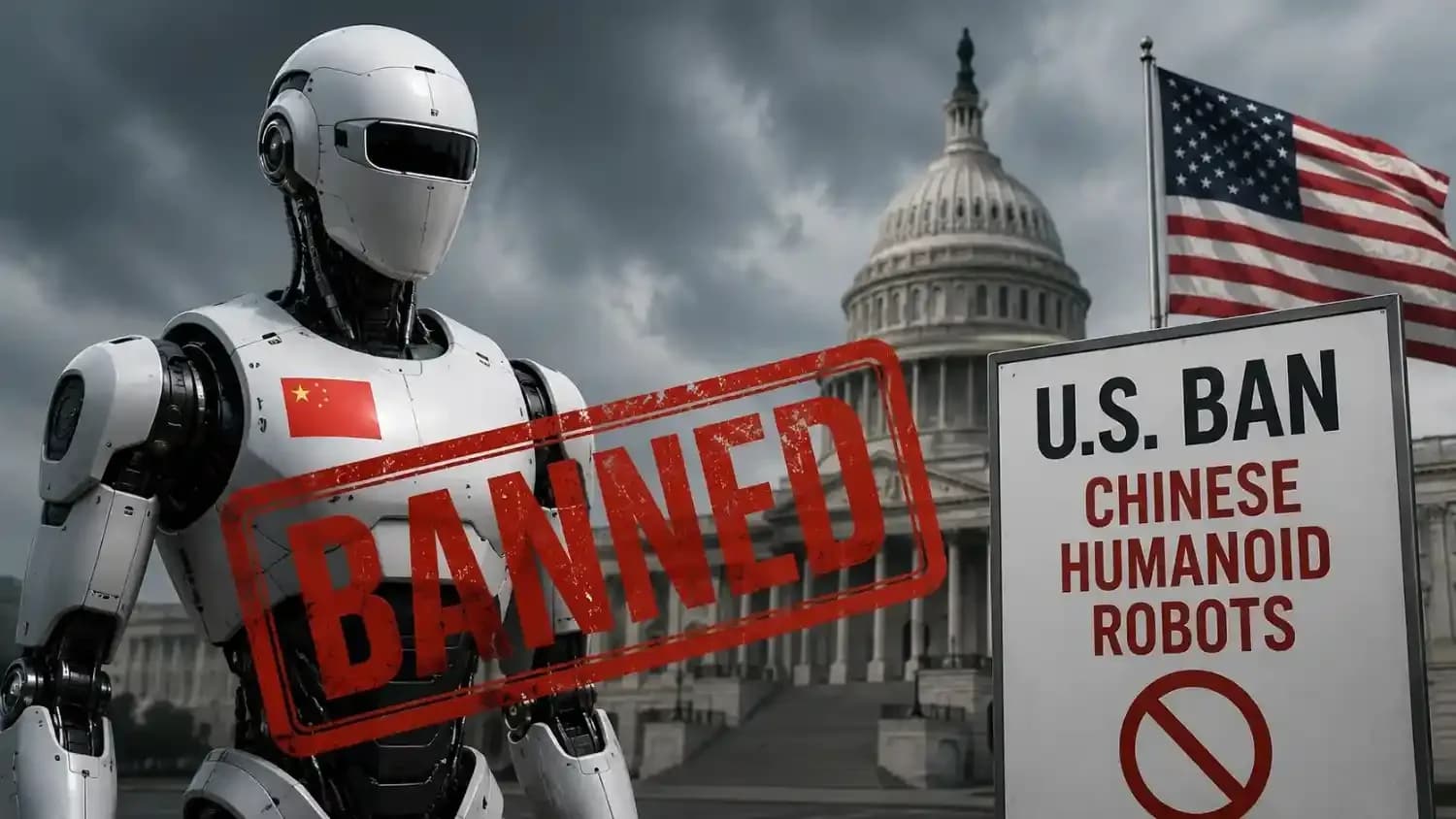
WASHINGTON, July 28, 2026 — The Trump administration has imposed new restrictions on imports of certain Chinese humanoid robots, quadruped robots, and connected power inverters, citing cybersecurity and national security risks to critical U.S. infrastructure and the country’s expanding artificial intelligence industry.
The measures, announced by the Federal Communications Commission (FCC), apply to new models that had not already been released when the restrictions took effect.
Summary
The FCC has restricted new Chinese humanoid robots, quadruped robots and connected power inverters.
U.S. officials cited cybersecurity, data theft, and supply-chain disruption risks.
The rules currently target unreleased models, while previously authorized products are not automatically banned.
The FCC targets risks to U.S. AI and critical infrastructure.
The restrictions are part of a broader U.S. effort to reduce security risks linked to Chinese-made technology as artificial intelligence, robotics, and data-center infrastructure become increasingly important to the American economy.
Connected power inverters are a major part of that infrastructure because they allow renewable energy systems and batteries to connect with electricity grids and data-center equipment.
The FCC said the targeted devices could create supply-chain vulnerabilities capable of disrupting U.S. economic activity and critical infrastructure.
FCC Chairman Brendan Carr said the agency would continue working to secure critical American supply chains.
U.S. officials are particularly concerned that connected devices could be exploited for cyberattacks, surveillance, or disruption if manufacturers or foreign governments gained unauthorized access to their systems or data.
The administration also wants more strategically important manufacturing to shift toward the United States instead of leaving key technology supply chains heavily dependent on China.
China pushes back as robot makers face pressure
The Chinese Embassy in Washington criticized the move and urged the United States to stop targeting Chinese companies with what Beijing described as unfair accusations and sanctions threats.
The embassy warned that China could take measures in response if U.S. actions materially damage Chinese interests.
The restrictions are expected to draw particular attention to Unitree, one of China’s leading humanoid robot manufacturers.
According to data cited in the source report, Unitree holds just under one-fifth of the global humanoid robot market and is one of several Chinese companies competing in the rapidly developing sector.
The company was also recently placed on a Pentagon list of companies alleged to have links to China’s military, increasing the possibility of further U.S. scrutiny.
Unitree has worked with Nvidia to use the U.S. chipmaker’s Blackwell technology in its robotics systems. Nvidia has said robot data linked to the partnership would remain in the United States and that American universities and research institutions are among Unitree’s major customers.
U.S. officials and China-focused lawmakers argue that advanced robots can collect large amounts of environmental and operational data, raising concerns that compromised systems could potentially be used for surveillance or interference with sensitive facilities.
John Moolenaar, the Republican chairman of the House Select Committee on China, welcomed the FCC action and said it would help protect U.S. security while strengthening the domestic robotics industry.
Chinese power inverters also come under tighter scrutiny.
The new measures also target connected power inverters, a market in which Chinese companies hold a major global position.
Chinese manufacturers, including Sungro, Huawei, Supply, and others, have expanded internationally as demand rises for solar power, battery storage, and electricity infrastructure supporting large data centers.
Huawei is already subject to extensive U.S. restrictions.
American officials have become increasingly concerned about the possibility that foreign-made grid-connected equipment could contain vulnerabilities capable of enabling remote disruption or malicious software installation.
Those fears have been reinforced by previous Chinese-linked cyber campaigns targeting U.S. infrastructure.
One example cited in the broader security debate is Volt Typhoon, a hacking campaign disclosed in 2023 in which attackers compromised privately owned routers and used them to help conceal activity targeting American critical infrastructure.
The U.S. Department of Defense already faces restrictions on purchasing certain solar cells, modules, and inverters made by entities classified as foreign companies of concern.
The latest FCC measures took effect upon publication and currently apply to robot and inverter models that had not already been released.
The FCC also has authority to revoke existing equipment authorizations, although the new action does not automatically prohibit every Chinese robot or inverter already approved for sale in the United States.
Non-Chinese suppliers are expected to receive exemptions in many cases, similar to exemptions used under previous U.S. restrictions involving foreign-made drones and routers.
Unitree, Sungrow, and Huawei had not immediately provided comments in response to requests cited in the source report.
Source: This article information is based on Reuters.
Article Details
Category: Tech
Published:
Updated:
Author: Usama Haider
More Stories