
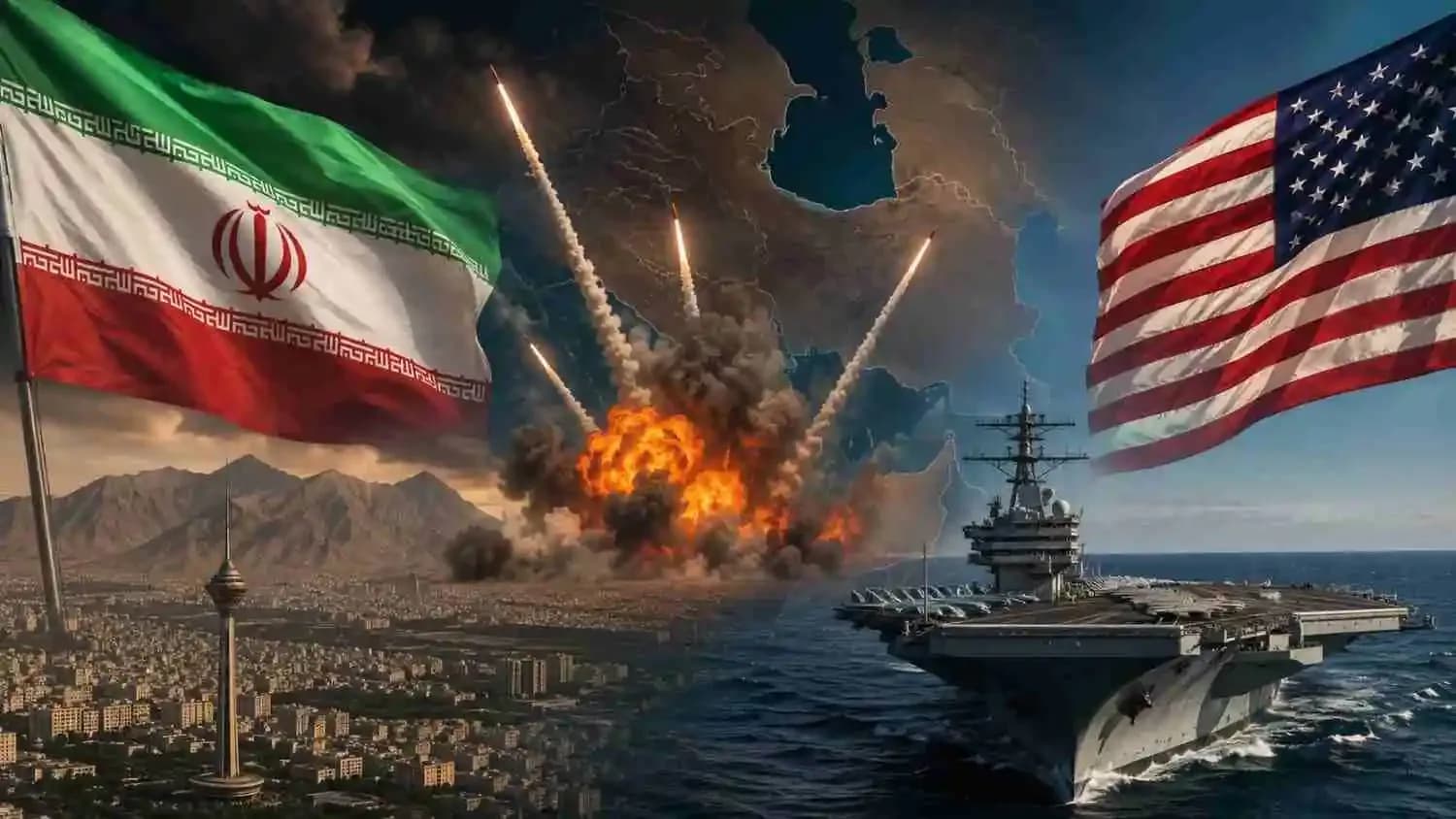
The US-Iran conflict has entered another dangerous phase, with the United States launching fresh strikes on Iranian targets and Iran responding with missile and drone attacks against US positions across the region.
The latest escalation is especially serious because the fighting has moved closer to the Strait of Hormuz, a critical route for global energy shipments. Any prolonged disruption there could push oil prices higher and create problems for countries far beyond the Middle East.
For Pakistan, the situation matters for another reason: higher oil prices can increase fuel costs, inflation, and the country's import bill.
What Happened Between the US and Iran Today?
The United States launched a new wave of strikes against Iranian military targets, including air-defense systems, radar facilities, maritime assets, mine-laying capabilities, and communications sites.
The US military said the strikes followed attempted Iranian attacks on commercial shipping in the Strait of Hormuz and American personnel in the region.
Iran responded with missile and drone attacks against American interests in Jordan, Bahrain, and Iraq, according to reports. Jordan also said it intercepted incoming missiles targeting its territory.
The exchange marks the most serious escalation in weeks and has renewed fears that the conflict could move into another prolonged phase of fighting.
Why Did the US Strike Iran Again?
Washington says the latest operation was a response to Iranian threats against American forces and commercial shipping.
President Donald Trump also said the strikes were linked to an Iranian attempt to place sea mines in the Strait of Hormuz and attacks against US forces. Iran has rejected the American position and warned that Washington would face consequences for the strikes.
The two sides therefore continue to give very different accounts of what triggered the latest escalation.
How Has Iran Responded?
Iran responded quickly with missile and drone attacks against US military positions in the region.
The response is important because American forces are stationed across several Middle Eastern countries. A continued exchange of attacks could therefore put additional countries under pressure even if they are not directly fighting Iran.
Iran has also warned that further American attacks could bring stronger retaliation.
The immediate concern is now whether the conflict follows another cycle of US strike → Iranian retaliation → further US action.
Why Is the Strait of Hormuz the Biggest Concern?
The Strait of Hormuz has become the most important economic pressure point in the conflict.
The waterway connects the Persian Gulf with the Gulf of Oman and is a major route for international energy shipments. Before the current disruption, roughly one-fifth of global oil shipments moved through the Strait.
Shipping activity has now fallen sharply.
Preliminary tracking data showed only four commodity vessels transiting the Strait on Tuesday, compared with a recent 10-day average of about 13. The figures may not capture every vessel because ships can switch off their tracking systems.
That decline has added another layer of uncertainty to an already tense energy market.
Is the Strait of Hormuz closed?
The situation is better described as a severe disruption to commercial shipping rather than a simple fully open or fully closed scenario.
Iran has threatened to restrict oil exports from the Gulf, while shipping activity has dropped significantly. At the same time, estimates of how much oil is still moving through the waterway differ because vessel-tracking data does not provide a complete picture.
For global markets, even the threat of a prolonged disruption is enough to create concern.
Why Did Oil Prices Jump Above $95?
Oil prices rose sharply as traders reacted to the renewed military exchanges and the risk of further disruption to energy supplies.
Brent crude moved above $95 a barrel, while US crude also climbed as markets assessed the potential impact of the conflict on Middle Eastern oil flows.
The main reasons include the following:
Lower shipping activity through the Strait of Hormuz
Increased risk for oil tankers operating in the region
Threats of further restrictions on Gulf oil exports
Renewed military escalation between the US and Iran
Growing concerns about a prolonged supply disruption
The important point is that oil prices can rise before an actual global shortage occurs. Markets often react to the possibility of disruption as much as the disruption itself.
Could the Conflict Spread to More Countries?
Yes, the risk of wider regional involvement has increased.
Iran has already targeted American interests in several countries, while the United States has military assets spread across the region.
The conflict could become more dangerous if:
Iran launches more attacks on US bases.
Commercial ships are targeted again.
Gulf countries become directly involved.
Shipping through Hormuz remains severely restricted.
Other regional powers enter the confrontation.
Diplomatic efforts completely collapse.
The biggest concern is that every new attack could create pressure for another military response, making the conflict increasingly difficult to contain.
What Does the US-Iran Conflict Mean for Pakistan?
Pakistan may be far from the fighting, but it could still feel the economic effects.
The biggest concern is oil. Pakistan relies heavily on imported energy, so a sustained increase in international crude prices can raise the cost of fuel imports.
That can then affect transportation, businesses, and consumer prices.
Area | Possible Impact on Pakistan |
|---|---|
Petrol and diesel | Higher global oil prices can increase fuel costs |
Inflation | Higher transport and production costs can put pressure on prices |
Import bill | More expensive oil can increase import expenses |
Trade balance | A larger energy bill can put pressure on the trade deficit |
Transport | Fuel increases can raise fares and logistics costs |
Businesses | Higher energy and operating expenses |
Financial markets | Global uncertainty can increase market volatility |
The actual impact will depend heavily on how long oil prices remain elevated and how the situation around Hormuz develops.
A short-term price increase would be very different from a prolonged disruption lasting several weeks.
What Could Happen to the Global Economy?
The consequences could extend far beyond oil markets.
Oil is essential for transportation, manufacturing, agriculture, and logistics. When energy becomes more expensive, businesses can face higher operating costs, which can eventually put pressure on consumer prices.
The main risks include the following:
Higher inflation
More expensive shipping
Increased transportation costs
Pressure on oil-importing countries
Greater financial-market volatility
Higher costs for businesses
Potential pressure on global economic growth
Global financial markets are already reacting to the renewed conflict, with oil prices rising and investors becoming more concerned about inflation and economic uncertainty.
Can the US and Iran stop the fighting?
Diplomacy remains possible, but the latest escalation shows how fragile the situation has become.
The conflict began with US and Israeli strikes on Iran in February and later shifted into a period of economic and military pressure. A June memorandum was intended to halt the fighting and create space for negotiations, but major disagreements remained unresolved.
Iranian President Masoud Pezeshkian has said Tehran would reciprocate if Washington honors its commitments under the memorandum.
At the same time, the United States has continued to warn Iran against further attacks.
This leaves diplomacy facing a difficult challenge: both sides are demanding concessions while continuing to apply military pressure.
What Happens Next?
The next few days could determine whether this remains a limited escalation or turns into another prolonged phase of war.
More Iranian Retaliation
If Iran launches further attacks against US forces, Washington could respond with another round of strikes.
That could create a dangerous cycle of retaliation.
Shipping Through Hormuz
Vessel movements will be one of the most important things to watch.
If commercial traffic begins returning toward normal levels, some pressure on oil prices could ease. If shipping remains severely restricted, energy markets could stay under pressure.
Oil Prices
Brent crude moving above $95 is already a warning sign.
If prices remain elevated for a prolonged period, oil-importing economies such as Pakistan could face greater economic pressure.
Diplomatic Talks
A credible diplomatic agreement could quickly change the situation.
If Washington and Tehran manage to reduce military tensions and restore safer shipping through the region, some of the current risk premium in oil prices could disappear.
Final Verdict
The latest US-Iran escalation is much bigger than another exchange of missiles. It has connected military conflict with global energy supplies, shipping, and economic stability.
Fresh US strikes have triggered Iranian retaliation, shipping through the Strait of Hormuz has fallen sharply, and oil prices have moved above $95 a barrel.
For Pakistan, the biggest concern is the potential impact of expensive oil on fuel prices, inflation, and the import bill.
But the most important factor is how long the crisis lasts.
If fighting slows and shipping through Hormuz returns to normal, some of the current economic pressure could ease. If attacks continue and the world's energy trade remains disrupted, the consequences could spread far beyond the Middle East.
For now, the next moves from Washington and Tehran and the situation in the Strait of Hormuz will determine how serious this crisis becomes.
Article Details
Category: News
Published:
Author: Usama Haider
More Stories