Why Digital Nomads Are Moving Across The Globe
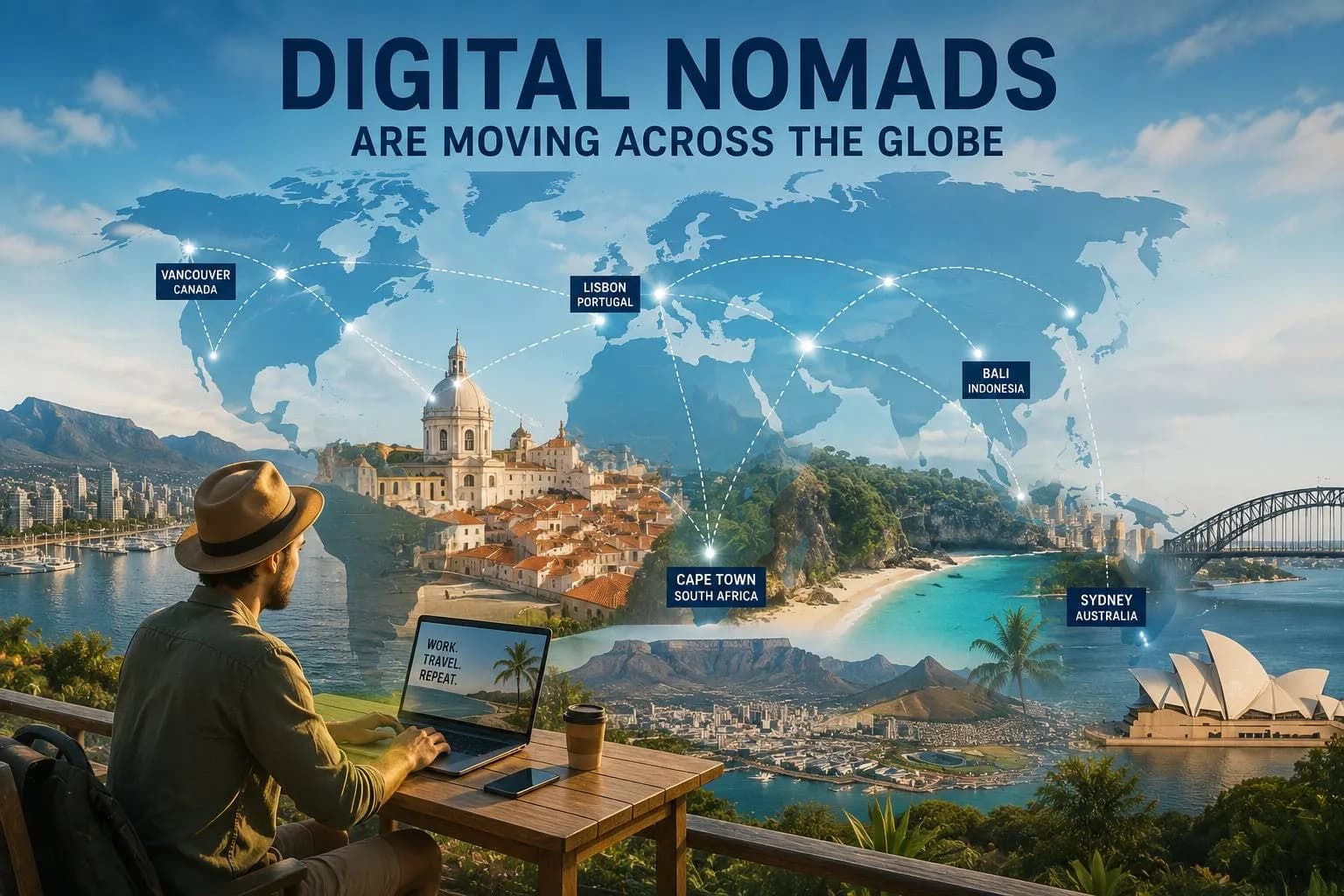
What if your office could be a café in Bali, an apartment in Lisbon, or a coworking space in Dubai? That is the lifestyle attracting digital nomads as remote work becomes more accepted worldwide.
Why Digital Nomad Life Is Growing
Digital Nomads Moving Globally are usually freelancers, remote employees, founders, creators, or consultants who earn online while living in different cities or countries.
The shift became stronger after companies learned that many jobs can be done outside traditional offices. Better internet, cloud tools, online payments, AI software, and video meetings have made remote work easier for skilled workers.
Main Reasons Behind The Movement
| Reason | Why It Matters |
|---|---|
| Remote work | People can work from anywhere with stable internet and approved contracts. |
| Lower living costs | Workers often move where rent, food, and transport are more affordable. |
| Digital nomad visas | More countries now offer legal routes for remote workers to stay longer. |
| Lifestyle freedom | Many workers want travel, flexibility, community, and better work-life balance. |
Cost Of Living Is A Major Driver
In many cases, digital nomads are not just chasing beaches or travel photos. They are making financial decisions. A remote worker earning in dollars or euros may reduce monthly expenses by moving to a country with cheaper rent, food, transport, and healthcare.
From experience, this is similar to a family shifting from an expensive neighborhood to a more affordable one. The income may stay the same, but the budget suddenly feels lighter.
The Hidden Costs Nomads Face
One common mistake people make is thinking digital nomad life is always cheap. Visas, insurance, flights, coworking spaces, taxes, equipment, and emergency travel can quickly increase costs.
A laptop repair in a foreign country or a sudden visa issue can disturb a monthly budget. For freelancers, irregular income adds another layer of pressure.
Countries Are Competing For Remote Workers
More countries are introducing digital nomad visa options because remote workers bring foreign income without taking local jobs in the traditional sense. Reports in 2026 show dozens of countries now offer digital nomad-style visas or remote work routes. :contentReference[oaicite:1]{index=1}
Thailand, Spain, Portugal, Malta, Malaysia, and several other destinations have become popular because they combine internet access, lifestyle appeal, visa options, and international communities.
What Digital Nomads Should Check First
Digital Nomads Moving Globally should not choose a country only because it looks attractive online. They should check visa rules, tax status, internet quality, healthcare, safety, housing costs, time zones, and local work restrictions.
They should also keep backup internet, emergency savings, health insurance, and clear client communication. A flexible lifestyle still needs serious planning.
Closing Thought
Digital nomads are moving across the globe because work is becoming less tied to one city. The trend offers freedom, savings, and new experiences, but it also brings legal, financial, and emotional challenges. The future of work may be borderless, but success will depend on planning, skills, stable income, and responsible travel.
Quick Facts Box
- MBO Partners reported 18.4 million American workers identified as digital nomads in 2025.
- Digital nomads averaged 6.2 locations in 2025, down from 7.2 in 2023.
- Many countries now offer digital nomad visas or remote work stay options.
- Key challenges include taxes, visas, healthcare, internet reliability, and unstable income.
Article Details
Category: Global
Published: 23 May 2026
Time: 4:18 am
Author: Pari Row
More Stories