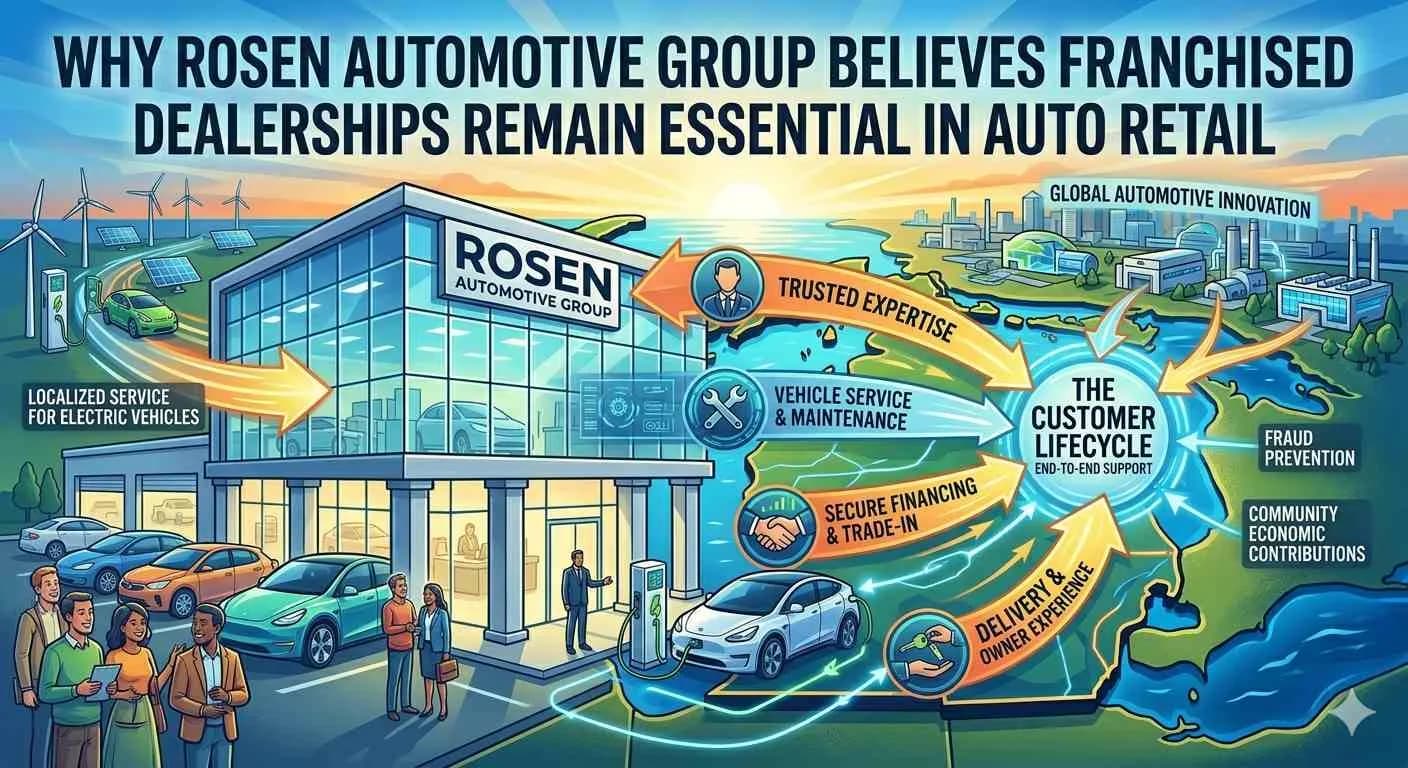
With online car sales, direct-to-consumer brands, and digital marketplaces expanding rapidly, many are asking a simple question. Do franchised dealerships still have a place in today’s auto retail ecosystem? Rosen Automotive Group strongly believes they do, and their reasoning reflects deeper industry realities.
Franchised Dealerships Under Renewed Spotlight
The automotive retail sector is undergoing structural change. Consumers are increasingly comfortable researching and even purchasing vehicles online. Yet Rosen Automotive Group argues that franchised dealerships continue to provide value that digital-only models cannot fully replace.
In many cases, the buying process for a vehicle still requires physical interaction, from test drives to financing discussions. This is where franchised dealerships maintain a critical role in bridging online research with real-world decision making.
Why Traditional Dealership Models Still Work
Franchised dealerships operate as authorized partners for manufacturers, offering certified inventory, warranty support, and trained service networks. These elements build trust in a high-value purchase environment.
From experience, one common mistake people make is assuming vehicle purchasing is similar to buying electronics online. Cars involve long-term financial commitments, maintenance planning, and legal documentation that often require in-person support.
For many families, purchasing a vehicle is one of the largest financial decisions they make after housing. It is similar to planning a long-term household budget where unexpected costs like repairs or insurance changes can significantly impact monthly expenses.
Key Advantages of Franchised Dealerships
Rosen Automotive Group highlights several structural strengths that continue to support franchised dealerships in a changing market.
| Feature | Why It Matters |
|---|---|
| Manufacturer Authorization | Ensures access to certified vehicles and parts |
| Service Network | Provides long-term maintenance support |
| Financing Assistance | Helps customers secure structured payment plans |
| Physical Experience | Allows test drives and direct inspection |
Digital Platforms Are Changing Expectations, Not Replacing Dealers
The rise of digital automotive platforms has changed how customers begin their buying journey. Most buyers now research vehicles online before ever stepping into a showroom.
However, the final stages of the purchase process still rely heavily on dealership engagement. This includes negotiations, financing approval, and trade-in evaluations.
In many cases, dealerships are evolving into hybrid experience centers, combining digital tools with physical interaction to create a more seamless buying journey.
Rosen Automotive Group’s Industry Perspective
Rosen Automotive Group emphasizes that franchised dealerships are not resisting change. Instead, they are adapting by integrating digital tools, online booking systems, and virtual showrooms.
This hybrid approach allows dealerships to stay competitive while maintaining the trust-based structure that has defined automotive retail for decades.
Closing Thought
While automotive retail continues to evolve rapidly, franchised dealerships remain a foundational part of the ecosystem. Rosen Automotive Group’s perspective highlights a balanced reality where digital innovation and traditional dealership models are not competing forces but interconnected parts of a changing industry landscape.
Quick Facts Box
- Franchised dealerships remain key in vehicle purchasing journeys
- Digital platforms influence early research but not final sales entirely
- Hybrid retail models are becoming more common
- Trust and service remain central to automotive sales
Article Details
Category: Auto
Published:
Author: Muhammad Sheikh
More Stories