
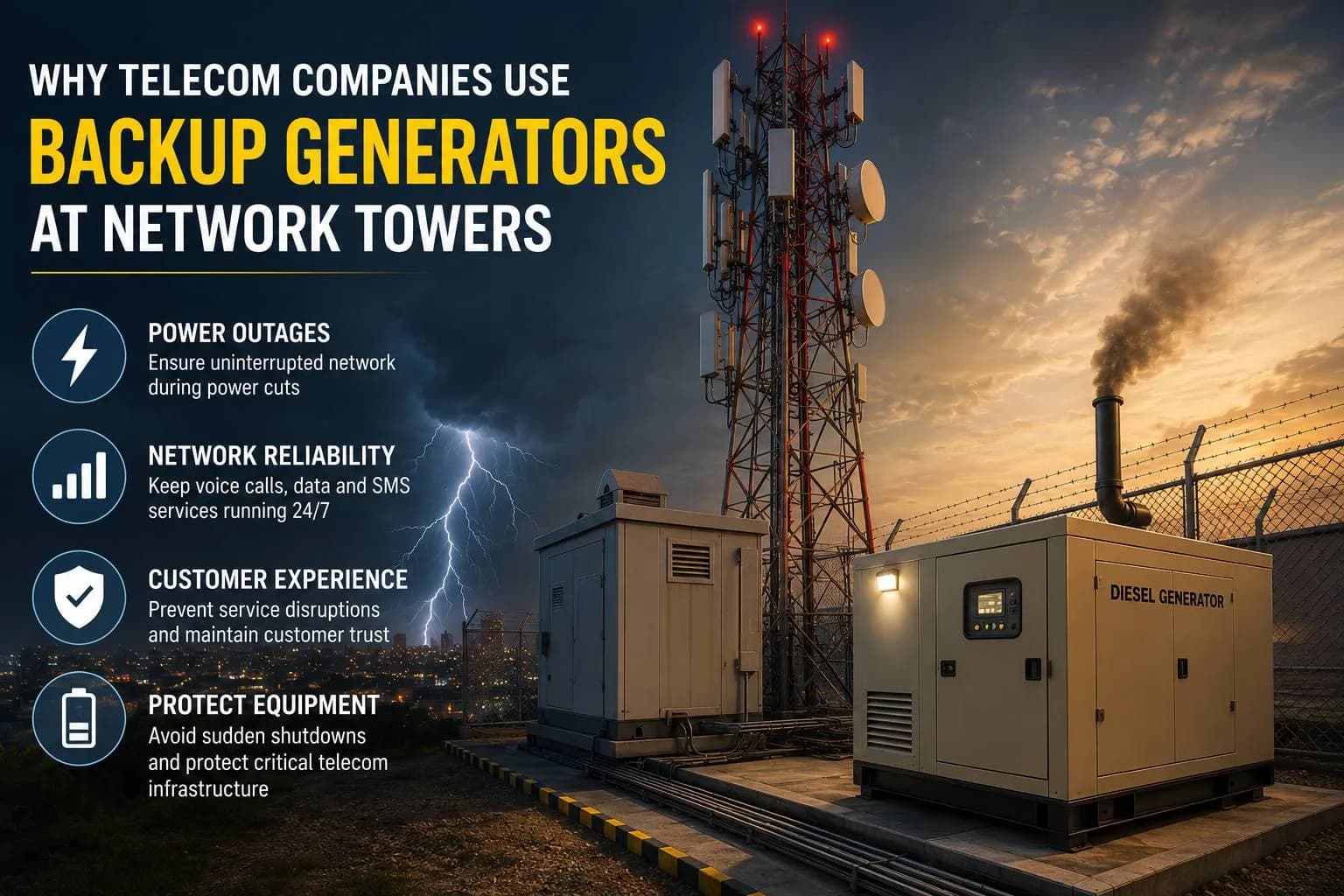
Ever seen mobile signals drop during long power outages? That usually happens because network towers need constant electricity, and backup generators often become the last line of defence.
Why Network Towers Cannot Run Without Power
Backup Generators At Network Towers are used because telecom sites need electricity all the time. A mobile tower runs antennas, radio units, routers, transmission equipment, cooling systems, batteries, and security devices.
When grid power fails, the tower does not magically keep working. First, batteries usually support the site for a limited time. If the outage lasts longer, generators help keep calls, mobile internet, SMS, and digital payment alerts moving.
How Backup Power Supports Telecom Services
| Backup System | Role At Tower Site |
|---|---|
| Batteries | Provide short-term power when electricity goes out. |
| Diesel generators | Keep towers active during longer outages and emergency conditions. |
| Solar backup | Reduces fuel use and supports remote or high-cost locations. |
| Remote monitoring | Helps operators track fuel, battery health, faults, and site uptime. |
The Hidden Cost Of Keeping Towers Alive
In many cases, users only notice whether the signal is working or not. Operators, however, deal with diesel supply, generator servicing, battery replacement, theft risk, field teams, and emergency repairs.
From experience, maintaining backup power is more difficult in remote areas. Fuel must be transported, technicians must reach the site, and equipment must survive heat, dust, rain, and voltage fluctuations.
Why This Matters For Ordinary Families
When tower backup fails, families feel the cost quickly. A student may miss an online class. A freelancer may lose a client call. A shopkeeper may be unable to receive a mobile wallet payment.
It is like paying for a phone connection but still keeping another SIM ready because the first network disappears during load-shedding. The backup cost slowly moves from the company to the customer’s pocket.
Why Generators Are Still Used Despite Solar Options
One common mistake people make is asking why telecom companies do not simply replace all generators with solar systems. Solar can help, but it needs panels, batteries, space, security, cleaning, and strong upfront investment.
Generators remain useful because they can provide immediate power during long outages, cloudy weather, heavy traffic hours, and emergency situations. For many tower sites, operators use a mix of batteries, generators, and solar to balance cost and reliability.
What Users Should Understand During Outages
Backup Generators At Network Towers improve service continuity, but they do not make networks unlimited. If power outages affect many towers at once, operators may still face pressure on fuel, batteries, and repair teams.
Users should keep phones charged, use SMS or short calls during outages, avoid large uploads, and report repeated network failure with location and time details.
Closing Thought
Backup generators may not be visible to most mobile users, but they play a key role in keeping Pakistan connected during power cuts. As data demand grows, telecom companies will need smarter energy planning, stronger batteries, more solar backup, and better maintenance. Reliable communication now depends as much on power resilience as it does on towers and spectrum.
Quick Facts Box
- Network towers need continuous power for antennas, radios, transmission, and cooling equipment.
- Batteries usually support short outages, while generators handle longer power failures.
- Diesel fuel, maintenance, theft protection, and field visits increase tower operating costs.
- Solar and hybrid systems can reduce generator use but require major investment.
Article Details
Category: Telecom
Published:
Author: Pari Row
More Stories