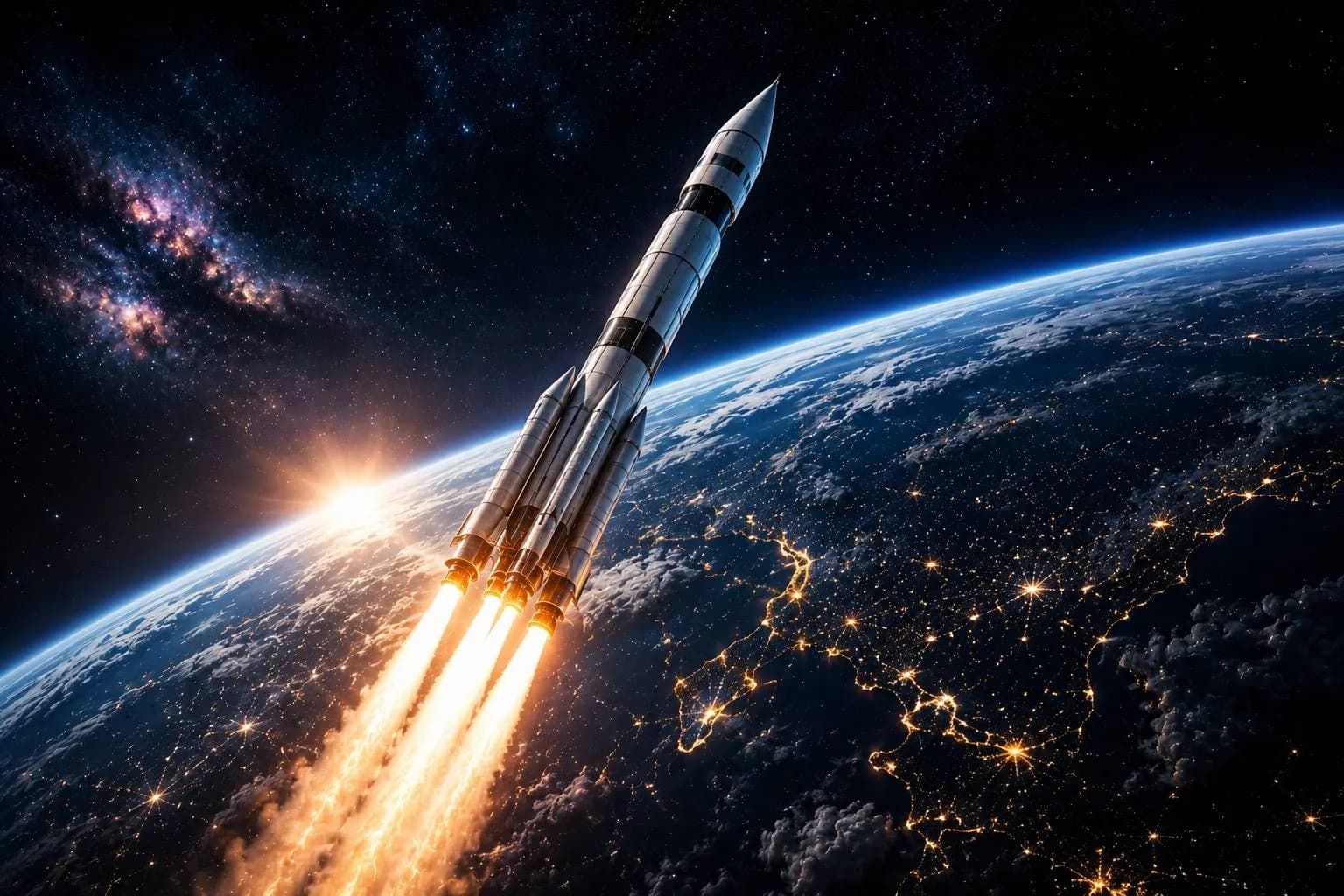
Space is no longer just about planting flags on the Moon. A new race is building around satellites, security, business, resources, and future influence beyond Earth.
Why Space Competition Is Back
Global Space Race is returning because space has become deeply connected to daily life. Satellites support internet, GPS, weather updates, banking systems, farming, shipping, disaster response, and military communication.
The difference today is that governments are not alone. Private companies now launch rockets, build lunar landers, operate satellite networks, and compete for commercial contracts. Brookings reported that the global space economy reached $613 billion in 2025, with the commercial sector making up 78% of that total.
What Is Driving The New Space Race?
| Driver | Why It Matters |
|---|---|
| Moon missions | Countries want scientific leadership, lunar access, and future resource rights. |
| Satellite networks | Internet, navigation, weather, and defense systems depend on satellites. |
| Private companies | Commercial players are lowering launch costs and speeding up innovation. |
| National security | Modern defense relies on space-based communication, surveillance, and positioning. |
The Moon Has Become Strategic Again
NASA says its Artemis program aims to return astronauts to the Moon, build a long-term exploration base, and prepare for future Mars missions. China, India, Japan, Europe, Russia, and private firms are also moving deeper into lunar activity.
In many cases, the Moon is being seen as more than a scientific target. Its south pole may offer water ice, which could support future fuel, life support, and longer missions.
The Financial Burden Behind Space Ambition
One common mistake people make is thinking space missions only affect scientists. The costs and benefits can reach ordinary families too. When countries spend heavily on space, citizens expect better weather forecasting, internet coverage, disaster planning, and technology jobs in return.
It is like building a motorway. The project looks expensive at first, but people support it when it improves trade, travel, safety, and opportunity.
Satellites Are The Real Everyday Prize
From experience, most people do not think about satellites until GPS fails, internet slows, or weather warnings arrive late. Yet satellites are now central to agriculture, banking, transport, emergency response, and telecom networks.
Global Space Race is also about controlling these services. Countries want secure satellite access because relying fully on foreign systems can become risky during conflict, sanctions, or major crises.
Private Firms Are Changing The Game
The old space race was mostly between superpowers. Today, private companies are building rockets, lunar rovers, spacecraft, space stations, and satellite internet networks. NASA is also working with commercial partners for Moon missions, fuel transfer tests, and future lunar infrastructure.
This shift makes space faster, cheaper, and more competitive. It also raises questions about regulation, debris, orbital traffic, and who controls future space resources.
Closing Thought
The global space race is heating up because space now connects science, business, security, and daily life. The countries that invest wisely may gain better technology, stronger communication systems, and new economic opportunities. The real challenge will be making space progress useful on Earth, not just impressive in headlines.
Quick Facts Box
- The global space economy reached $613 billion in 2025, according to Brookings.
- Commercial activity accounted for around 78% of the space economy in 2025.
- NASA’s Artemis program aims to support long-term Moon exploration and future Mars missions.
- Satellites support internet, GPS, weather forecasting, banking, defense, and disaster response.
Article Details
Category: Global
Published:
Updated:
Author: Pari Row
More Stories