
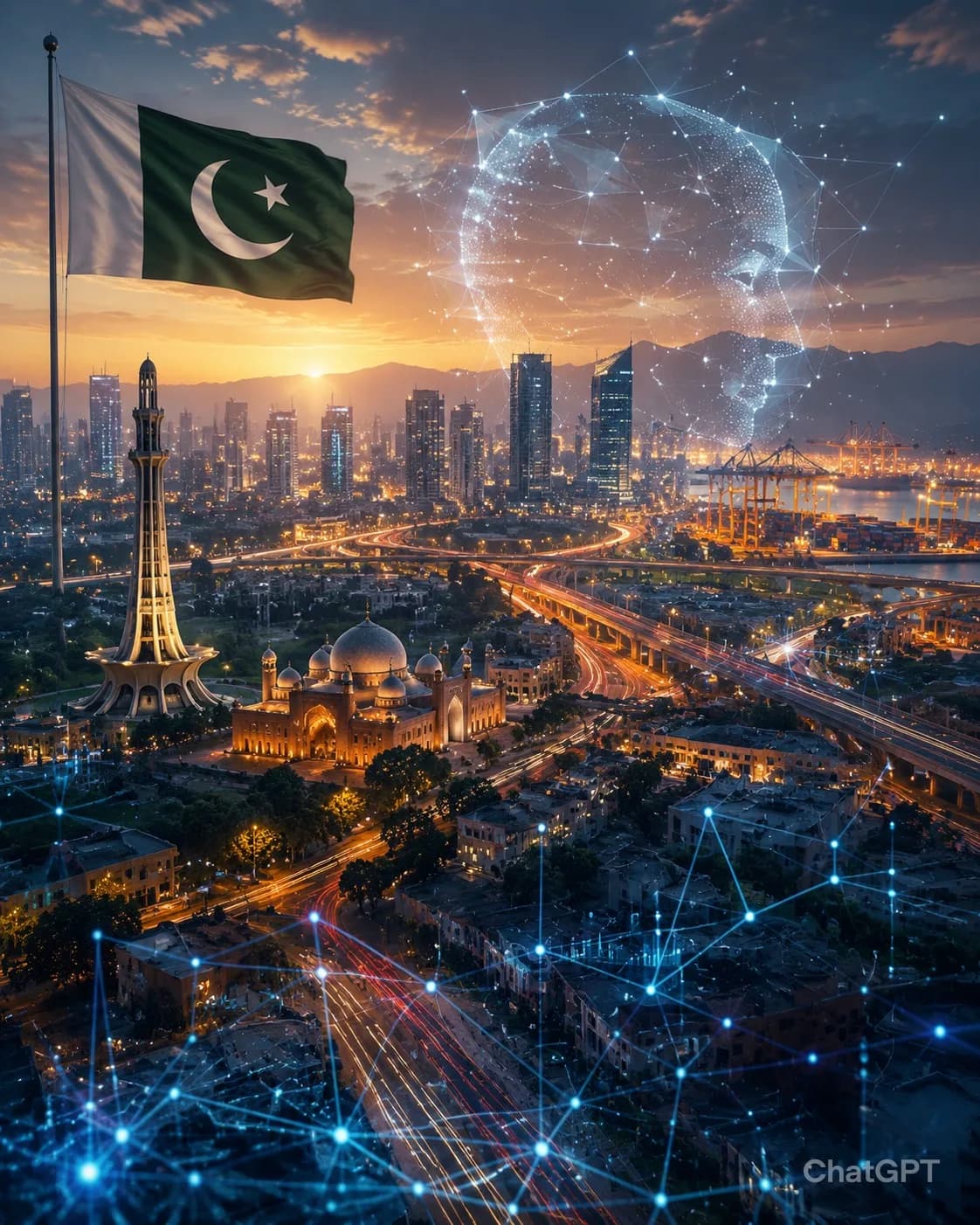
How AI Could Become Pakistan’s Biggest Economic Opportunity
What if Pakistan’s next economic breakthrough does not come from traditional industries but from artificial intelligence? That question is becoming more serious with every passing month as AI tools continue to reshape businesses around the world.
Countries that invested early in artificial intelligence are now seeing massive growth in productivity, exports, and digital innovation. The United States remains the global leader in AI development, while China continues to expand aggressively through government-backed technology projects. Pakistan may still be far behind these giants, but local experts believe the country has a real chance to benefit if the right decisions are made now.
Pakistan’s IT sector has already shown strong potential in freelancing, software development, and digital services. AI could take that progress to another level. From experience, one common mistake people make is assuming artificial intelligence only replaces jobs. In reality, AI also creates new industries, new startups, and entirely new ways of earning income.
Quick Facts
- Pakistan’s IT exports crossed billions of dollars in recent years
- United States currently leads global AI innovation
- AI is expected to add trillions to the global economy by 2030
- Thousands of Pakistani freelancers already use AI tools daily
Artificial intelligence is already changing industries like healthcare, banking, agriculture, and education. Farmers can use AI-powered systems to monitor crops and predict weather patterns. Banks can detect fraud faster. Small businesses can automate customer support without hiring large teams.
For ordinary families, this shift could become financially important. Imagine a household where one student learns AI skills online and starts earning remotely for international clients. In many cases, that single income stream can reduce the pressure of rising electricity bills, fuel costs, and school expenses. It is similar to adding a second engine to a struggling vehicle trying to climb uphill.
| Sector | AI Impact |
|---|---|
| Healthcare | Faster diagnosis and digital patient systems |
| Agriculture | Crop monitoring and smarter irrigation |
| Education | Personalized online learning tools |
| Business | Automation and productivity growth |
Can AI predict the economy? To some extent, yes. Large AI systems already analyze market trends, inflation patterns, and consumer behavior. Governments and companies use these tools to make faster financial decisions. However, experts warn that AI is only as effective as the data behind it.
Pakistan’s current AI ranking globally is still developing compared to major economies. Limited investment, slower digital infrastructure, and skill gaps remain challenges. Yet the country’s young population gives it a strong advantage. Universities, startups, and private tech firms are increasingly introducing AI-focused programs and training initiatives.
The bigger question now is whether Pakistan can move quickly enough. Countries that delay digital transformation often struggle to compete later. AI is no longer just a technology trend. It is becoming part of global economic survival.
Pakistan’s economy still faces inflation, unemployment, and investment concerns. But technology may offer a different path forward. If policymakers, businesses, and universities work together, artificial intelligence could help create jobs, improve exports, and strengthen the digital economy over the next decade.