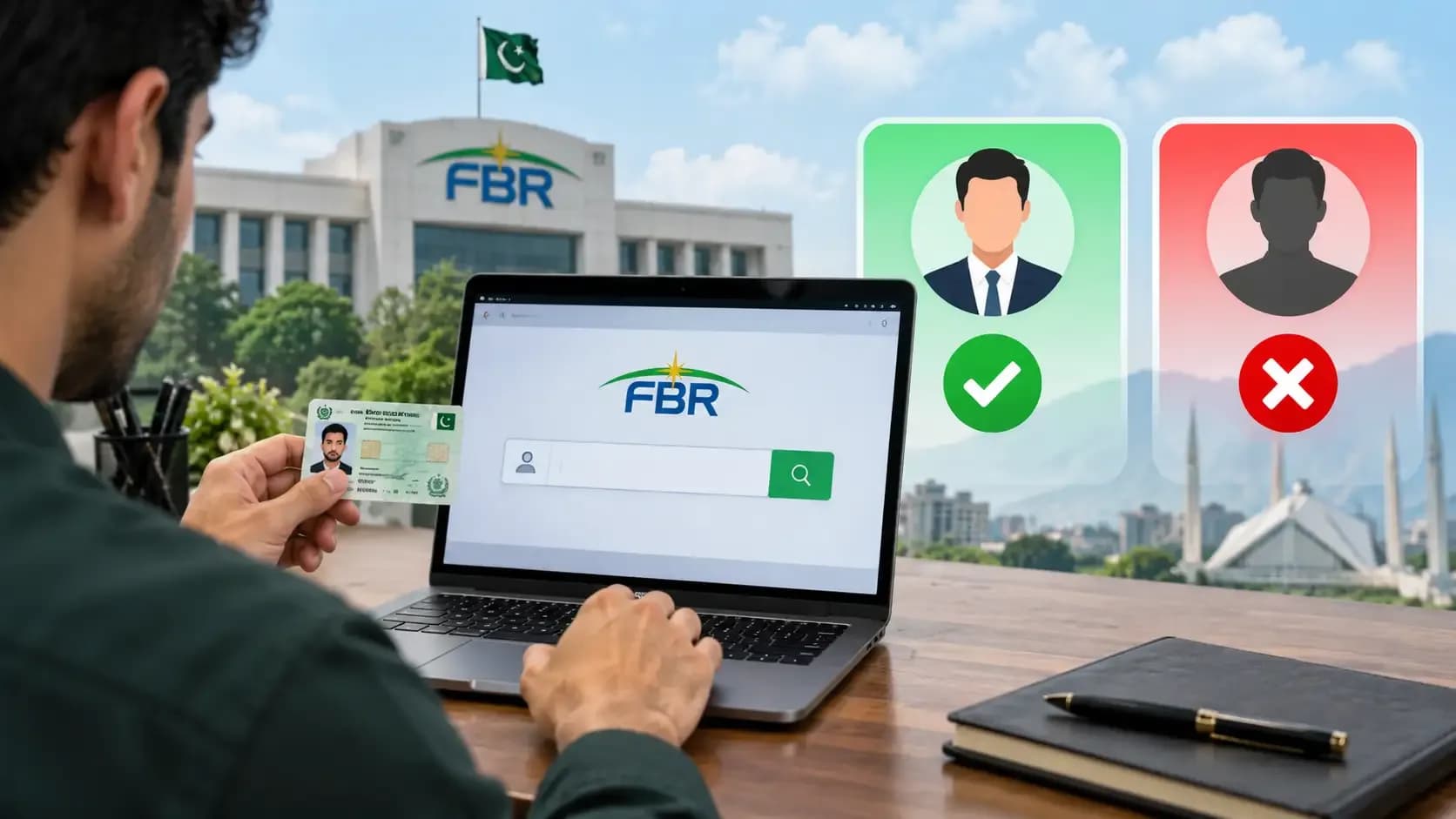
You've been freelancing for a year. Money comes in from overseas clients via Payoneer or Wise. You file tax returns on your salary. But you've never reported the freelance income. You assume it's exempt, or you're unsure how to report it, or you worry it will push you into a higher tax bracket.
Pakistan's tax system treats freelancer income uniquely but the rules are misunderstood by almost every freelancer who starts out. There are exemptions. There are registration routes. There are real tax-saving strategies. And there are costly mistakes that could trigger audits or lock you out of banking.
This guide explains how freelancer income is taxed in Pakistan, which exemptions actually apply to you, how to register without making taxes worse, and how to receive foreign payments legally.
For the complete tax framework that governs freelancer income, see the income tax guide for salaried persons.
What Is Freelancer Income and How Is It Taxed?
Freelancer income is money earned for services or work delivered to clients outside your regular employment. It includes:
Upwork, Fiverr, Toptal projects (graphic design, writing, programming, etc.)
Direct client contracts (consulting, copywriting, tutoring)
Affiliate commissions and referral income
Agency payments for subcontracting work
Any other business-like income outside your main job
Pakistan taxes freelancer income at the same rates as regular income using the same progressive slabs. But freelancers face additional withholding tax when receiving payments, and they have different exemptions and registration options.
For withholding rates on all transaction types, see withholding tax on property, vehicles and banking.
How Freelancer Income Is Taxed: The Withholding Mechanism
Here's where most freelancers misunderstand the system. Tax on freelancer income isn't just charged during filing it's withheld at the source when you receive the money.
When you receive a payment from a foreign client (via Payoneer, Wise, or bank wire), Pakistan's State Bank and the recipient's bank apply withholding tax. The amount deducted depends on your filer status and registration.
To register as a filer, see how to become a filer - FBR IRIS registration, step by step.
Scenario 1: You're a Registered Freelancer/Filer
Withholding tax rate: 0.5–2% (depending on the client's country and treaty arrangements).
Example: You receive $1,000 from a US client. Withholding tax = Rs 500–1,000 (approximately). You receive ~Rs 49,000–50,000; the rest goes to FBR or the bank.
Scenario 2: You're a Non-Filer
Withholding tax rate: 5–7% (much higher penalty for being non-filer).
Same $1,000 example: Withholding tax = Rs 2,500–3,500. You receive only ~Rs 46,500–47,500.
On annual freelance income of $24,000 (a modest amount), being a non-filer costs you ~Rs 72,000+ in extra withholding taxes alone money that could have been yours if you'd registered.
Tax Exemptions for Freelancer Income
Pakistan offers specific exemptions for freelancers. These are real. Know them.
1. Exemption if Income Below Rs 600,000 (Annual)
If your annual freelance income is below Rs 600,000 (approximately $2,000/month), you pay zero income tax on it - provided you're a filer or have registered as self-employed.
This is the same threshold as salaried income. But here's the catch: you must register. Simply not reporting it doesn't equal exemption.
2. Exemption for Certain Service Exports
Pakistan promotes software development and IT services exports. If you're an IT/software freelancer (programmer, web developer, app developer) and you register as such with FBR, your income may qualify for reduced withholding tax or partial exemption.
Criteria: You must be registered with FBR in the IT/software category, and your clients must be outside Pakistan.
3. Exemption if Gross Receipts Below Rs 5 Million (Various Circumstances)
Small business/sole proprietor freelancers with gross receipts under Rs 5 million may qualify for simplified tax or exemption but this requires proper documentation and often professional tax advice.
Registration Options: Sole Proprietor vs. Limited Company
When you decide to report freelance income, you need a registration structure. Pakistan offers two main routes:
Option 1: Register as Sole Proprietor (Simpler, Most Freelancers)
What it is: You register your freelance business under your own name (not a company). It's treated as self-employment income.
Steps:
Register with FBR through IRIS as a "Self-Employed / Business" person (not salaried)
Open a freelancer/exporter bank account with your bank (most Pakistani banks offer this for freelancers)
File your annual return showing freelance income
Pros: Simple, low cost, minimal documentation. Most freelancers start here.
Cons: Withholding tax is still applied to incoming payments (though at filer rates, not non-filer rates). You're personally liable for all business income/debt.
Option 2: Register as a Limited Company (Complex, Larger Freelancers)
What it is: You form a private limited company and operate through it. The company is a separate legal entity.
Steps: Involve SECP registration, opening a company bank account, and complex tax filing. This typically costs Rs 50,000–200,000 initially and involves ongoing compliance.
Pros: Corporate tax rates may be lower than individual rates in some circumstances. Limited personal liability. Better for large contracts (Rs 1 million+/month).
Cons: Expensive, time-consuming, requires professional accountant. Overkill for most freelancers earning under Rs 2 million/year.
Most freelancers should go with Option 1 (Sole Proprietor). Unless you're earning consistently over Rs 2 million/month, a company registration is not worth the overhead.
How to Receive Foreign Payments Legally and Tax-Efficiently
1. Open a Freelancer/Exporter Bank Account
This is essential. A standard personal account will flag large inflows and may be frozen by the bank or FBR. Freelancer accounts are designed for receiving foreign payments and are linked to your tax registration.
Which banks offer this? Most major Pakistani banks (HBL, UBL, Allied Bank, MCB, etc.) have freelancer/exporter account products. Requirements:
CNIC and proof of residence
NTN (National Tax Number) proof of FBR registration
Bank statements or client contracts showing freelance income
2. Remittance Methods: Payoneer vs. Wise vs. Bank Wire
You have three main routes for bringing money into Pakistan:
Payoneer to Bank Account:
Withdraw from Payoneer directly to your Pakistan bank account. Withholding tax is applied at the bank's end. Easy but slower (~3–5 working days). Payoneer charges a small fee.
Wise (formerly TransferWise):
Transfer from your foreign account or Payoneer to Wise, then to Pakistan bank. Mid-market rates, lower fees than bank transfers. Still subject to withholding tax when hitting Pakistan banks. (~1–2 working days + regulatory time).
Direct Bank Wire:
SWIFT transfer directly from client's bank to your Pakistan bank account. Most expensive (bank fees ~3–5%) but most direct. Subject to State Bank of Pakistan scrutiny and withholding tax. (~3–5 working days).
Strategy: For most freelancers, Payoneer → Freelancer Bank Account is the easiest. The bank handles withholding and FBR reporting automatically.
3. Record Everything for Tax Filing
Keep records of:
Every payment received (from which client, date, amount, platform)
Bank deposits and remittance receipts
Withholding tax deducted (your bank or payment platform will show this)
When you file your annual return, declare your gross income (before withholding). The withholding tax is credited against your final liability. If you overpaid, you get a refund.
Tax-Saving Strategies for Freelancers
Strategy 1: Become a Filer Immediately
This is non-negotiable. Being a filer reduces withholding tax from 5–7% to 0.5–2%. On Rs 1 million in annual income, that's an Rs 40,000–70,000 difference annually.
See how to become a filer via FBR IRIS to register.
Strategy 2: Register as Self-Employed with FBR
When registering, explicitly select "Self-Employed / Business" category. This opens door to certain exemptions and simplified tax calculations.
Strategy 3: Bundle Income with Your Salary (If Applicable)
If you're also salaried, your total income (salary + freelance) is taxed as one pool using progressive slabs. Your deductions (GP Fund, insurance, zakat) apply to total income. Sometimes this is better; sometimes it's worse. Work with a tax advisor to model scenarios.
Strategy 4: Keep Detailed Expense Records
Freelancers can deduct legitimate business expenses (software subscriptions, courses, equipment, internet) from gross income before calculating tax. This reduces your taxable income significantly. Keep receipts.
Example: Rs 1 million income − Rs 150,000 legitimate expenses = Rs 850,000 taxable income.
Strategy 5: Know the Exemption Threshold
If your annual freelance income is under Rs 600,000, you likely owe zero tax - but you must still file a return declaring it. Filing costs nothing, but not filing can trigger penalties.
Common Mistakes Freelancers Make
Ignoring withholding tax: Treating 5–7% non-filer withholding as the final tax, then being shocked by additional liability at filing. Withholding is just the down payment.
Not registering as self-employed: Registering as "Salaried" instead of "Self-Employed." This locks you out of freelance-specific exemptions.
Mixing personal and business bank accounts: Using a standard account instead of a freelancer account. Banks flag this and may freeze your account.
Not keeping expense records: Freelancers can deduct costs (software, equipment, courses). Without receipts, you can't claim them.
Using illegal remittance channels: Hawala, unregistered agents, cash. These avoid documentation but also avoid tax compliance. You'll get caught eventually, and the penalties are steep.
Frequently Asked Questions
Q: Do I have to declare freelance income if I earn under Rs 600,000?
Legally, yes. You must file a return (it's free). Declaring it - even if you owe zero tax -keeps you in the FBR system as a legitimate filer. Not filing can attract surcharges or audits later.
Q: What if I don't declare freelance income?
If caught, you face penalties (10–20% of unpaid tax), potential surcharges, bank account scrutiny, and difficulty accessing future credit. The SBP and banks are increasingly flagging unexplained foreign inflows. It's not worth the risk.
Q: Can I use Payoneer without being a filer?
Technically yes, but you'll face higher withholding tax (5–7% vs. 0.5–2%). More importantly, your bank account might flag large Payoneer transfers and freeze it if you can't prove tax compliance. Become a filer first.
Q: What if my client withholds tax in their country too?
You may be entitled to a foreign tax credit. This is complex and depends on Pakistan's tax treaties with the client's country. Consult a tax advisor. In most cases, you claim credit for foreign tax paid and calculate Pakistan's additional tax on top.
Q: Is it better to keep freelance income separate from my salary?
Not necessarily. Both are added to your total income for tax calculation. Whether bundling is favorable depends on your salary level and tax brackets. A tax advisor can model your specific situation.
Q: Do I need a company if I'm a freelancer?
Only if you're earning consistently over Rs 2 million/month or managing multiple employees. For most freelancers, a sole proprietor registration is simpler and sufficient.
Q: What if I receive money from a Pakistani client?
Domestic payments are taxed differently. Some domestic payments have withholding tax (if from corporations), some don't. The same FBR registration applies, but withholding rates vary. Consult your client's accountant or an advisor for domestic remittance rules.
Your Action Plan: From Freelancer to Registered Taxpayer
If you're freelancing and haven't registered yet, follow this order:
Step 1: Become a filer. See how to become a filer and register via FBR IRIS. Choose "Self-Employed"
Step 2: Open a freelancer/exporter bank account. Bring your NTN and CNIC to your bank and ask for this product.
Step 3: Set up payments via Payoneer or Wise into your new account. Withholding tax will be deducted automatically.
Step 4: Track all payments and bank deposits. Keep receipts for business expenses.
Step 5: When tax filing season arrives (July–September), file your return showing freelance income. See the complete income tax guide for filing details.
Verify your ATL status after filing to confirm you're active in the FBR system.
Understand the real costs and benefits. See filer vs non-filer to see how much staying non-filer costs you.
If you have other income types (property, withholding). See withholding tax rates.
Article Details
Category: Tax & Finance
Published:
Updated:
Author: Usama Haider
More Stories