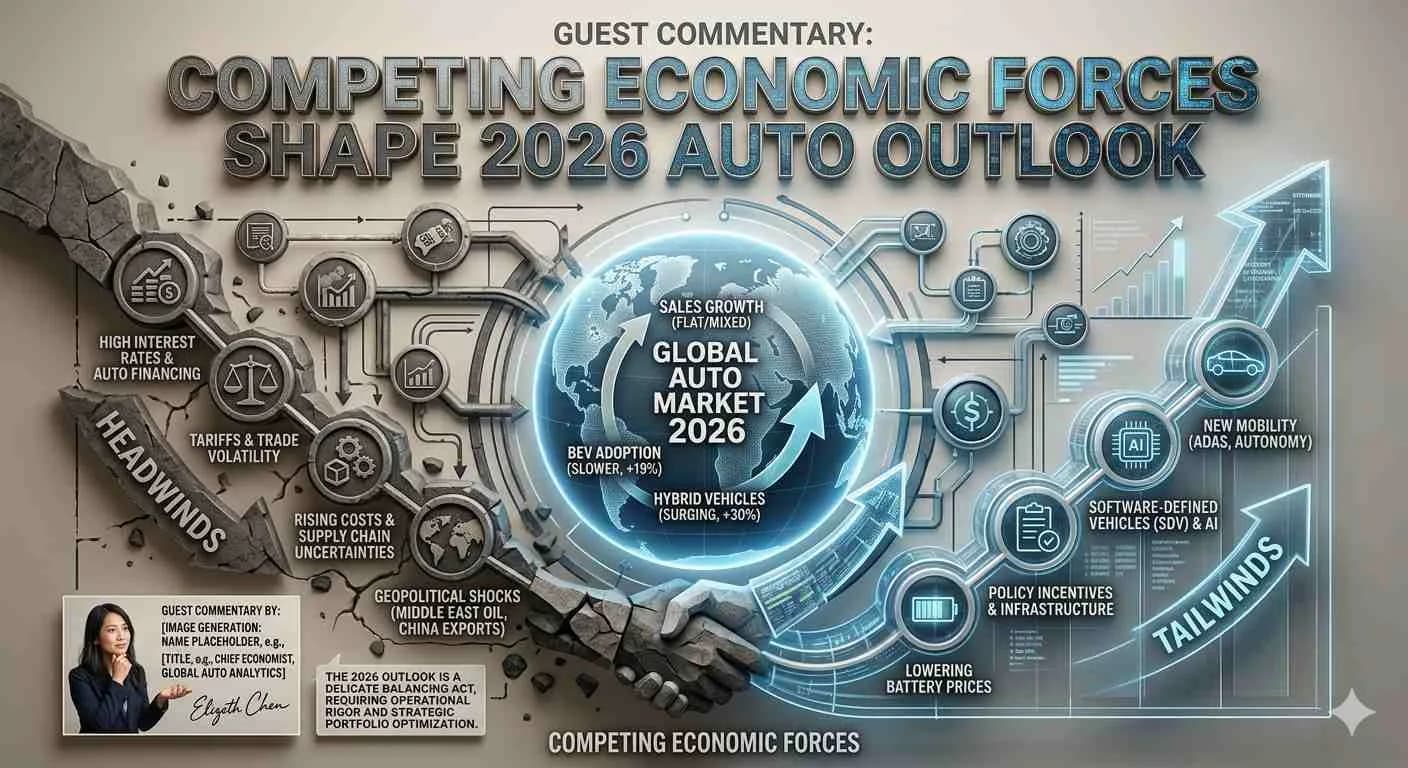
Why Rising Costs and Falling Confidence Could Redefine the 2026 Auto Market
What happens when buyers want new cars but shrinking household budgets say otherwise? That question is beginning to define the global auto industry as manufacturers, suppliers, and consumers head into 2026 facing conflicting economic signals.
Economic Pressure Is Changing Buyer Behavior
The auto market is entering a complicated phase. Inflation in several major economies has cooled compared to previous years, yet high borrowing costs continue to affect car financing. Many families are delaying vehicle upgrades because monthly expenses already feel stretched.
From experience, consumers usually continue spending on essential items even during uncertainty, but automobiles are different. A vehicle purchase often depends on confidence. If job security weakens or interest rates remain elevated, buyers tend to wait longer before replacing their cars.
For middle-income households, purchasing a car today feels similar to carrying a second rent payment. Insurance costs, fuel prices, registration fees, and financing charges have all increased together. In many cases, buyers are not rejecting new vehicles entirely. They are simply choosing cheaper trims, smaller models, or used alternatives.
Electric Vehicles Face a Mixed Outlook
Electric vehicle demand is still growing globally, but the pace has slowed compared to earlier forecasts. Consumers remain interested in lower running costs, though higher upfront prices continue to discourage many first-time buyers.
One common mistake people make is assuming EV adoption depends only on environmental awareness. Infrastructure matters just as much. Charging networks, battery replacement concerns, and resale value still influence purchasing decisions across emerging markets.
Automakers are now adjusting strategies by focusing on hybrid technology and affordable compact EVs rather than only premium electric models. That shift could become one of the defining industry trends in 2026.
Supply Chains Are Improving, But Risks Remain
Supply chain conditions have improved compared to the disruption seen over the last few years. Semiconductor shortages are easing, shipping routes have stabilized in several regions, and production delays have reduced significantly.
Still, uncertainty remains around global trade tensions, raw material costs, and energy prices. Auto manufacturers are increasingly diversifying suppliers to avoid dependence on a single country or region. This strategy may improve resilience, though it also increases operational costs in the short term.
| Key Factor | Impact on 2026 Auto Market |
|---|---|
| High Interest Rates | Lower vehicle financing demand |
| EV Expansion | Growth focused on affordable models |
| Improved Supply Chains | Faster production and deliveries |
| Consumer Uncertainty | Delayed vehicle replacement cycles |
Used Cars Could Remain Strong
Analysts expect used vehicle markets to remain active throughout 2026. Buyers searching for affordability are likely to continue shifting toward certified pre-owned vehicles. This trend is especially visible in developing economies where currency pressure and import duties push new car prices even higher.
Dealerships are also adapting. Many are investing more aggressively in after-sales services, flexible financing, and subscription-based ownership models to attract cautious consumers.
Closing Thought
The 2026 auto outlook will not be shaped by a single economic force. Instead, it will depend on how consumers balance necessity against affordability in an uncertain environment. Automakers that focus on practical pricing, fuel efficiency, flexible financing, and long-term reliability may be better positioned than brands chasing aggressive expansion alone. The next year could reward stability more than speed.
Quick Facts
- High financing costs continue to reduce new car affordability globally.
- Hybrid and compact EV demand is expected to grow faster than premium electric models.
- Used vehicle markets may remain strong through 2026.
- Automakers are diversifying supply chains to reduce future disruption risks.
Article Details
Category: Auto
Published:
Updated:
Author: Muhammad Sheikh
More Stories