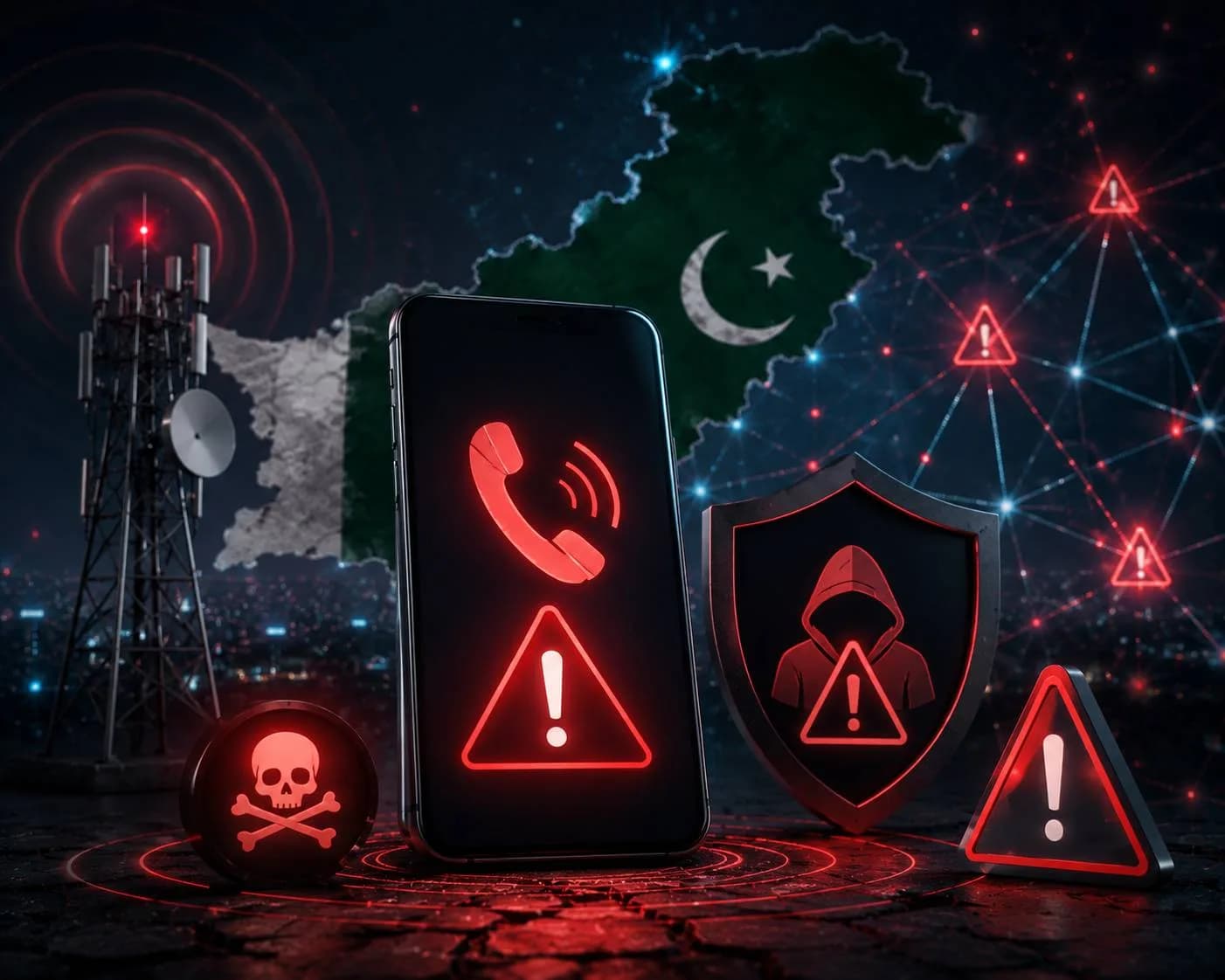
Ever received a call claiming your bank account, SIM, or prize money needs urgent verification? That one call can cost a family its savings if personal details, OTPs, or account information are shared in panic.
How Telecom Fraud Is Spreading
Telecom Fraud in Pakistan is increasing because more people now use mobile phones for banking, wallets, shopping, jobs, and family communication. Scammers follow users where money and personal data are moving.
PTA has repeatedly warned the public that banks, government bodies, and PTA itself do not ask for PINs, OTPs, CNIC details, account balance, or passwords through calls or messages. Users are advised to ignore such requests and verify information through official channels only.
Common Scam Tactics Users Face
| Scam Type | How It Targets Users |
|---|---|
| Fake bank calls | Scammers ask for OTP, PIN, or account verification details. |
| Prize messages | Users are told they won cash, cars, phones, or lucky draws. |
| SIM verification scams | Fraudsters claim the user’s SIM will be blocked unless details are shared. |
| Fake links | Phishing links steal login details, wallet access, or personal information. |
Why Ordinary Users Are Easy Targets
In many cases, scammers create fear or excitement. They say the account will close, the SIM will block, or a prize will expire soon. This pressure makes people act quickly without checking.
From experience, one common mistake people make is trusting a caller because they already know part of their name, city, or mobile number. Scammers may collect small details from leaked data, social media, forms, or previous conversations to sound believable.
The Financial Burden On Families
Telecom scams can damage a household in minutes. A stolen wallet balance, drained bank account, or fraud loan taken on someone’s identity can disturb rent, school fees, medicine, and grocery planning. It is like leaving your house key with a stranger because he wore a security guard’s uniform.
What PTA And Authorities Are Doing
PTA allows users to report scam numbers to their service provider first. If no action is taken, users can report the number to PTA through its complaint system or helpline 0800-55055. PTA says suspected numbers and mobile device IMEIs can be blocked, while repeat misuse may lead to CNIC blacklisting for new SIM issuance.
PTA and FIA have also taken action against illegal pre-activated SIM sellers. PTA noted that active SIM misuse can support anonymous communication linked to cybercrime, financial fraud, abduction, and other unlawful activities.
How Users Can Protect Themselves
Never share OTPs, PINs, passwords, CNIC photos, banking details, or wallet codes with any caller. Do not click unknown links received through SMS, WhatsApp, or social media.
If a call sounds urgent, disconnect and contact the official helpline of your bank, wallet provider, or mobile operator. Save screenshots, note the number, and report quickly. Fast reporting can help block the scammer before more people are targeted.
Closing Thought
Pakistan’s digital growth has made mobile phones more powerful, but it has also created new risks for users. Stronger enforcement, cleaner SIM registration, public awareness, and quick reporting can reduce telecom fraud. The safest habit is simple: no real bank, regulator, or official service asks for secret codes over a call.
Quick Facts Box
- PTA says banks and official bodies never ask for OTPs, PINs, or passwords through calls or SMS.
- Users can report scam numbers to operators and PTA at 0800-55055.
- PTA can block suspected numbers and mobile device IMEIs linked to fraud.
- PTA and FIA have conducted action against illegal pre-activated SIM sellers.
Article Details
Category: Telecom
Published:
Author: Pari Row
More Stories