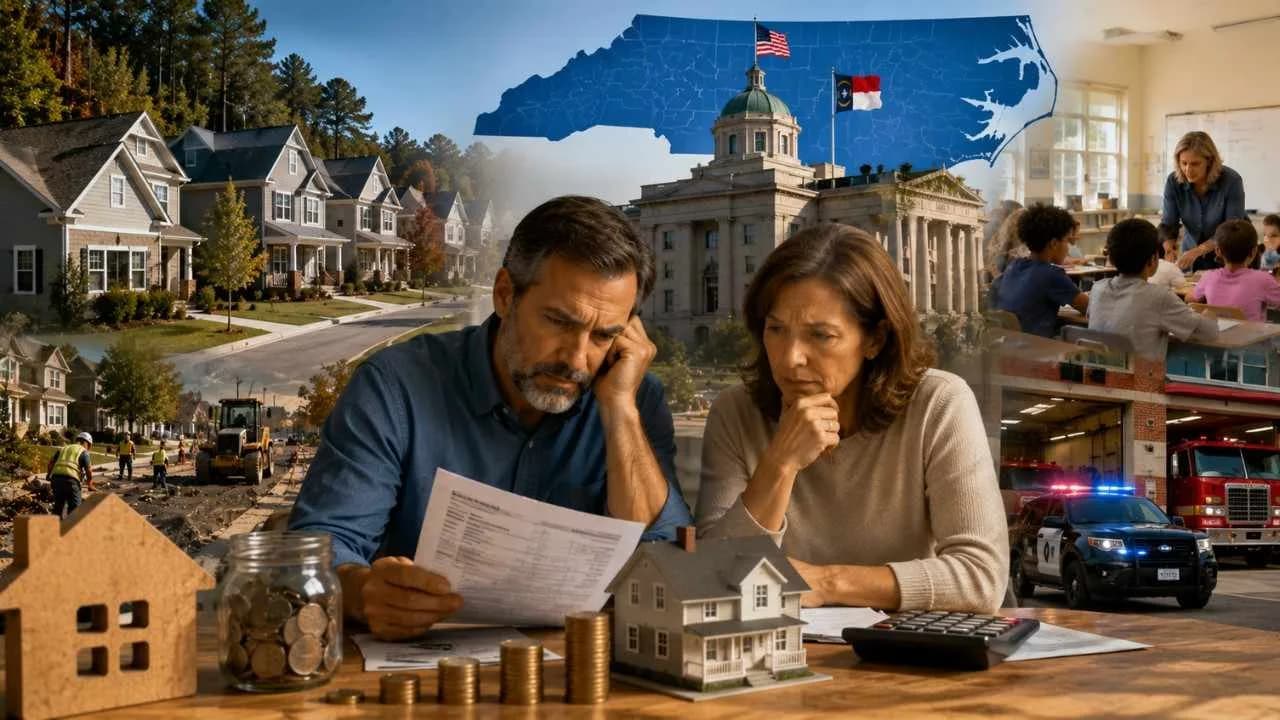
North Carolina Property Tax Proposal Triggers Statewide Debate
What happens when homeowners demand lower taxes but local governments warn about shrinking budgets? That question is now driving a heated debate across North Carolina as lawmakers push for a constitutional amendment aimed at limiting property tax increases.
Quick Facts Box
- House Bill 1089 proposes limits on property tax increases
- The amendment may appear on the fall 2026 ballot
- Property taxes remain the top local government revenue source
- Debate centers on homeowners versus public service funding
Why Property Taxes Matter So Much
Property taxes are not just numbers printed on annual bills. They fund schools, emergency services, road maintenance, libraries, and sanitation systems. In many counties, these taxes keep basic local services functioning every single day.
Supporters of the amendment argue that rising home values have pushed tax bills beyond what many families can comfortably afford. In many cases, retirees and middle income homeowners feel trapped between rising living costs and increasing property assessments.
One common mistake people make is assuming higher property values automatically improve financial stability. A family may own a home worth more on paper, yet still struggle to pay larger annual tax bills. For many households, it feels similar to owning a car that suddenly becomes expensive to maintain even though income remains unchanged.
What the Proposed Amendment Could Change
The proposed constitutional amendment would direct the North Carolina legislature to place limits on future property tax increases. While the exact cap has not yet been finalized, lawmakers supporting the measure believe it would offer long term predictability for homeowners.
Critics, however, warn that limiting tax growth could reduce funding for essential local services. County officials and policy analysts fear smaller budgets may eventually impact school systems, public safety programs, and infrastructure projects.
Growing Pressure on Local Governments
From experience, local governments already face rising operational costs due to inflation, population growth, and infrastructure expansion. Fire departments, public schools, and transportation systems often require larger budgets each year just to maintain existing service levels.
Some analysts believe the amendment debate reflects a broader national trend where voters increasingly demand tighter control over taxation while still expecting reliable public services.
| Issue | Supporters Say | Critics Say |
|---|---|---|
| Tax Limits | Protect homeowners from rising costs | Could weaken local budgets |
| Public Services | Encourages efficient spending | May reduce service quality |
| Future Ballot Measure | Gives voters direct control | Could oversimplify complex policy |
Political and Economic Implications
The proposal has quickly become more than a tax debate. It now touches housing affordability, public spending priorities, and the relationship between state lawmakers and local governments.
If approved by both legislative chambers, North Carolina voters could decide the issue during the upcoming fall election cycle. That means property taxes may become one of the state’s biggest political conversations heading into late 2026.
Financial experts suggest homeowners should closely monitor how the amendment evolves. Small policy changes can significantly affect long term housing costs, especially for families already dealing with higher mortgage rates and insurance premiums.
Closing Thought
North Carolina’s property tax debate reflects a challenge many regions face today: balancing taxpayer relief with the growing cost of public services. Whether the amendment ultimately passes or not, the discussion has already highlighted how closely housing affordability and local government stability are connected in modern economies.
Article Details
Category: Property
Published:
Updated:
Author: Fiza
More Stories