
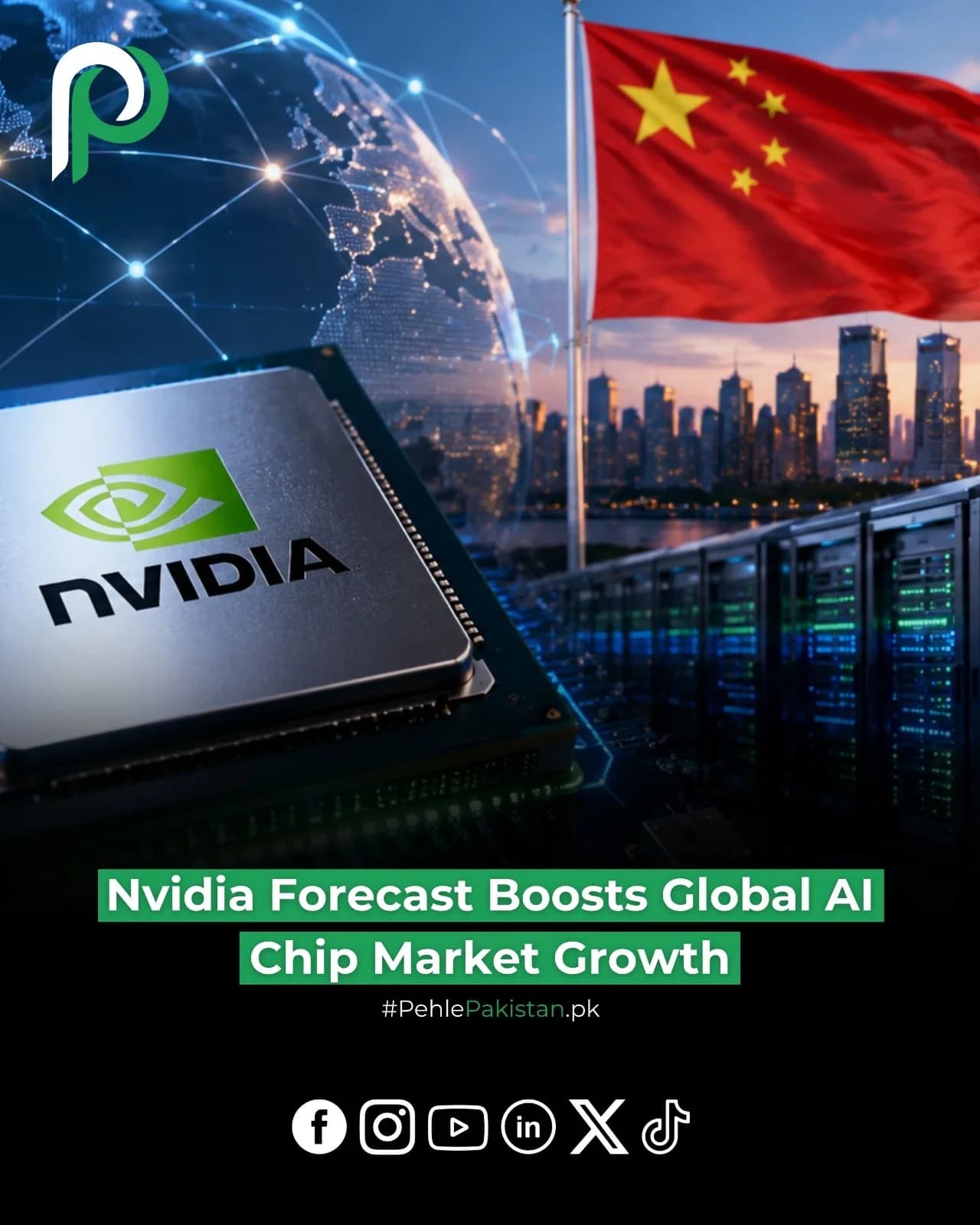
Nvidia Says China Included in $200 Billion CPU Market Forecast
The statement has attracted strong attention from global investors, semiconductor analysts, and technology-focused funds because China remains one of the world’s largest buyers of advanced computing infrastructure. Nvidia’s comments also come during an aggressive global race around artificial intelligence infrastructure, cloud computing, and high-performance data centers.
While Nvidia is widely known for its dominance in AI graphics processing units (GPUs), the company is increasingly positioning itself in the CPU market as competition intensifies across enterprise computing and AI infrastructure segments.
Certain product-level financial details, future sales projections, and exact China revenue expectations have not officially been mentioned yet.
Investment Overview
Nvidia’s latest comments highlight how critical China remains to the global semiconductor ecosystem. Despite tightening export restrictions and technology tensions between Washington and Beijing, Chinese demand for AI computing, servers, cloud infrastructure, and enterprise processors continues to influence the global semiconductor market.
From an investment perspective, Nvidia’s reference to a $200 billion CPU market demonstrates the company’s ambition to compete beyond GPUs. Investors are increasingly viewing Nvidia as a broader AI infrastructure company rather than just a graphics chip manufacturer.
The announcement may also influence sentiment around related semiconductor companies, cloud computing providers, server manufacturers, and AI infrastructure suppliers.
Quick Facts Box
Market Background
The global semiconductor industry has experienced massive growth due to artificial intelligence adoption, cloud computing expansion, machine learning applications, and rising demand for data center capacity.
Nvidia emerged as one of the biggest beneficiaries of the AI boom, particularly after generative AI platforms accelerated global demand for advanced chips.
China remains a major technology market despite increasing export controls imposed by the United States on advanced semiconductor technologies. Chinese cloud companies, enterprise technology firms, and research institutions continue investing heavily in AI infrastructure.
In many cases, geopolitical restrictions have forced semiconductor companies to redesign products specifically for Chinese markets to comply with regulations while maintaining commercial relationships.
Current Market Situation
- Global AI infrastructure spending remains elevated.
- Semiconductor stocks continue showing high volatility.
- China remains central to global electronics demand.
- Export restrictions continue affecting chipmakers.
- Investors are closely watching AI-related revenue growth.
Investment Type
Nvidia represents a large-cap technology equity investment focused on semiconductors, AI computing, data centers, gaming, and enterprise infrastructure.
The company is considered a growth-oriented technology stock with significant exposure to artificial intelligence trends and global enterprise spending.
Price / Value Details
| Metric | Details |
|---|---|
| CPU Market Estimate | $200 Billion |
| Current Share Price | Market price fluctuates daily |
| Market Capitalization | One of the world’s largest technology companies |
| Dividend Yield | Official yield varies over time |
Historical Performance
Nvidia has delivered exceptional growth over recent years, driven largely by AI adoption and strong data center demand.
The company’s valuation expanded significantly as institutional investors increased exposure to AI-related assets.
| Historical Trend | Market Impact |
|---|---|
| AI Boom | Strong investor demand |
| Data Center Expansion | Revenue growth acceleration |
| Semiconductor Supply Constraints | Periodic market volatility |
Potential Returns and Risk Factors
| Opportunity | Risk |
|---|---|
| AI infrastructure growth | Regulatory restrictions |
| Expansion into CPU markets | Rising competition |
| Chinese market demand | Geopolitical tensions |
Short-Term vs Long-Term Outlook
| Time Horizon | Outlook |
|---|---|
| Short-Term | High volatility tied to earnings and AI demand cycles. |
| Long-Term | Potentially strong if AI infrastructure demand continues expanding globally. |
Tax and Regulatory Details
| Category | Details |
|---|---|
| Main Regulator | U.S. SEC |
| Export Controls | Subject to U.S. government restrictions |
| Tax Implications | Depends on investor jurisdiction |
How to Invest
- Open an international brokerage account.
- Research Nvidia’s financial statements and earnings reports.
- Understand semiconductor industry cycles.
- Monitor AI infrastructure demand trends.
- Diversify investments instead of relying on one technology stock.
Investment Platforms Table
| Platform | Purpose |
|---|---|
| International Brokerage Apps | U.S. equity investment access |
| Global ETFs | Semiconductor sector exposure |
| Wealth Management Firms | Managed portfolio solutions |
Beginner Investor Checklist
| Checklist | Importance |
|---|---|
| Understand AI market cycles | Essential |
| Track geopolitical developments | Highly Recommended |
| Diversify globally | Important |
Risk Management Tips
- Avoid investing solely based on AI hype.
- Monitor earnings growth consistency.
- Track export restriction developments carefully.
- Review valuation levels before investing.
- Maintain diversified exposure across sectors.
Common Mistakes Investors Make
One common mistake investors make is assuming rapid AI growth automatically guarantees long-term stock appreciation.
Many beginner investors overlook semiconductor industry cycles, supply chain disruptions, and geopolitical risks affecting global chipmakers.
In practical terms, technology stocks can experience significant volatility even when long-term business fundamentals remain strong.
Comparison With Other Investments
| Investment Type | Growth Potential | Risk Level | Volatility |
|---|---|---|---|
| AI Semiconductor Stocks | High | High | High |
| Government Bonds | Moderate | Low | Low |
| Traditional Dividend Stocks | Moderate | Medium | Moderate |
Pros and Cons
| Pros | Cons |
|---|---|
| Strong AI market exposure | High valuation concerns |
| Expanding CPU ambitions | Regulatory uncertainty |
| Global brand leadership | Semiconductor market volatility |
Expert Analysis
From an investment perspective, Nvidia’s comments reinforce how central China remains to global semiconductor demand despite geopolitical friction.
Investors are increasingly evaluating whether AI-driven demand can continue supporting elevated semiconductor valuations over the long term.
For long-term investors, Nvidia’s expansion into CPUs could diversify revenue streams beyond GPUs, although competition from established processor manufacturers remains intense.
Many analysts also believe regulatory developments between the United States and China could remain one of the biggest market-moving factors for semiconductor stocks in the coming years.
Final Thoughts
Nvidia’s statement regarding the inclusion of China within its estimated $200 billion CPU market highlights the ongoing importance of Chinese technology demand in the global semiconductor industry.
While artificial intelligence continues driving massive infrastructure investment worldwide, investors should remain aware of geopolitical risks, export controls, market volatility, and competitive pressures shaping the future of semiconductor companies.
In many cases, technology leadership can create long-term opportunities, but market expectations and regulatory developments often influence valuations just as much as financial performance.
Frequently Asked Questions
1. What did Nvidia say about the CPU market?
Nvidia stated that its estimated $200 billion CPU market opportunity includes China.
2. Why is China important for Nvidia?
China remains a major global buyer of AI and semiconductor infrastructure.
3. Is Nvidia mainly a GPU company?
Traditionally yes, but it is increasingly expanding into CPUs and broader AI infrastructure.
4. What are the main risks for investors?
Geopolitical tensions, export restrictions, competition, and technology market volatility.
5. Is Nvidia suitable for beginner investors?
It may suit investors comfortable with technology sector volatility and long-term growth investing.
6. Are there taxes on international investments?
Tax treatment depends on the investor’s country and brokerage structure.
7. How can Pakistani investors access Nvidia shares?
Through international brokerage platforms offering U.S. stock market access.
8. Is Nvidia regulated?
Yes. Nvidia is regulated under U.S. securities laws and SEC requirements.
9. What documents are usually required for investing?
Identification documents, proof of address, and brokerage account verification are commonly required.
10. What are alternative investments?
Semiconductor ETFs, technology mutual funds, cloud computing stocks, and diversified global equity funds.
Article Details
Category: Investment
Published:
Updated:
Author: Irfan Ali
More Stories