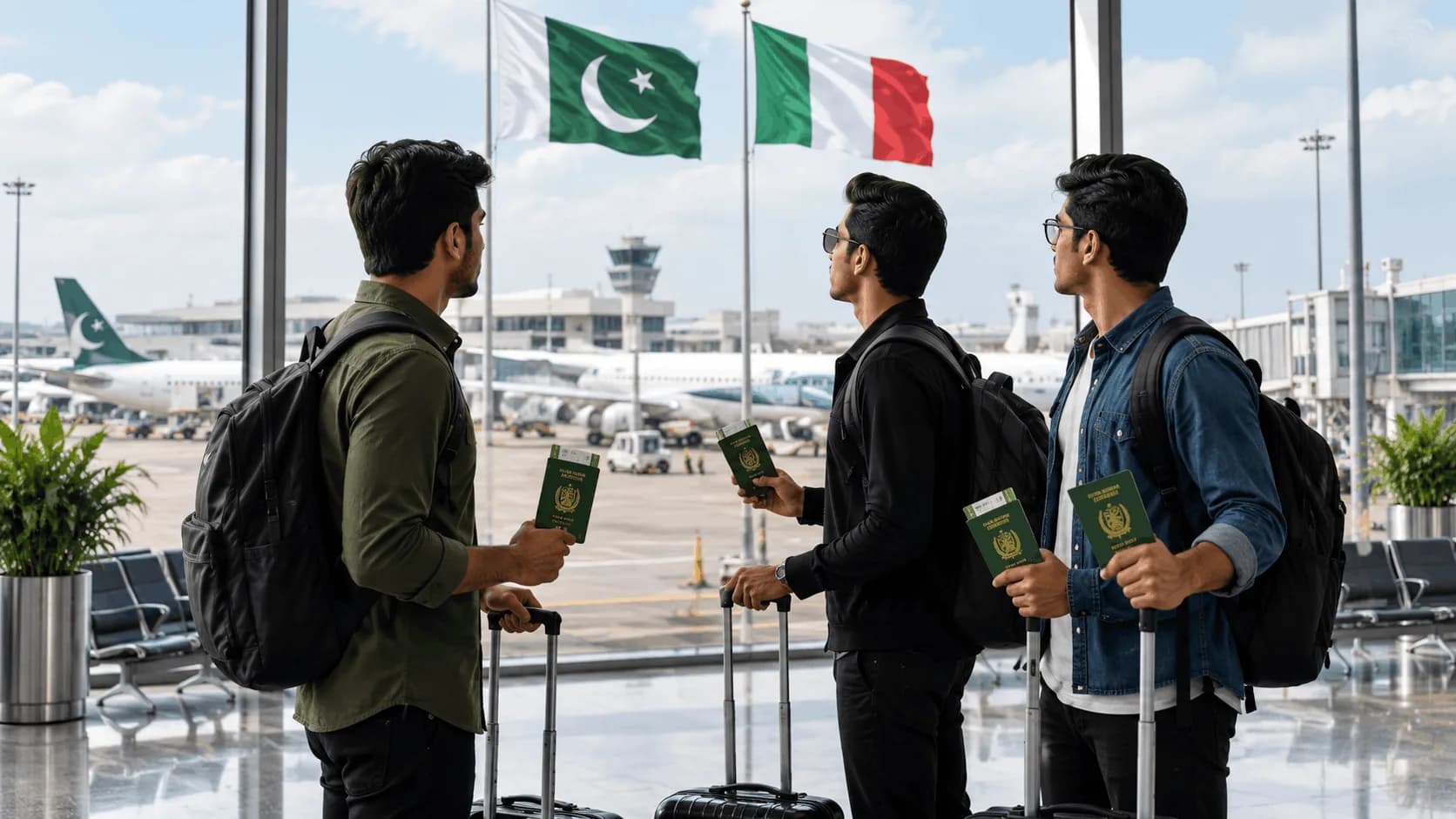
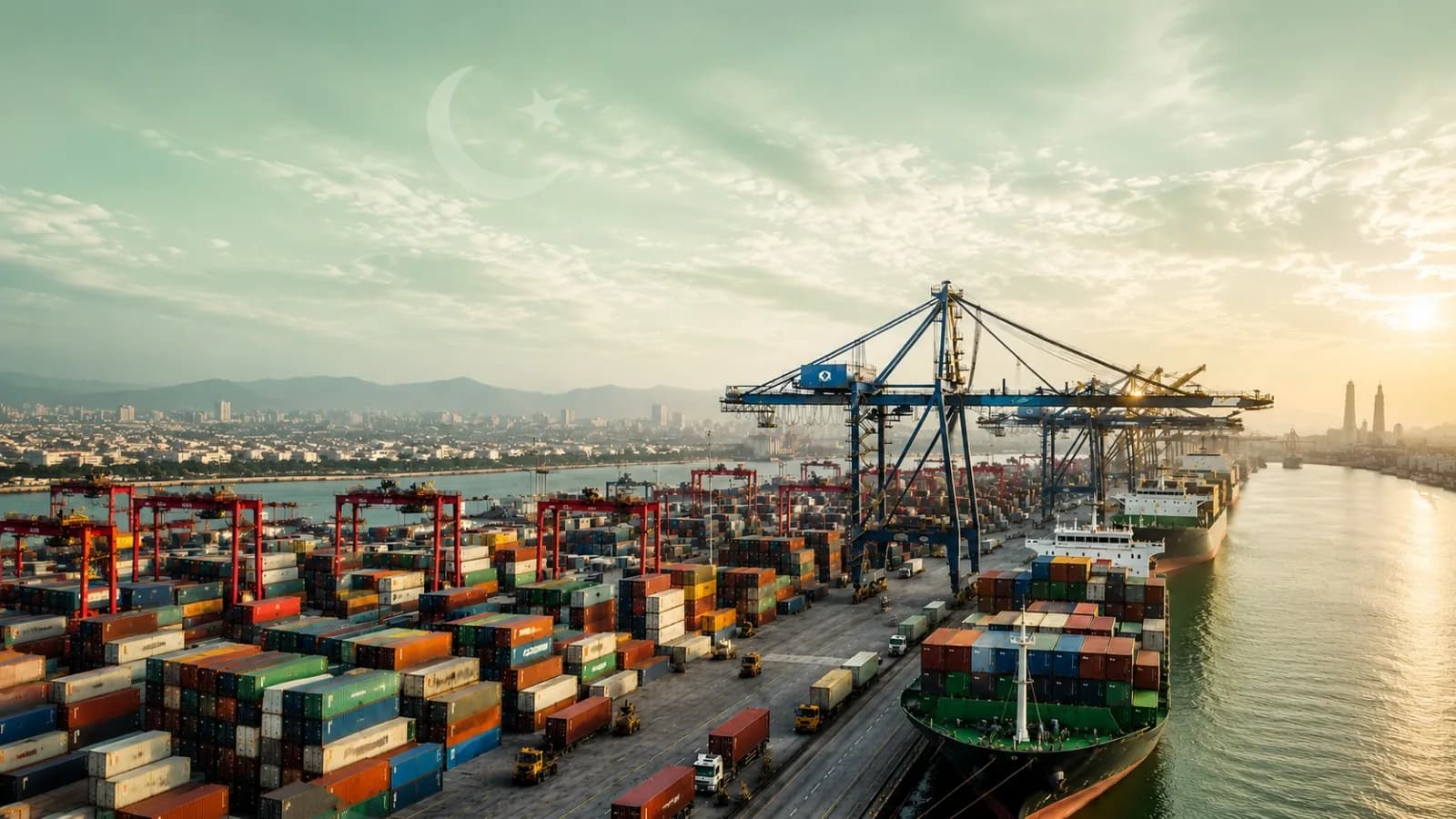
Pakistan Invites Chinese Investment in Ports and Logistics
Pakistan just made its clearest pitch yet to Chinese investors, and this one was not buried in a routine diplomatic statement. It came directly from the top of the Ministry of Maritime Affairs, at an event built specifically around regional trade connectivity.
Federal Minister Muhammad Junaid Anwar Chaudhry used the platform to invite Chinese investors expansion in Pakistan's ports, logistics, and maritime sectors, calling it part of a broader plan to turn the country into a regional transit trade hub. If you follow Pakistan-China economic news even casually, you know this language has been building for months. What made this appearance different was the venue and the audience.
What Pakistan Announced in Beijing
The announcement came at the Regional Transit Trade Hub Initiative in Beijing, an event organized by Jiang Tonland International Holdings, a firm focused on facilitating cross-border trade and logistics partnerships between China and regional markets.
Speaking to the audience, Chaudhry laid out Pakistan's pitch in fairly direct terms.
The government is committed to transforming Pakistan into a regional transit, logistics, and industrial hub
Pakistan and China's partnership is entering a new phase centered on connectivity and trade facilitation
Global trade is being reshaped by digitalisation, smart logistics, and green shipping, and Pakistan wants to be part of that shift early
None of this is new territory for Chaudhry specifically. He has made similar pitches to Chinese firms in Beijing before, including talks with Shandong Xinxu Group and Tianjin Dongjiang officials last year. What stood out this time was the framing around a dedicated transit trade hub initiative, rather than a one-off bilateral meeting.Why Pakistan Is Positioning Itself as a Regional Transit Hub
This is the part worth slowing down on, because the timing here is not random. Chaudhry pointed to a shift already happening across global trade, one that most shipping analysts have been flagging for a couple of years now.
He described the global trading system as being reshaped by digitalisation, smart logistics, resilient supply chains, and green shipping, adding that multimodal transport is becoming a bigger factor in how countries compete for trade routes. That is not just a talking point. Ports around the world are racing to modernize before shipping volumes shift toward faster, cleaner corridors, and countries that wait too long risk getting left out of new trade lanes entirely.
Chaudhry argued that Pakistan's geography gives it a real advantage here, calling it a natural gateway for regional and international trade.
The Bigger Picture Behind the Timing
There is also a broader signal worth noting. China's own 2026 to 2030 development plan places heavy emphasis on resilient infrastructure and secure regional supply chains, which lines up closely with what Pakistan is now pitching. Pakistan has also been active on this front domestically. Earlier this year, it activated a new China-linked trade corridor connecting Central Asian countries to its southern seaports, and cut port charges at Karachi Port as part of a broader push to lower logistics costs.
Seen together, this is not an isolated pitch. It looks like Pakistan trying to position itself early, before regional competition for these trade routes gets more crowded.Key Maritime Institutions Involved
Big announcements like this only mean something if there is actual infrastructure behind them. Chaudhry was careful to name the specific institutions driving this push, rather than leaving it as a vague government promise.
He said Pakistan's maritime institutions are already implementing reforms to move the country toward becoming a modern maritime, logistics, and industrial hub for regional markets. Four names came up specifically.
Institution | Current Role |
|---|---|
Karachi Port Trust | Pakistan's largest deep sea port, recently reduced port charges to lower logistics costs |
Port Qasim Authority | Industrial and bulk cargo infrastructure development |
Gwadar Port Authority | CPEC flagship port, focused on free zone and industrial expansion |
Pakistan National Shipping Corporation | Fleet expansion, active in shipping partnerships with Chinese firms |
If you are unfamiliar with how Pakistan's port system is structured, this matters because it shows the investment pitch is not centered on one location. Karachi handles the bulk of existing trade volume, Port Qasim is positioned for industrial growth, and Gwadar is the long term strategic play tied directly to CPEC. PNSC ties the whole picture together on the shipping side, since ports alone do not move cargo without a fleet to support them.
This is also why Chaudhry's invitation was framed around sectors rather than a single project. Port modernization, multimodal corridors, and logistics parks each map to a different institution, which gives Chinese investors more than one entry point depending on where their interest lies.Gwadar Port The Flagship Investment Opportunity
If there is one name Chinese investors already recognize from Pakistan's maritime pitch, it is Gwadar. Chaudhry called it out specifically, describing it as a flagship project of the China Pakistan Economic Corridor and the clearest example of where near term investment opportunities actually exist.
He outlined a fairly wide net of opportunities tied to the port.
Port operations and terminal management
Logistics and warehousing infrastructure
Free zone development
Broader maritime industrial investment
This is not the first time a Chinese firm has been pitched something similar. Shandong Xinxu Group had already proposed building an Integrated Maritime Industrial Complex in Pakistan, with the government offering land, utilities, and regulatory support in return. That earlier proposal gives this new invitation more weight, since it shows Gwadar is not just being marketed on potential alone.
Why Gwadar Keeps Coming Up in These Pitches
Gwadar's appeal comes down to geography more than anything else. It sits close to major shipping lanes near the Arabian Sea, without the congestion that ports like Karachi deal with. For Chinese firms already investing across CPEC, expanding into Gwadar's free zone is a smaller step than starting a relationship from zero.
That said, Gwadar has historically moved slower than its announcements suggest, and investors weighing this opportunity will likely want to see how quickly the free zone incentives and regulatory approvals actually materialize this time around.This Is Not Pakistan's First Outreach to Chinese Investors
Anyone reading this announcement in isolation might assume Pakistan just opened the door to Chinese maritime investment for the first time. That is not quite accurate, and it is worth knowing the backstory, since it changes how seriously this latest pitch should be taken.
Chaudhry has made nearly identical appeals to Chinese firms before, and some of them have already moved past the talking stage.
Pakistan National Shipping Corporation signed an MoU with Shandong Xinxu Group last year, covering vessel acquisition, leasing, and marketing support
Talks with Tianjin Dongjiang officials explored ship financing and leasing for container vessels and bulk carriers
A proposed China Gwadar Africa logistics corridor was floated in earlier meetings, aimed at positioning Gwadar as a transshipment link beyond just China Pakistan trade
This pattern matters because one time pitches rarely lead anywhere. Investors, especially institutional ones, tend to watch for repeated engagement before committing real capital. Pakistan showing up again with a more structured pitch, this time under a dedicated Regional Transit Trade Hub framework, signals this is being treated as an ongoing relationship rather than a single ask.
It also means Chinese firms attending this latest event were likely not hearing about Pakistan's maritime sector for the first time. Several already have existing context from these earlier rounds of talks, which typically shortens the distance between an invitation and an actual signed agreement.What This Means for Investors
Strip away the diplomatic language, and this announcement is really about where the entry points are for anyone actually considering putting money into Pakistan's maritime sector.
Chaudhry was fairly specific about the sectors open for cooperation, which is more useful than a vague call for investment. He listed port modernization, multimodal transport corridors, logistics parks, industrial infrastructure, maritime services, digital trade facilitation, and value added logistics as the priority areas.
Breaking that down into something more practical, here is where the near term opportunities appear to sit.
Port operations and terminal upgrades, particularly around Gwadar and Port Qasim
Warehousing and cold chain infrastructure tied to bonded free zones
Shipbuilding, leasing, and fleet partnerships through PNSC
Digital systems for port monitoring, including AI and drone based tracking already being piloted at Karachi Port
Logistics parks supporting transit trade to Central Asia and beyond
Chaudhry also addressed the question most foreign investors ask before anything else, which is how predictable the regulatory environment actually is. He assured attendees that Pakistan would maintain a transparent and investment friendly environment, specifically framing it around long term partnerships rather than short term deals.
That assurance carries more weight given the AI and drone monitoring already rolling out at Karachi Port, aimed at cutting container dwell times by up to 70 percent. It suggests some of this modernization is not just planned, it is already in motion.Pakistan China Strategic Partnership Broader Context
None of this maritime push exists in a vacuum. Chaudhry framed the entire pitch around what he called an all weather strategic partnership between Pakistan and China, language that has defined the relationship for decades but is now being applied specifically to trade and logistics.
He described the partnership as entering a new phase, one centered less on large scale infrastructure financing and more on connectivity, trade facilitation, and sustainable economic growth. That shift in emphasis is worth noting if you have followed CPEC's evolution over the years.
Where This Fits Into CPEC
The China Pakistan Economic Corridor originally focused heavily on energy and road infrastructure. Gwadar Port was always part of that plan, but it has taken longer than early timelines suggested to become commercially active at scale.
Early CPEC phases prioritized power generation and highway networks
Later phases shifted toward industrial cooperation and special economic zones
This latest maritime push represents a further shift toward trade facilitation and logistics specifically
Reaffirming the strategic partnership was likely as much about reassurance as ambition. Foreign investors, particularly from China, tend to weigh political continuity heavily before committing capital to multi year infrastructure projects. By tying this maritime pitch back to a decades old strategic relationship, Chaudhry was signaling stability rather than a new, untested initiative.
Whether that framing translates into faster investment decisions is a separate question, one that usually depends more on execution than on how the partnership is described.What Happens Next
Announcements like this rarely come with a defined timeline, and this one is no exception. Chaudhry closed his remarks by calling for closer cooperation and reaffirming Pakistan's commitment to the partnership, but no specific agreements, deadlines, or investment figures were confirmed during the event.
Based on how similar outreach has played out over the past year, here is what typically comes next in this kind of process.
Follow up meetings with individual Chinese firms interested in specific sectors, similar to the earlier talks with Shandong Xinxu and Tianjin Dongjiang
Feasibility studies or MoUs for specific projects, rather than broad sector wide commitments
Delegation visits to Gwadar or Karachi Port to assess infrastructure firsthand
Slower movement on free zone and regulatory approvals, which has historically been the bottleneck rather than investor interest itself
If Pakistan's past pattern holds, expect smaller, sector specific announcements over the coming months rather than one large deal. That has generally been how these partnerships have progressed, MoU by MoU, rather than through a single sweeping agreement.
For now, this remains an invitation rather than a signed commitment. Whether it converts into actual capital will depend less on the pitch itself and more on how quickly the regulatory and free zone incentives Chaudhry mentioned actually materialize on the ground.
Frequently Asked Questions
What is the Regional Transit Trade Hub Initiative?
It is an event held in Beijing, organized by Jiang Tonland International Holdings, focused on strengthening regional trade connectivity. Pakistan used the platform to formally invite Chinese investment in its ports, logistics, and maritime sectors.
Which Pakistani ports are open for Chinese investment?
Karachi Port, Port Qasim, and Gwadar Port are all part of this invitation, each managed by a separate authority. Gwadar is positioned as the flagship opportunity due to its CPEC status and free zone development plans.
Is this Pakistan's first outreach to Chinese investors in the maritime sector?
No. Pakistan has made similar pitches before, including an MoU between the Pakistan National Shipping Corporation and Shandong Xinxu Group, along with earlier talks on ship financing and a proposed China Gwadar Africa logistics corridor.
What role does Gwadar Port play in this investment plan?
Gwadar is described as the flagship project of the China Pakistan Economic Corridor. Opportunities there include port operations, logistics, warehousing, and free zone development.
What sectors is Pakistan prioritizing for Chinese investment?
Port modernization, multimodal transport corridors, logistics parks, industrial infrastructure, maritime services, digital trade facilitation, and value added logistics were all named as priority areas.
Has Pakistan made any concrete progress toward becoming a regional trade hub?
Yes. Pakistan recently activated a new China linked trade corridor connecting Central Asian countries to its southern seaports and reduced port charges at Karachi Port to lower logistics costs.
When will this investment invitation lead to actual agreements?
No specific timeline was given. Based on past patterns, expect smaller sector specific MoUs and feasibility studies over the coming months rather than one large agreement.
Topics in this story
Article Details
Category: Industry
Published:
Updated:
Author: Rabia
More Stories