
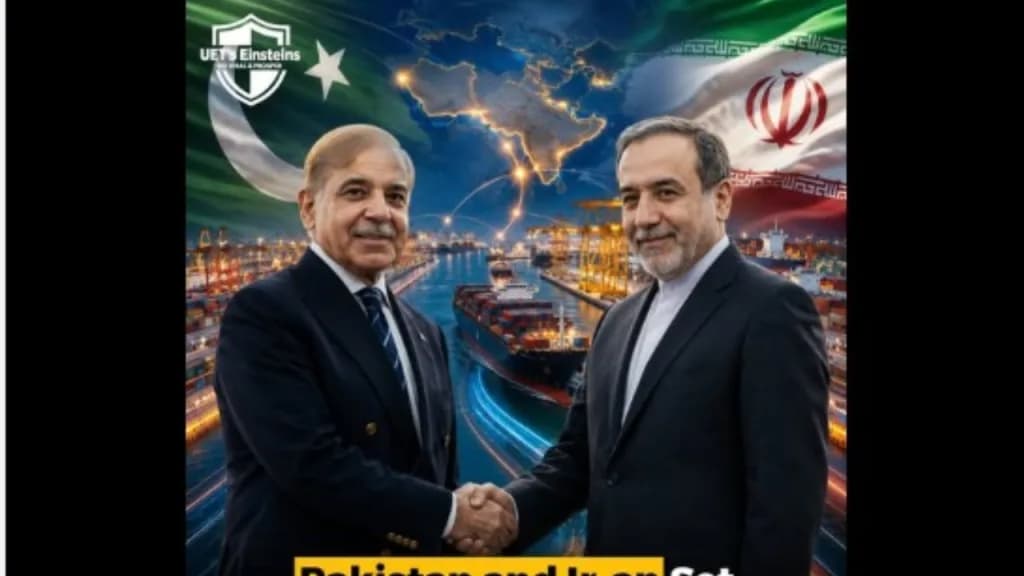
Pakistan Iran Trade Deal Likely, Gwadar Included
Why this Pakistan Iran Trade Agreement Likely, Gwadar Included matters now
Pakistan Iran Trade Deal
The Pakistan Iran Trade Agreement Likely, Gwadar Included is starting to get serious attention in policy circles and business communities. And honestly, it makes sense. Both countries have been trying for years to unlock real trade potential, but politics, logistics, and sanctions pressure have kept things half-closed, half-working.
From what we are seeing on the ground, this isn’t just another diplomatic headline. It feels more like a practical shift toward regional trade survival. In many cases, when economies slow down or shipping costs rise globally, countries naturally start looking at neighbors first. That is exactly what is happening here.
If Gwadar Port becomes part of this framework, the impact could go far beyond Pakistan and Iran. It could reshape trade routes connecting Central Asia, the Middle East, and even parts of South Asia.
Let’s break it down in a simple, real-world way.
What is the trade agreement between Iran and Pakistan?
The trade agreement between Iran and Pakistan is basically a planned framework to increase bilateral trade, reduce friction at borders, and improve transit routes.
It is not just about buying and selling goods. It is about:
Making customs clearance faster
Allowing smoother cross-border transportation
Improving energy and fuel trade
Opening maritime trade routes through ports like Gwadar and Bandar Abbas
In simple terms, both countries want fewer delays and more predictable trade rules.
Real-world example
Think of it like this. In the United States, states like Texas and New Mexico trade heavily with each other because highways, logistics systems, and rules are aligned. Now imagine if every truck had to wait days at the border. Trade would slow down instantly.
That’s similar to what Pakistan and Iran have been trying to fix for years.
One common mistake people make is thinking trade agreements are just political statements. In reality, they directly affect shipping costs, food prices, and fuel availability.
Gwadar Port’s strategic role in this agreement
The biggest highlight of the Pakistan Iran Trade Agreement Likely, Gwadar Included is obviously Gwadar Port.
Gwadar is not just a port. It is a strategic gateway sitting near the Arabian Sea, connecting:
Middle East energy routes
Central Asian trade corridors
Western China trade expansion routes
Why Gwadar matters so much
Deep sea port capability
Shorter shipping distance to Gulf countries
Access to landlocked Central Asia
Connection to China Pakistan Economic Corridor (CPEC)
From experience, whenever a country controls a strategic port, it automatically gains leverage in regional trade negotiations.
Simple comparison
Dubai Port (Jebel Ali): Global transshipment hub
Karachi Port: Traditional national trade hub
Gwadar Port: Emerging regional connector hub
Gwadar is still developing, but its location gives it long-term strategic value.
Is Pakistan giving Gwadar to China?
This is one of the most searched and misunderstood questions.
The short answer is: No, Pakistan is not giving Gwadar to China.
What actually exists is a development and operational partnership under CPEC. China has invested heavily in infrastructure, but ownership remains with Pakistan.
What China actually controls
Development of infrastructure
Some operational involvement through agreements
Investment in roads, energy, and logistics networks
What Pakistan controls
Sovereignty of Gwadar
Port authority decisions
Customs and trade regulation
Long-term policy direction
A common mistake people make is confusing investment with ownership. In many cases globally, countries allow foreign investment in ports without losing control.
Example from the USA
If you look at ports in the United States like Long Beach or Los Angeles, they also rely on international shipping companies and investors, but ownership remains American.
Gwadar is similar in structure, not a transfer of control.
Who helped Pakistan buy Gwadar?
Historically, Gwadar was purchased by Pakistan from Oman in 1958.
This is an important historical point that many people still search today.
Key fact
Gwadar was under Omani control before 1958
Pakistan purchased it for development purposes
The deal was facilitated through diplomatic negotiations, not military action
In simple terms, it was a strategic acquisition, not a commercial market purchase.
Why this matters today
Understanding this history helps explain why Gwadar is so important today. It was not just randomly developed. It was acquired specifically for long-term strategic trade expansion.
From experience, countries rarely invest in ports without long-term geopolitical thinking behind them.
What is the future of Gwadar?
The future of Gwadar depends heavily on three factors:
1. Regional trade stability
If Pakistan and Iran strengthen trade ties, Gwadar becomes a key transit hub.
2. Infrastructure completion
Ports alone don’t work. Roads, railways, customs systems, and logistics networks must function smoothly.
3. Investor confidence
International investors look for stability, not just location.
Possible future scenarios
Positive scenario
Gwadar becomes a major regional shipping hub
Iran uses Gwadar for trade diversification
Central Asian countries connect through Pakistan
Job creation increases locally
Moderate scenario
Limited trade expansion
Mostly regional shipping usage
Gradual development over 10–15 years
Weak scenario
Underutilized infrastructure
Trade bottlenecks remain
Competing ports dominate regional trade
Comparison with global ports
Dubai: Became global hub due to fast policy execution
Singapore: Became hub due to efficiency and trust
Gwadar: Still building trust and infrastructure phase
The difference is not potential. It is execution speed.
Pakistan Iran trade: opportunities and challenges
Let’s be honest here. Every major trade agreement comes with both opportunity and friction.
Opportunities
Increased fuel and energy trade
Lower import costs for nearby regions
Expansion of maritime routes
Regional political stability through economic dependency
Challenges
Sanctions affecting Iran’s global trade
Infrastructure delays in border regions
Security concerns in transit routes
Bureaucratic inefficiencies
One thing often overlooked is how quickly logistics problems can kill even the best trade agreements. From experience, paperwork delays at borders can cost more than fuel prices in many cases.
Comparison with regional competitors
To understand the importance of Pakistan Iran Trade Agreement Likely, Gwadar Included, we need to compare regional trade hubs.
UAE (Dubai, Jebel Ali Port)
Highly efficient customs system
Strong global shipping network
Established investor trust
India (Chabahar Port development influence)
Strong regional maritime expansion
Strategic partnerships with Iran
Competing transit influence in the region
Pakistan (Gwadar Port)
Strategic location advantage
Lower operational maturity
High long-term potential
The key difference is that UAE already dominates, India is aggressively expanding, while Pakistan is still in development phase.
But location-wise, Gwadar sits at one of the most strategically important maritime points in the region.
Final thoughts: what this agreement really signals
The Pakistan Iran Trade Agreement Likely, Gwadar Included is not just about trade paperwork. It signals something deeper.
It shows a shift toward regional economic survival strategies rather than global dependency. Countries in this region are increasingly trying to trade more with neighbors instead of relying only on distant markets.
If Gwadar is properly integrated into this framework, it could slowly transform from an underdeveloped port into a serious regional trade connector.
But as with all major infrastructure stories, success will depend less on announcements and more on execution.
And that is where the real test begins.
Article Details
Category: Business
Published: 13 May 2026
Time: 3:12 am
Author: Fiza
More Stories


