
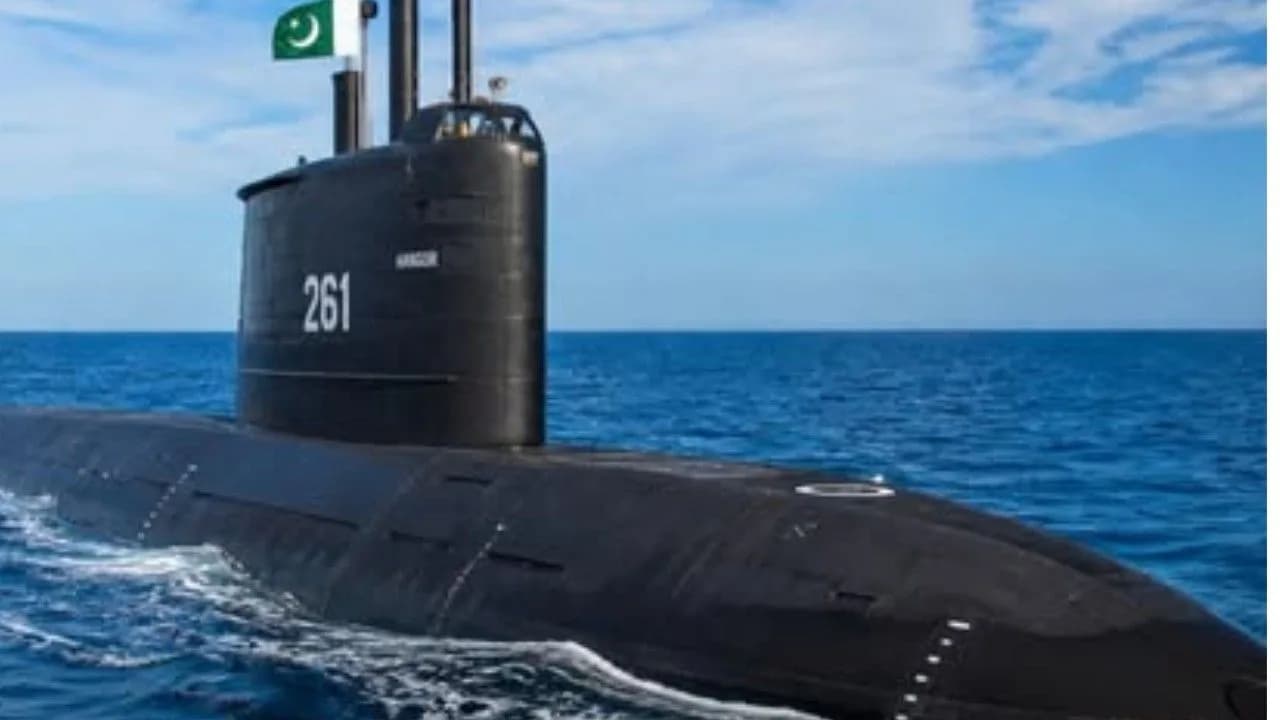
Pakistan Navy Has Launched Its First Modern Hangor Class Submarine
In many cases, big military developments don’t just change defense capabilities, they reshape regional strategy. The news that pakistan navy has launched its first modern hangor class submarine is one of those moments. It’s not just another addition to the fleet, it signals a shift toward more advanced, stealth-based naval power in the region.
From experience, when countries invest heavily in submarines, it usually means they are focusing on deterrence rather than direct confrontation. And that’s exactly what’s happening here.
What Is a Hangor Class Submarine?
A Hangor-class submarine is a next-generation diesel-electric attack submarine based on Chinese design (Type 039B/041 Yuan class). But Pakistan’s version includes upgrades tailored to its operational needs.
Key features that matter in real scenarios:
Air Independent Propulsion (AIP) system
Allows the submarine to stay underwater longer without surfacing
Low acoustic signature
Makes it harder to detect, which is critical in modern naval warfare
Advanced sonar and combat systems
Capability to launch torpedoes and anti-ship missiles
One common mistake people make is thinking all submarines are similar. In reality, modern AIP submarines like Hangor are far more stealthy than older diesel submarines.
Why This Launch Matters for Pakistan
Strategic Impact
Strengthens sea-based deterrence
Enhances second-strike capability
Improves surveillance in the Arabian Sea
From experience, submarines are often called “silent hunters” for a reason. Even a small number can influence enemy naval movements.
Regional Balance
Compared to regional competitors:
Feature Hangor Class Older Pakistani Subs Typical Indian Diesel Subs
Stealth High Medium Medium
AIP System Yes Limited Some have
Endurance Long Moderate Moderate
Detection Risk Low Higher Medium
This shows Pakistan is trying to close the technology gap rather than just increasing numbers.
Which Was the First Submarine of Pakistan?
The first submarine of Pakistan was PNS Ghazi.
Important context:
Originally a US submarine (USS Diablo)
Acquired by Pakistan in 1964
Played a key role in early naval strategy
In many cases, Ghazi is remembered not just as the first submarine, but as the foundation of Pakistan’s underwater warfare capability.
Who Destroyed Ghazi?
This is still debated.
Two main perspectives:
Indian Navy claims it was destroyed by INS Rajput
Pakistani view suggests it sank due to an internal explosion
From a neutral perspective, many analysts believe an internal mine explosion is the most likely cause, but no definitive conclusion exists.
How Many Submarines Has the Pakistan Navy?
As of now, Pakistan Navy operates a mix of submarines:
Current fleet includes:
Agosta 70 class
Agosta 90B (Khalid class)
Upcoming Hangor class (8 planned)
Estimated numbers:
Around 5 active submarines currently
Expected to increase to 8+ with Hangor additions
From experience, quality matters more than quantity in submarine warfare.
Which Indian Ship Was Destroyed by Pakistan?
During the 1971 war:
Pakistan Navy sank INS Khukri
Why this matters:
It remains one of the few submarine kills in South Asian naval history
Demonstrated effectiveness of submarine warfare early on
Why Were Females Not Allowed on Submarines?
This is a question many people ask, and the answer is evolving.
Historically, women were restricted due to:
Extremely confined living conditions
Privacy challenges
Long deployment durations without resurfacing
But things are changing:
In many countries like the US and UK:
Women now serve on submarines
Policies changed with better infrastructure and inclusion efforts
One common mistake people make is assuming the restriction was about capability. It was mostly about logistics and environment, not competence.
Real-World Insight: Why Submarines Matter More Than Ships
In many cases, surface ships are visible and vulnerable. Submarines, on the other hand:
Operate unseen
Strike unexpectedly
Act as psychological deterrents
A Quora-style example often discussed:
A naval officer once mentioned that during exercises, a single submarine “sank” multiple ships without being detected. That’s the level of advantage stealth provides.
Final Thoughts.
The development that pakistan navy has launched its first modern hangor class submarine is not just about military hardware. It reflects a long-term strategy focused on stealth, deterrence, and technological advancement.
From experience, nations that invest in submarines are thinking decades ahead, not just about immediate threats.
Pros:
Enhanced stealth capability
Stronger deterrence
Modern technology integration
Cons:
High cost
Maintenance complexity
Requires highly trained crew
In the bigger picture, this move puts Pakistan in a more competitive position underwater, which is exactly where modern naval warfare is heading.
More Stories