Introduction The Gap Between Policy and Reality
The headline Banks Show Low Interest in PM E-Bike Scheme is starting to reflect a deeper issue in Pakistan’s financial and policy ecosystem. On paper, the initiative looks promising. Subsidized electric bikes, youth support, reduced fuel dependency, and a push toward sustainable transport.
But in reality, things are not moving as expected.
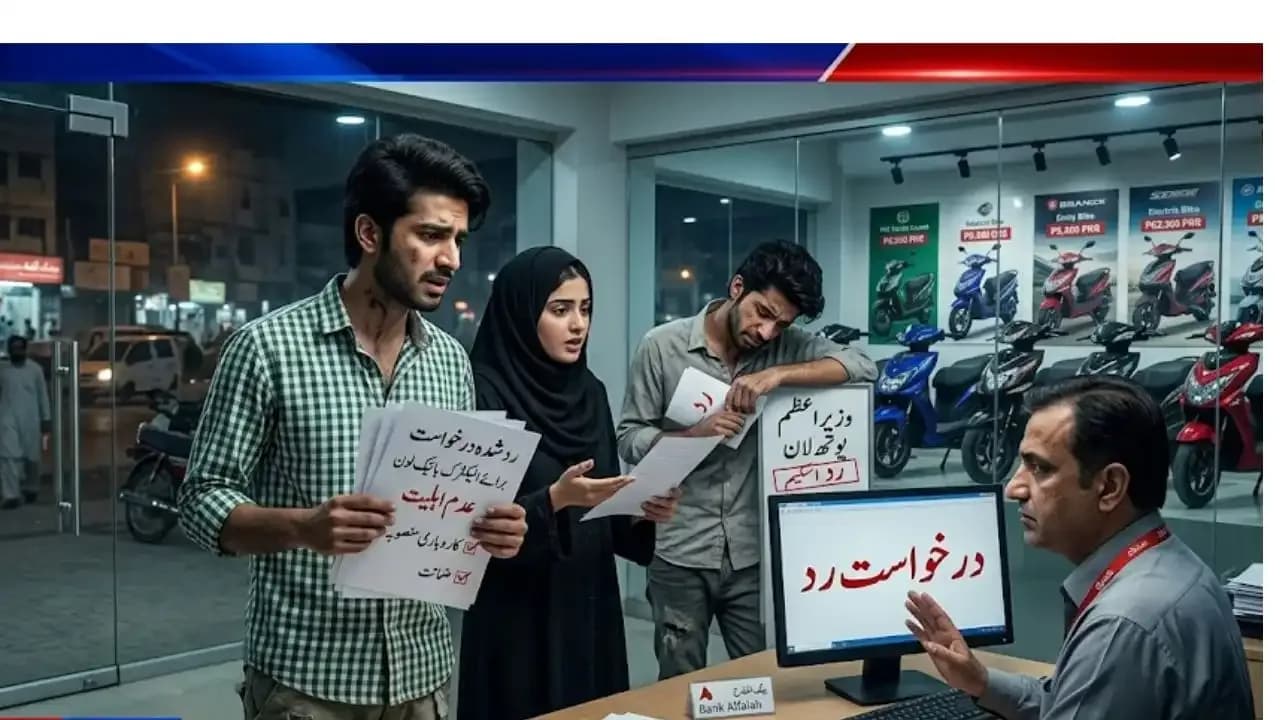
Banks rejected 91% e bike off in Pakistan, and in Karachi alone, approval rates have been shockingly low. That raises a simple but important question. If the demand is clearly there, why are approvals not following?
From experience, when a government scheme struggles at the execution level, it is rarely about intent. It is almost always about systems, incentives, and coordination.
Let’s break this down in a practical, no-fluff way.
What Is the PM E-Bike Scheme and Why It Matters?
The vision behind the scheme
The government introduced this initiative to tackle multiple problems at once:
Rising fuel costs
Limited affordable transport for youth
Increasing urban pollution
Slow adoption of electric vehicles in Pakistan
The idea was simple. Provide subsidized electric bikes through banks so people can afford them through easy installments.
Why this model works globally
In countries like the United States, EV financing works because:
Banks actively support green financing
Governments reduce risk for lenders
Digital systems speed up approvals
In many cases, buyers can get approval within days, not weeks.
Pakistan tried to replicate a similar model, but the execution has been uneven.
Banks Rejected 91% E Bike Off Karachi – What’s Behind the Numbers?
A closer look at rejection rates
The data is hard to ignore. Banks rejected 91% e bike off Karachi, and similar patterns are visible across the country.
This is not a small gap. It signals a structural problem.
Why banks are hesitant
From experience, banks don’t reject applications randomly. Their decisions are driven by risk.
Here are the main concerns:
Low or no credit history of applicants
Irregular income documentation
Fear of loan defaults
Lack of strong government guarantees
Limited recovery mechanisms
One common mistake people make is assuming that a government-backed scheme removes all risk for banks. That is not how banking works.
The risk vs reward imbalance
Banks evaluate every loan based on one question. Is this recoverable?
Right now, for many applicants, the answer is uncertain.
E Bike Scheme Pakistan Apply Online – Where Users Get Stuck
The digital promise
The E Bike Scheme Pakistan apply online system was meant to simplify access.
Applicants can:
Fill forms online
Submit documents digitally
Choose financing options
On paper, this looks efficient.
The real user experience
In many cases, the process breaks down after submission.
Common issues include:
No clear status updates
Delayed verification
Repeated document requests
Lack of communication from banks
From experience, this is where frustration builds. People are willing to comply, but the system doesn’t guide them properly.
A relatable example
On Quora, a user once shared how they applied for a vehicle loan in the US and got approval within 48 hours because everything was integrated.
Now compare that with weeks of silence after applying online in Pakistan. The difference is not technology, it is execution.
Punjab Electric Bike Scheme – A Slightly Better Approach?
What’s working in Punjab
The Punjab electric bike scheme has shown relatively better structure.
Key strengths include:
Clear eligibility criteria
Better communication channels
Strong administrative support
This has helped improve trust among applicants.
But it is not perfect
Despite improvements, challenges still exist:
Limited supply compared to demand
Processing delays
Bank-level bottlenecks
In many cases, even qualified applicants face delays simply due to volume pressure.
Punjab E Bike Exchange Scheme – A Smarter Alternative?
Why exchange models make sense
The Punjab E bike exchange scheme offers a more practical approach.
Instead of asking users to buy new bikes outright, it allows them to exchange old ones.
This reduces financial pressure significantly.
Benefits of this model
Lower upfront cost
Reduced loan size
Better approval chances
Faster adoption
From experience, exchange models work well because they align incentives for both buyers and lenders.
Electric Vehicles in Pakistan – Big Opportunity, Slow Progress
Why EV adoption is critical
Electric vehicles in Pakistan are not just a trend. They are a necessity.
They help:
Reduce fuel imports
Lower environmental impact
Save long-term costs for users
What is slowing adoption
Despite strong policy announcements, progress is slow due to:
High initial costs
Limited charging infrastructure
Weak financing systems
Low public awareness
One common mistake people make is focusing only on price. Financing accessibility is just as important.
Comparison With Competitors and Global Models
How Pakistan compares to global systems
Let’s take a realistic look.
United States:
Fast loan approvals
Strong credit systems
Government-backed guarantees
High EV adoption
China:
Massive subsidies
Strong manufacturing ecosystem
Easy financing access
Pakistan:
Limited financing approval
Weak bank participation
Slow processing systems
From experience, success in EV adoption depends more on financial systems than technology itself.
Local comparison within Pakistan
Even within Pakistan, performance varies.
Punjab:
Better coordination
Slightly higher approvals
Karachi and other regions:
Higher rejection rates
Slower processing
This shows that execution matters more than policy design.
Practical Advice for Applicants
How to improve approval chances
If you are applying, here are some practical tips:
Maintain proper income records
Ensure all documents are complete
Avoid multiple incomplete applications
Follow up regularly with banks
From experience, small details can make a big difference in approval decisions.
What to avoid
Submitting incomplete forms
Ignoring bank communication
Assuming automatic approval
One common mistake people make is treating the process casually. It requires attention and follow-up.
What Needs to Change in the System
For banks
Banks need to:
Simplify loan criteria
Improve digital processing
Align with government goals
Reduce unnecessary delays
For government
The government should:
Provide stronger guarantees to banks
Monitor approval rates
Improve system integration
Increase transparency
For policymakers
Better coordination is key.
From experience, policies fail not because they are wrong, but because execution is weak.
Conclusion: A Good Idea Facing Execution Challenges
The reality behind Banks Show Low Interest in PM E-Bike Scheme is not about lack of demand. People clearly want affordable electric bikes.
The problem lies in:
Risk-averse banking systems
Weak execution frameworks
Poor coordination between stakeholders
At the same time, initiatives like the Punjab electric bike scheme and exchange models show that improvement is possible.
In many cases, success does not require new policies. It requires fixing existing systems.
If Pakistan can align its banking sector with its policy goals, the future of electric vehicles in Pakistan could change rapidly.
Until then, the gap between promise and reality will continue to frustrate applicants and slow down progress.
Article Details
Category: Scheme
Published:
Updated:
Author: Fiza
More Stories